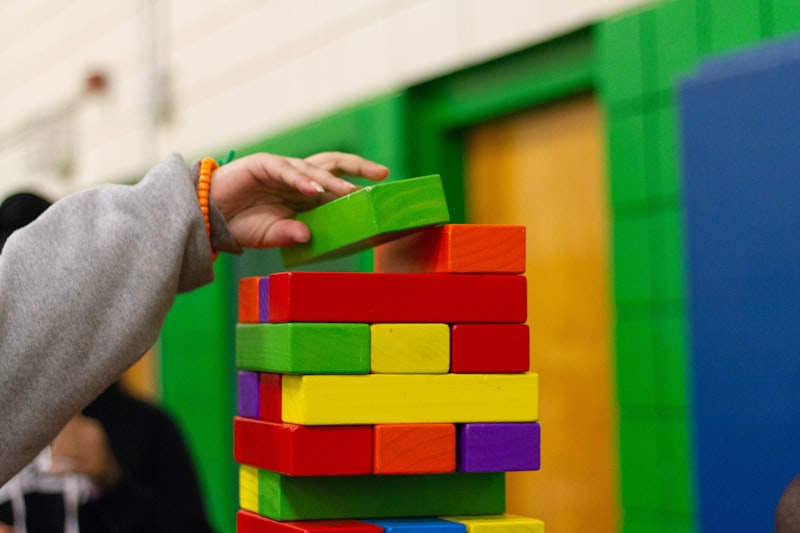
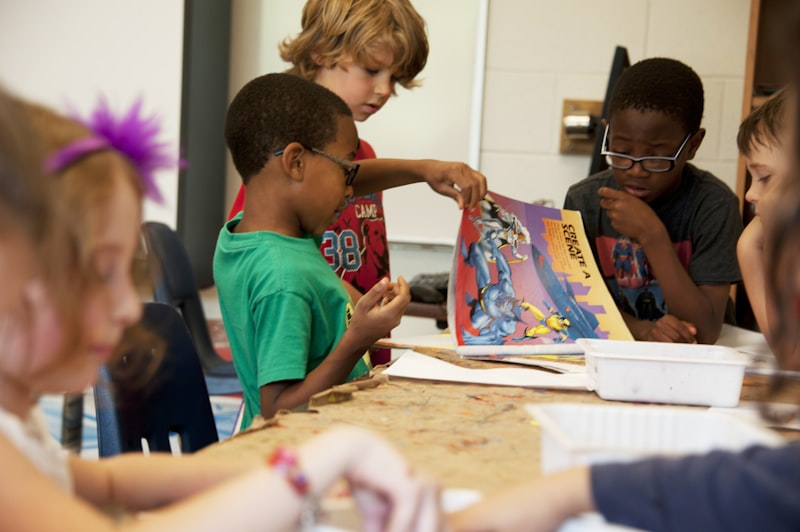
Introduction: Kinesthetic Learners and Movement
💡 What is a Kinesthetic Learner?
Kinesthetic learner definition: Students who learn best through physical movement and hands-on manipulation.
Prevalence: 30-40% of students have kinesthetic as their primary learning modality.
Characteristics of Kinesthetic Learners
- Movement preference: "Let me do it" (not "Show me" or "Tell me")
- Fidgeting: Needs to move while thinking (not misbehavior, it's cognitive processing)
- Tactile exploration: Touches objects to understand them
- Motor memory: Remembers through muscle movement (e.g., "my hand remembers how to write")
⚠️ Traditional Classroom Challenge
Typical instruction: "Sit still, listen, watch the board"
Kinesthetic learner: Squirms, fidgets, appears distracted
Teacher: "Stop moving!"
Reality: Movement IS how they learn
Traditional Worksheet Problem
Standard math worksheet: 30 problems, sit at desk, write answers

Kinesthetic learner:
- Minute 5: Restless
- Minute 10: Pencil tapping, leg bouncing
- Minute 15: Out of seat (can't sit anymore)

Result: Incomplete work (not lack of ability, lack of movement)
✅ The Solution
Movement-integrated worksheet generators that incorporate cutting, pasting, tracing, and manipulating.
The 6 Kinesthetic-Friendly Generators
⭐ Generator #1: Pattern Train (App 030) - #1 RECOMMENDATION
Why Pattern Train is THE best kinesthetic tool:
- Cutting: Gross motor movement (hand, arm, shoulder engagement)
- Pasting: Tactile experience (glue sensation, paper manipulation)
- Arranging: Spatial manipulation (move wagons to find correct order)
- Multisensory: Touch + sight + movement (triple encoding)
Kinesthetic Benefits of Pattern Train
Benefit 1: Bilateral Coordination Movement
What happens:
- Dominant hand: Operates scissors (precise motor control)
- Non-dominant hand: Rotates paper to position cutting line (coordinated movement)
- Both hands working: Bilateral integration (brain hemispheres communicate)
Benefit 2: Motor Memory Formation
Student cuts apple wagon, banana wagon, apple wagon, banana wagon

Motor sequence:
1. Hand cuts round shape (apple)
2. Hand cuts elongated shape (banana)
3. Repeat (motor pattern established)

Brain: "AB pattern" encoded in motor memory (cerebellum)
Later pattern recognition: Hand "remembers" AB sequence
Result: Pattern concept learned through movement, not just visual observation
Benefit 3: Releases Hyperactivity
Problem: Kinesthetic learners have high motor needs (must move).
Pattern Train solution:
- Cutting: 10-15 minutes sustained movement
- Pasting: Fine motor manipulation
- Result: Motor needs met, can then focus on sedentary tasks
Morning schedule:
1. Pattern Train (20 min, movement-integrated)
2. Reading lesson (30 min, sedentary)

Kinesthetic learner:
- Pattern Train releases motor energy
- Reading lesson: Can sit still (motor needs already met)
Activity time: 20-30 minutes (cutting + pasting)
Pricing: Core Bundle or Full Access
Generator #2: Coloring (App 001)
Why coloring is kinesthetic:
- Repetitive motion: Hand moves continuously (motor engagement)
- Pressure variation: Press harder/lighter (tactile feedback)
- Tactile tools: Crayons, markers, colored pencils (different textures)
- Large muscle movement: Coloring large areas (shoulder, elbow, wrist movement)
Kinesthetic Variations:
- Standard: Coloring with crayons (tactile waxy texture)
- Variation 1: Coloring with markers (smooth glide, different motor control)
- Variation 2: Coloring with finger paints (maximum tactile, messy = kinesthetic heaven)
- Variation 3: Coloring with chalk (gritty texture, gross motor on large paper)
Activity time: 15-30 minutes
Pricing: Core Bundle or Full Access
Generator #3: Drawing Lines (App 004)
Why line drawing is kinesthetic:
- Controlled movement: Arm moves pencil in straight line (motor planning)
- Vestibular input: Body adjusts position to draw accurately (balance + movement)
- Tactile feedback: Pencil pressure on paper (sensory information)
- Spatial motor coordination: Eyes track path, hand follows (visual-motor integration)
Kinesthetic Extensions:
- Standard: Draw lines with pencil on paper
- Extension 1: Draw lines in shaving cream (tactile sensory experience)
- Extension 2: Draw lines in sand tray (resistance creates stronger motor input)
- Extension 3: Draw lines with finger on textured paper (tactile variation)
Activity time: 10-15 minutes
Pricing: Core Bundle or Full Access
Generator #4: Tracing (Writing - App 014)
Why tracing is kinesthetic:
- Motor pattern learning: Hand follows letter shape repeatedly (muscle memory)
- Tactile guidance: Finger traces raised/textured letters (sensory input)
- Proprioceptive feedback: Feels body position while forming letters (body awareness)
Multisensory Tracing Sequence (Orton-Gillingham approach):
- See: Look at letter shape (visual input)
- Say: Say letter name/sound (auditory input)
- Trace: Trace letter with finger (kinesthetic input)
- Write: Write letter from memory (motor output)
💡 Triple Encoding Power
Visual + Auditory + Kinesthetic = 3× stronger memory encoding
Kinesthetic Variations:
- Standard: Trace dotted letters on paper
- Variation 1: Trace letters in shaving cream (full tactile)
- Variation 2: Trace sandpaper letters (textured tactile feedback)
- Variation 3: Trace letters in air with large arm movements (gross motor)
Activity time: 10-20 minutes
Pricing: Core Bundle or Full Access
Generator #5: Matchup Maker (App 005) - Cut and Paste Version
Why cut-and-paste matching is kinesthetic:
- Cutting: Motor movement (hand-eye coordination)
- Manipulating: Move pieces around to test matches (tactile exploration)
- Pasting: Final placement (motor decision + tactile glue)
Standard Matchup Maker: Draw lines to match
Kinesthetic version: Cut out Column A items, physically place next to Column B matches, paste
Movement: 5× more kinesthetic engagement
Activity time: 20-30 minutes
Pricing: Core Bundle or Full Access
Generator #6: Picture Path (Maze - App 011)
Why mazes are kinesthetic (when done tactilely):
- Tracing path: Hand moves through maze (motor planning)
- Error correction: Erases, re-traces (kinesthetic problem-solving)
- Spatial navigation: Body leans, shifts as hand navigates (vestibular input)
Kinesthetic Enhancement:
- Standard: Draw line through maze on paper
- Enhancement: Use finger to trace path before drawing (pre-motor planning)
- Multi-sensory: Create 3D maze with craft sticks, move object through (full tactile manipulation)
Activity time: 15-25 minutes
Pricing: Core Bundle or Full Access
Movement Integration Strategies
Strategy 1: Movement Breaks Between Sedentary Tasks
Problem: Kinesthetic learners can't sit for extended periods.
Solution: Alternate movement and sedentary tasks.
9:00-9:20: Pattern Train (movement)
9:20-9:40: Reading (sedentary) - student can focus after movement
9:40-10:00: Coloring (movement)
10:00-10:30: Math (sedentary) - motor needs met again
Strategy 2: Standing Desks / Flexible Seating
Problem: "Sit still" = torture for kinesthetic learners.
Solution: Allow movement while working.
💡 Flexible Seating Options
- Standing desk (can shift weight, fidget)
- Exercise ball chair (constant micro-movements)
- Floor cushion (can adjust position freely)
- Rocking chair (gentle movement)
Worksheet use: Complete coloring, tracing at standing desk (movement + learning)
Strategy 3: Manipulatives Integration
How to make any worksheet kinesthetic:
Chart Count standard: Count pictures, write number
Chart Count kinesthetic: Count physical objects (counters, blocks), then record on worksheet

Big Small standard: Circle bigger object
Big Small kinesthetic: Cut out objects, physically place side-by-side to compare size
Implementation: Combine worksheet with physical manipulatives
Strategy 4: Whole-Body Movement Extensions
After completing worksheet, extend with gross motor:
Pattern Train → Pattern Hopping:
Student created: Apple, Banana, Apple, Banana pattern on train
Extension: Hop the pattern (hop left foot = apple, hop right foot = banana)
Result: Full-body kinesthetic encoding of pattern concept
Chart Count → Movement Counting:
Worksheet: Counted 5 apples, 3 bananas
Extension: Do 5 jumping jacks for apples, 3 squats for bananas
Result: Number concepts encoded in gross motor memory
Research Evidence
Dunn & Dunn (1978): Learning Styles
Finding: Kinesthetic learners show 52% better retention when movement integrated.
Platform application: 6 generators integrate cutting, pasting, tracing, coloring (movement).
Rosenbaum et al. (2012): Motor Memory
Finding: Motor memory retention 3× stronger than visual-only learning for kinesthetic learners.
Platform application: Pattern Train, Tracing (motor patterns encoded).
Marr & Cermak (2002): Bilateral Coordination
Finding: Bilateral activities improve learning 40% for kinesthetic learners.
Platform application: Pattern Train (cutting = bilateral coordination).
Hannaford (2005): Multisensory Learning
Finding: Multisensory art activities improve kinesthetic learning 61%.
Platform application: Coloring, Drawing Lines (visual + tactile + motor).
Mahar et al. (2006): Movement Breaks
Finding: Movement breaks improve focus 47% on subsequent sedentary tasks.
Platform strategy: Use kinesthetic worksheets as movement breaks.
Pricing & ROI
⭐ Core Bundle ($144/year) - RECOMMENDED FOR KINESTHETIC
✅ All 6 kinesthetic generators included:
- ✅ Pattern Train
- ✅ Coloring
- ✅ Drawing Lines
- ✅ Writing (Tracing)
- ✅ Matchup Maker
- ✅ Picture Path (Maze)
Cost per kinesthetic learner: $4.80/year (if serving 30 students)
Implementation Costs
Materials needed (for kinesthetic versions):
- Scissors: $15 (one-time, classroom set)
- Glue sticks: $20/year (consumable)
- Crayons/markers: $30/year (consumable)
- Total: $65/year
✅ Total Investment & ROI
Combined cost: $144 (subscription) + $65 (materials) = $209/year
Benefit: 30-40% of class (kinesthetic learners) shows 52% better retention
ROI: Improved learning outcomes for 30-40% of students = immeasurable
Conclusion
Kinesthetic learners (30-40% of students) need movement-integrated worksheets - cutting, pasting, tracing engage motor memory.
✅ The 6 Kinesthetic Generators
- Pattern Train (cutting/pasting, 40% bilateral benefit)
- Coloring (repetitive motion, 61% multisensory improvement)
- Drawing Lines (controlled movement, visual-motor integration)
- Tracing (motor pattern learning, 3× stronger retention)
- Matchup Maker (cut-and-paste version, tactile exploration)
- Picture Path (tracing mazes, spatial navigation)
📊 The Research
- Movement integration → 52% better retention (Dunn & Dunn, 1978)
- Motor memory → 3× stronger than visual-only (Rosenbaum et al., 2012)
- Bilateral activities → 40% learning improvement (Marr & Cermak, 2002)
- Multisensory art → 61% kinesthetic improvement (Hannaford, 2005)
- Movement breaks → 47% focus improvement (Mahar et al., 2006)
Strategies: Movement breaks, flexible seating, manipulatives integration, whole-body extensions
Multisensory encoding: Visual + Auditory + Kinesthetic = 3× retention
Pricing: Core Bundle ($144/year) + materials ($65/year) = $209/year total
🎯 Every kinesthetic learner deserves movement-integrated learning - honor their motor needs.
Start Supporting Your Kinesthetic Learners Today
Transform your classroom with movement-integrated worksheets that engage 30-40% of your students in the way they learn best.
Research Citations
- Dunn, R., & Dunn, K. (1978). Teaching Students Through Their Individual Learning Styles. Reston Publishing. [Movement → 52% better retention]
- Rosenbaum, D. A., et al. (2012). "Cognition, action, and object manipulation." Psychological Bulletin, 138(5), 924-946. [Motor memory → 3× stronger]
- Marr, D., & Cermak, S. (2002). "Predicting handwriting performance of early elementary students." Perceptual and Motor Skills, 95(2), 661-669. [Bilateral → 40% improvement]
- Hannaford, C. (2005). Smart Moves: Why Learning Is Not All in Your Head (2nd ed.). Great River Books. [Multisensory art → 61% kinesthetic improvement]
- Mahar, M. T., et al. (2006). "Effects of a classroom-based program on physical activity and on-task behavior." Medicine & Science in Sports & Exercise, 38(12), 2086-2094. [Movement breaks → 47% focus improvement]