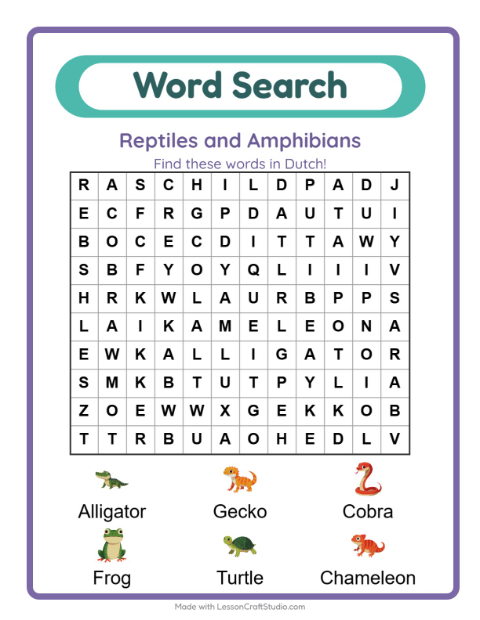
Learn Dutch: picture word search
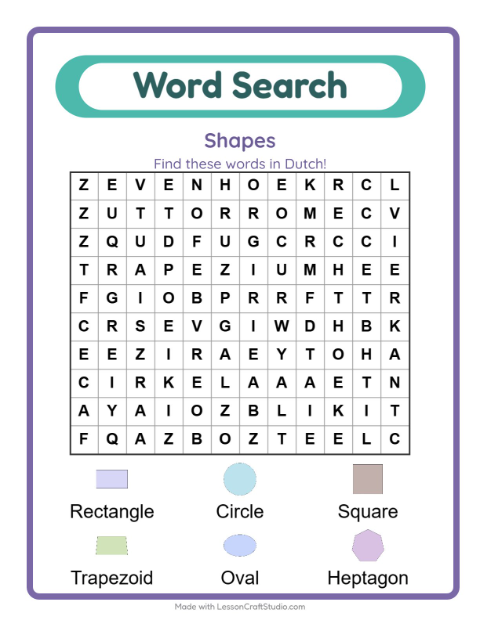
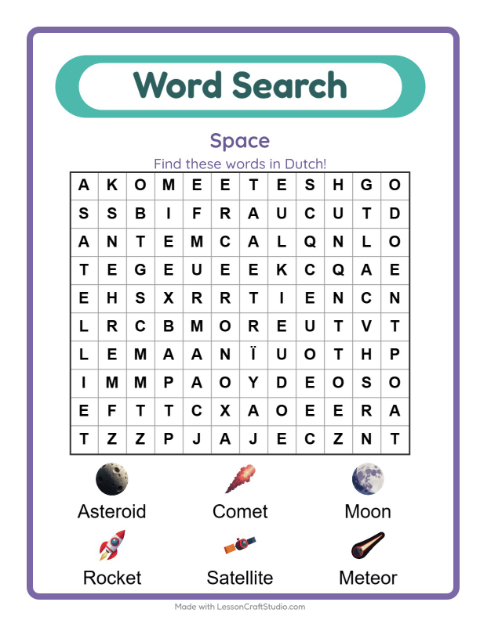
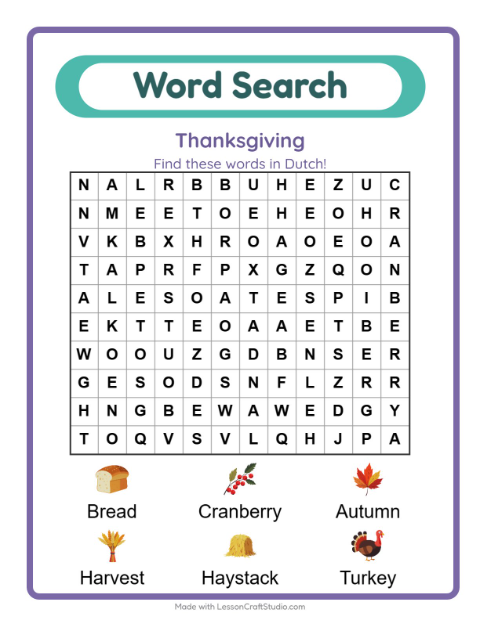
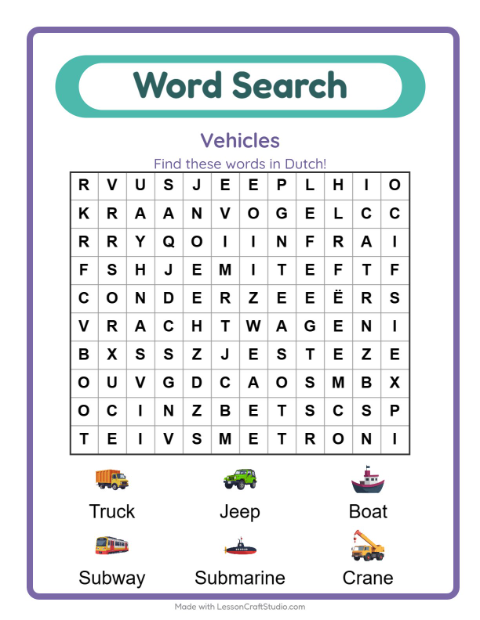
A letter grid with six Dutch reptiles and amphibians in it
Twelve creatures are drawn on the picture list; six of them have their Dutch names hidden in the grid. ALLIGATOR, KAMELEON, COBRA, GEKKO, KIKKER and SCHILDPAD are the ones to find. Having more pictures than answers is deliberate — a child has to read the word list properly rather than assume every drawing counts, and that small extra step keeps the attention where it belongs.
Half the list is nearly free. ALLIGATOR is spelled exactly as in English, COBRA likewise, and KAMELEON differs from chameleon by a letter or two. Read them in a Dutch accent and children hear the family resemblance immediately. The other half is where the work is: GEKKO doubles its k, KIKKER is the frog, and SCHILDPAD, shield plus toad, is nine letters that need a patient finger.
Reptile vocabulary tends to stick, because the animals themselves are memorable, so this is a sensible sheet for the first weeks of Dutch when a child needs a quick success. It also sits neatly beside a zoo or vivarium visit, or a library book about snakes. Nothing here is timed and nothing is scored, so a slow, thorough search costs a child nothing. Read the six words aloud before the pencil starts moving; hearing KAMELEON once makes that long string of letters far easier to catch than meeting it cold in the grid.
What's inside
- 6 exercises
- 6 words
- Answer key included
- Print as PDF or play online — free, no sign-up
Updated June 13, 2026
The 6 words in this worksheet
- Alligator
- Kameleon
- Schildpad
- Gekko
- Kikker
- Cobra