Interactive Math Manipulatives
Interactive tools your students explore directly. No tasks, no checks — just the manipulative.
Numbers & Counting
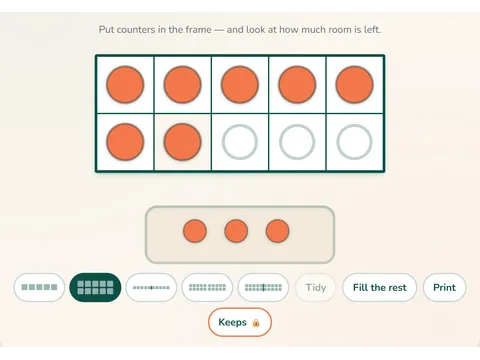
Ten Frame
Build numbers to 10 and 20
Try it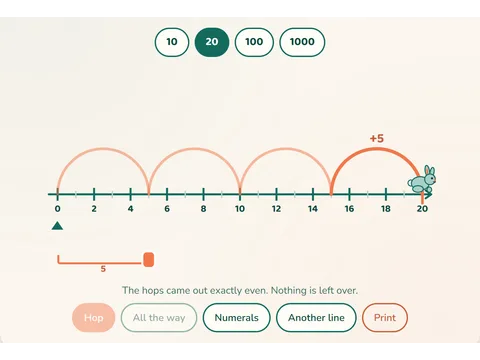
Number Line
Jump along to add and subtract
Try it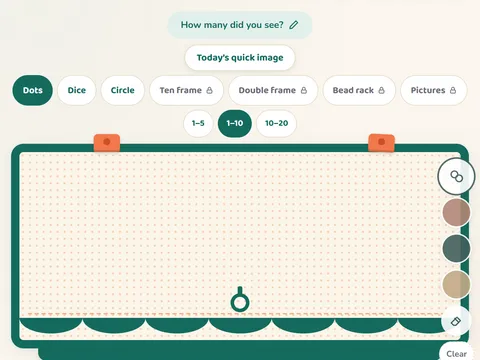
Number Talk Easel
Flash a picture, talk about the math
Try it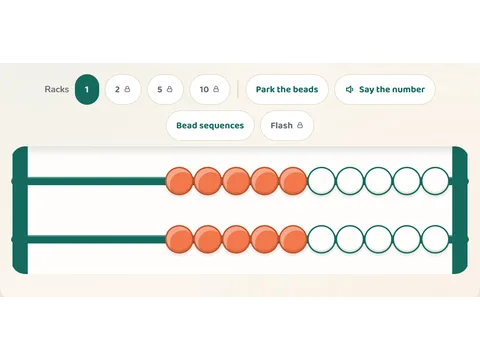
Rekenrek
Twenty beads, one push — see the number
Try it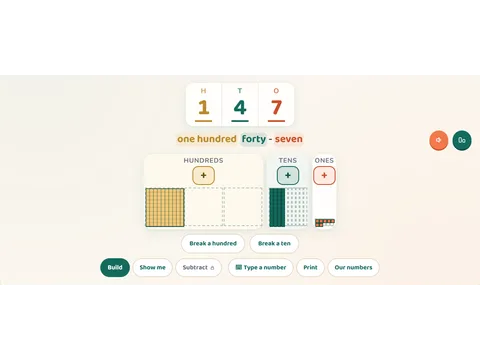
Place Value Lab
Blocks, digits, and the number word — linked live
Try it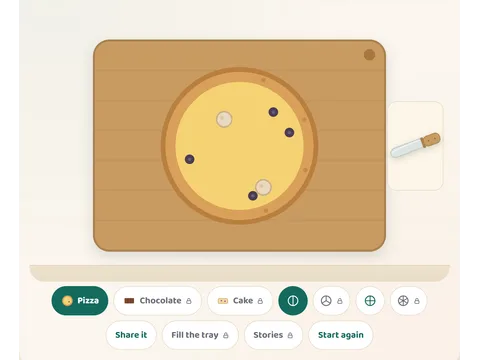
Fraction Kitchen
Cut real food into equal parts — and share it fairly
Try it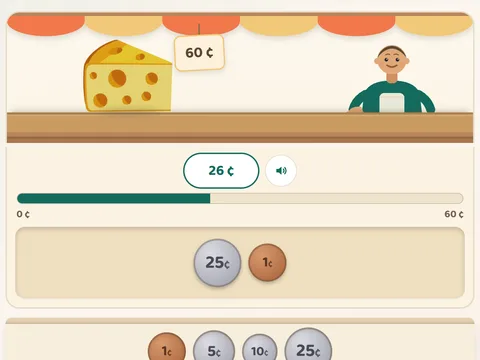
Money Mat
Count real coins onto the mat — in your classroom's own currency
Try it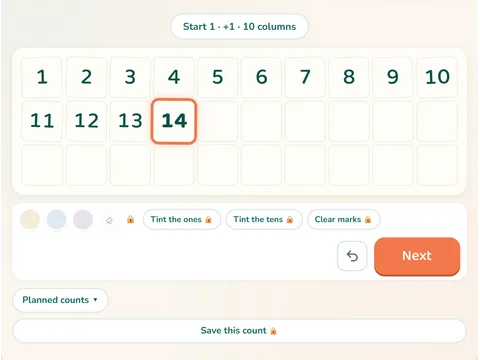
Choral Counting
Count aloud together while the chart writes itself — and the patterns pop.
Try it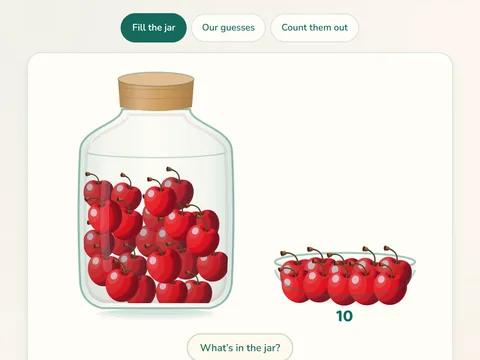
Estimation Jar
The weekly guess-how-many jar — counted out in tens, never ranked.
Try it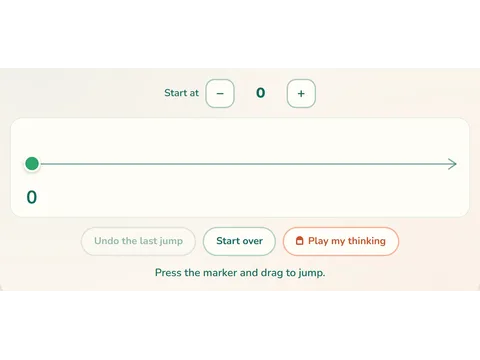
Open Number Line
An empty line where the child draws their own jumps — the strategy, not the answer.
Try it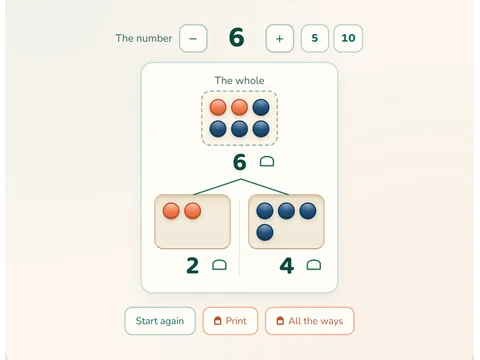
Number Bonds Board
One whole, two parts — and a whole that never changes.
Try it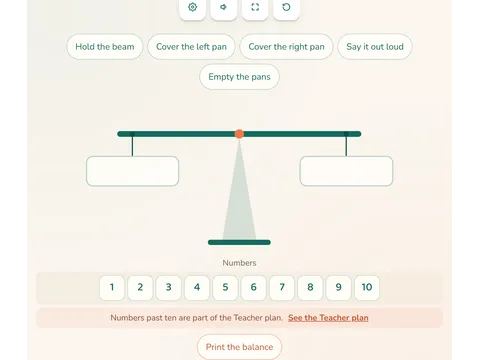
Number Balance
The beam tips, so nobody has to say wrong — and the size of the tip tells you how far off you are.
Try it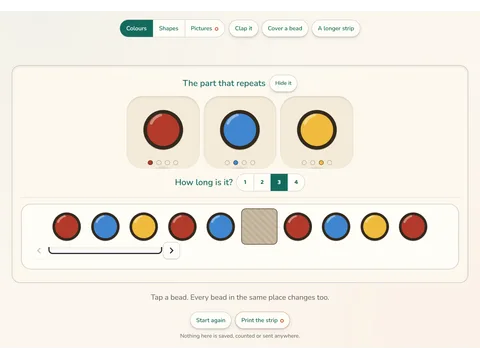
Pattern Bench
Clap it, colour it, shape it — and watch the class realise it was the same pattern all along.
Try it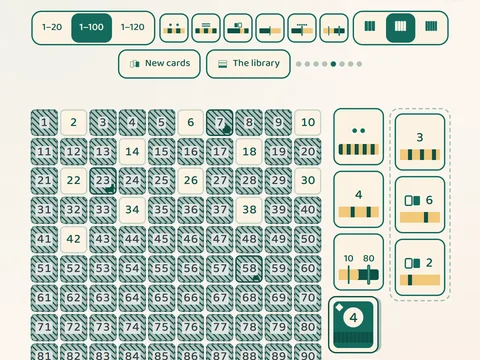
The Number Sieve
The clue does not tell you — it acts
Try it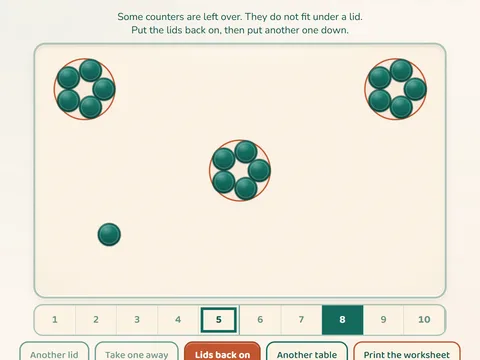
The Lids
Put two lids on a table of counters — each one hides the same number. The class argues its way to a number, parks a marker on it, and only then do the lids come up.
Try it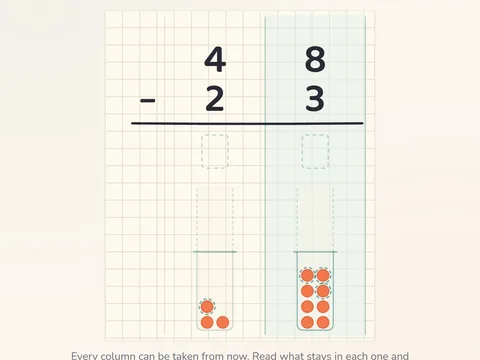
The Exchange Machine
Carrying and borrowing are one machine, running in both directions.
Try it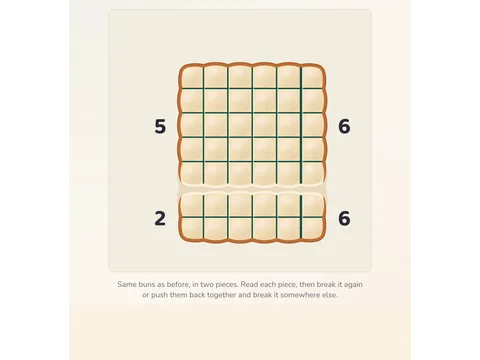
The Baking Tray
One tray, two facts: the hard one breaks into two the class already owns.
Try it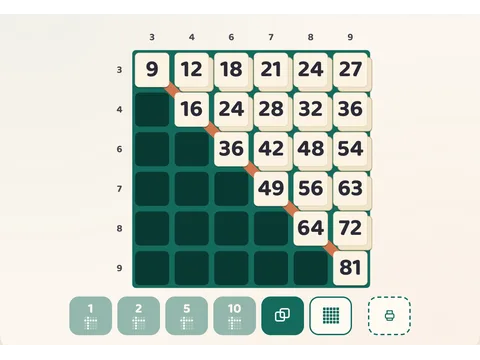
The Folding Wall
A hundred cards on a shelf. Put away the tables the class owned before multiplication was taught, and twenty-one are left to learn.
Try it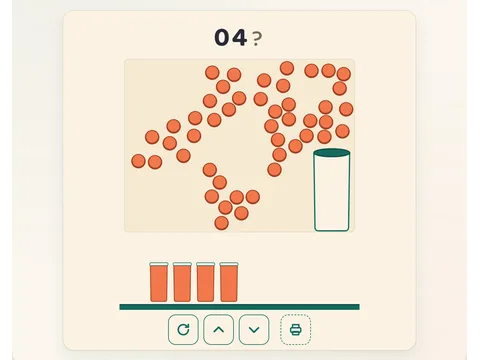
The Counting Cups
Too many to be worth counting one at a time — so the class scoops them ten at a time, and the number builds itself.
Try it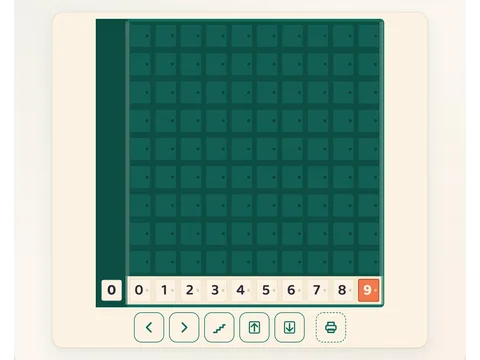
The Number Hotel
A hundred rooms on ten corridors — and no door after 49, which is exactly why the tens digit changes.
Try it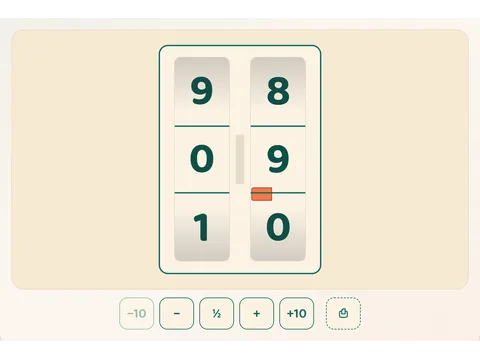
The Number Drum
Two rings of numerals — and the only place on this site where the 0 is drawn directly under the 9.
Try it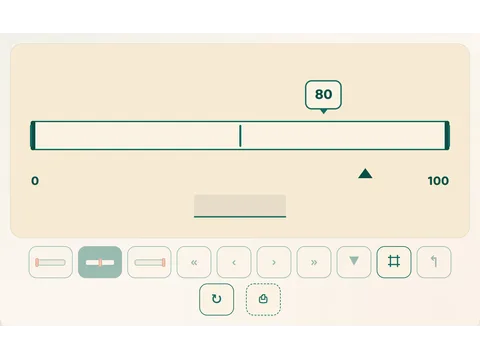
The Landing Strip
Three posts on a bare strip — and after you open up a ten, the same three posts are there again.
Try it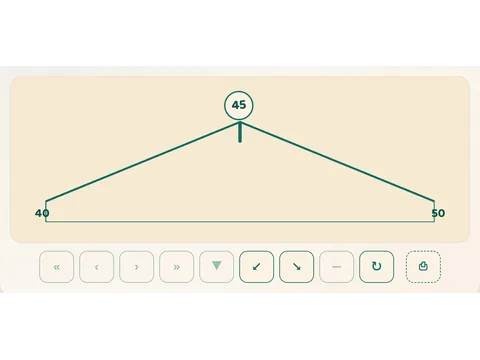
The Rounding Hill
Let go and it runs downhill into the nearest ten — until it lands on the ridge, where the ground is level and nothing happens at all.
Try it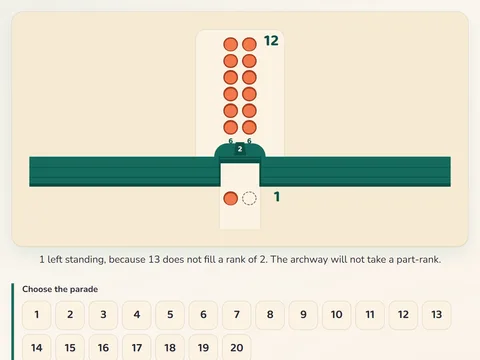
The Pair Gate
Choose the parade, say how many will be left standing — then call them through, as many abreast as the archway takes. Whoever is left standing is drawn exactly like everybody else; only the empty place beside them shows.
Try it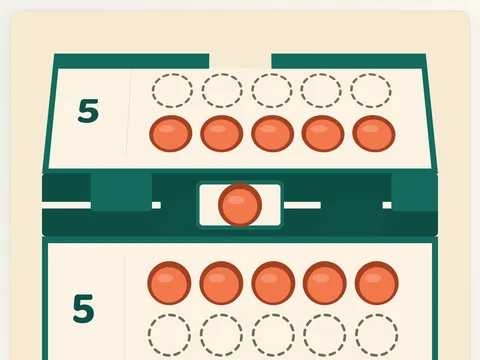
The Doubling Mirror
Say the double, close the tray and count the counters as they land. Then open it, and the same counters share back out into two — one tray, both ways round.
Try it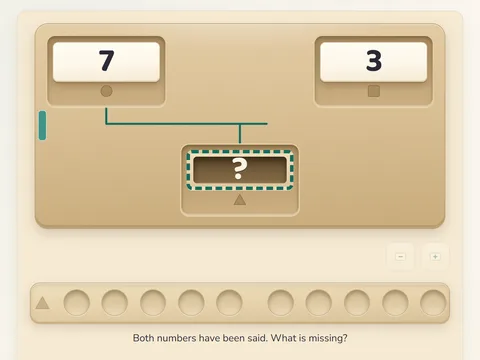
The Missing Question
Three empty places and no numbers at all — before anything is said, the class decides what could be asked.
Try it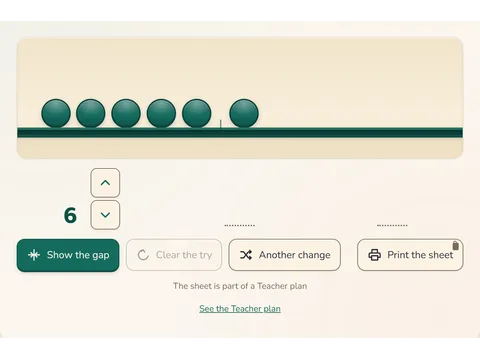
The Gap
Count what is on the ground. The gap covers it for a moment, and when it lifts the count is different — the class works out what happened while nobody could see.
Try it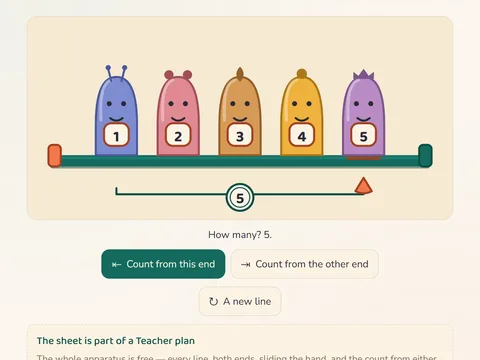
The Counting Line
Count a line of characters from one end, then the other. Everyone gets a different number, but how many is always the same.
Try itMeasurement, Shape & Data
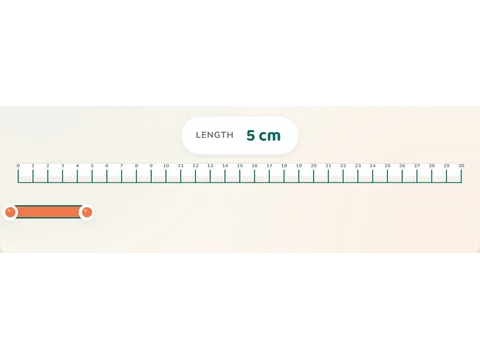
Ruler
Measure length in cm and inches
Try it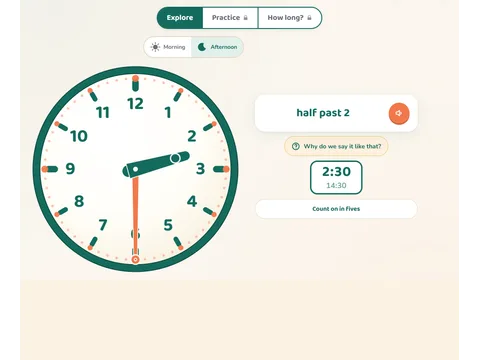
Learning Clock
The clock that says the time the way people really say it
Try it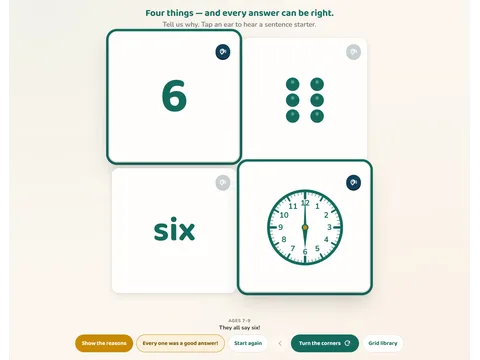
Which One Doesn’t Belong?
Four things — and every answer can be right
Try it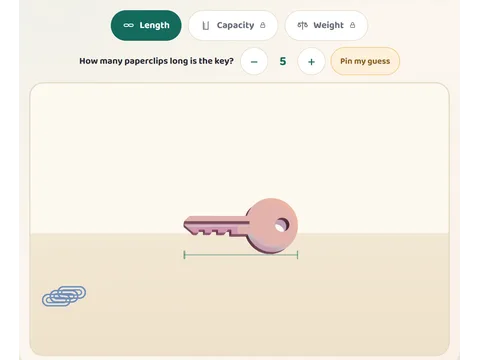
Measurement Bench
Guess first, then measure — length, capacity, and weight
Try it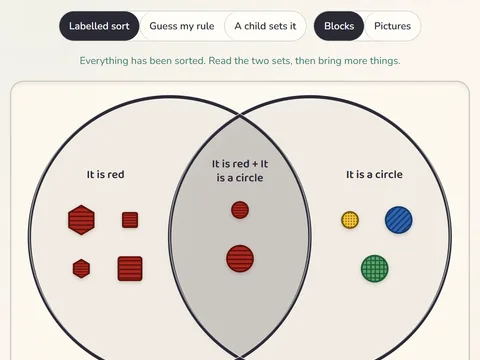
Sorting Hoops
Two hoops, one hidden rule — and the hoop decides, so you can go quiet and watch them think.
Try it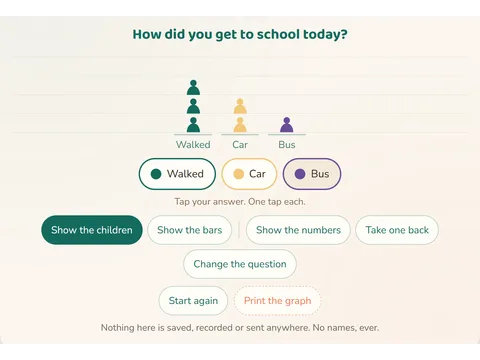
Class Graph
The class answers a question, one child at a time — then watch the children turn into a bar graph.
Try it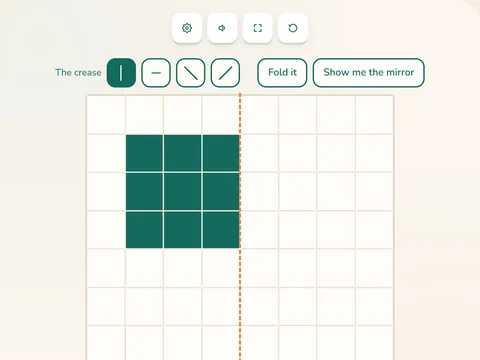
The Folding Sheet
Colour some squares, decide where the mirror is, and fold it to find out.
Try it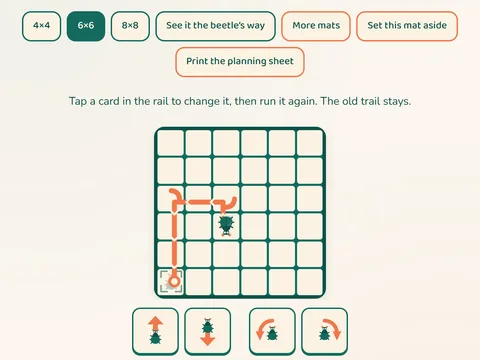
The Rail That Waits
Build the plan, say where it will stop, then run it — and watch what one changed card does to everything after it.
Try it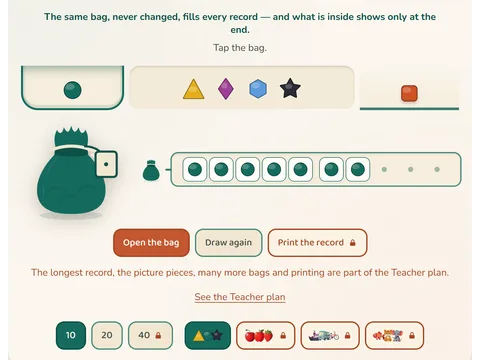
The Draw Bag
Say what you think is in the bag, then draw one at a time — every draw stays on the record and every piece goes back in — and run the very same bag again to watch it come out differently.
Try it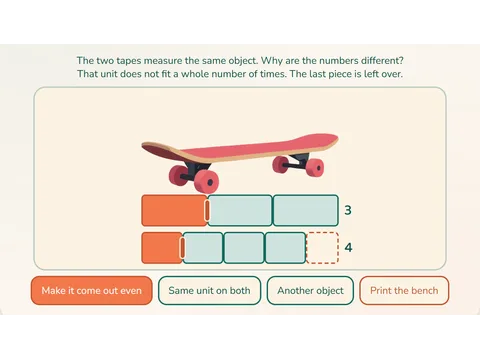
The Unit Handle
Two tapes measure one object. Stretch the unit on one of them and its number climbs — while the object, and the other tape, have not moved at all.
Try it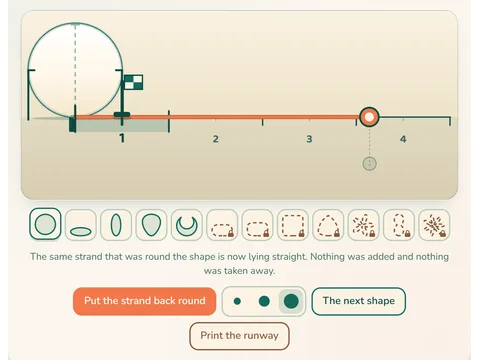
All the Way Round
A strand lies all the way round a shape, then lies down straight beside a scale ruled in the shape’s own width — and a circle always comes out at three and a bit.
Try it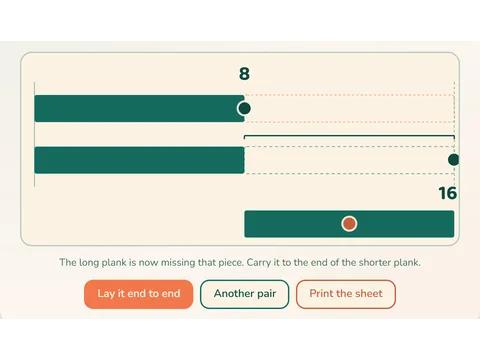
The Planks
Two planks grow from one line. Over the part where one reaches further a bracket appears, and that piece comes off and lands at the end of the short one — where together they reach exactly as far.
Try it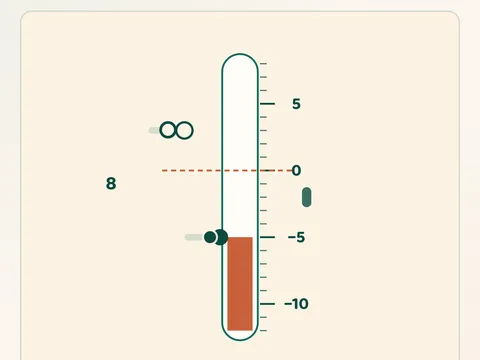
Upright and Flat
A tall column with a scale beside it you can drag, numbered above and below zero — and one control that lays the whole thing flat, after which nothing about it has changed.
Try it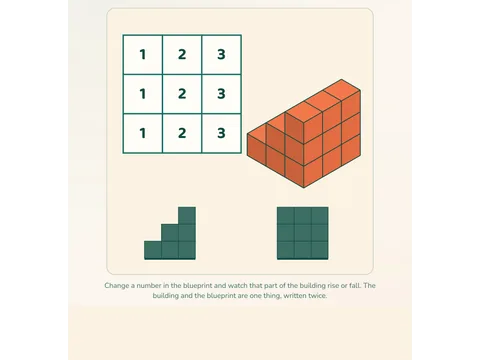
The Blueprint
Nine squares, a number in each — and beside them the building those numbers make. Change the blueprint and the building follows; change the building and the blueprint follows.
Try it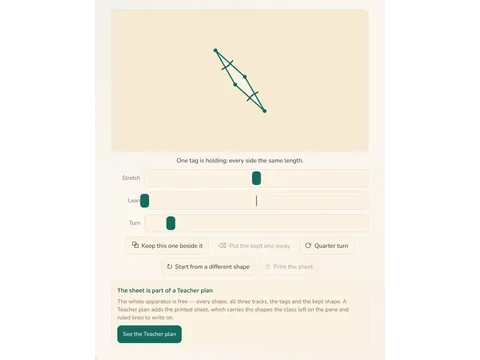
The Shape Stretcher
Turn a shape as far round as you like and nothing lets go. Lean it and a tag does — a tilt and a skew look alike, and only one of them hands you a different shape.
Try itReading & Phonics
Sound Boxes
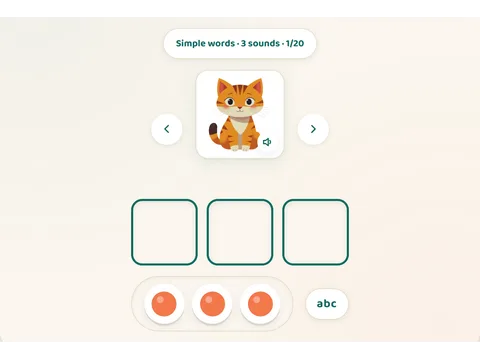
Push a chip for every sound you hear
Try it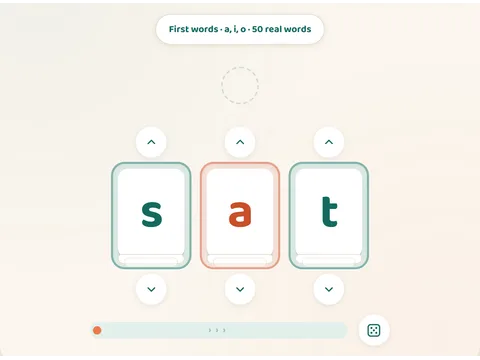
Blending Board
Flick the cards, blend the word
Try it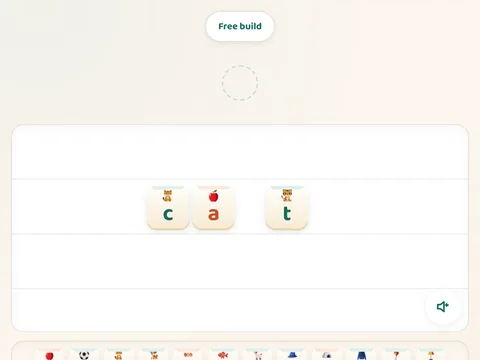
Letter Tiles
An open magnetic board for building words
Try it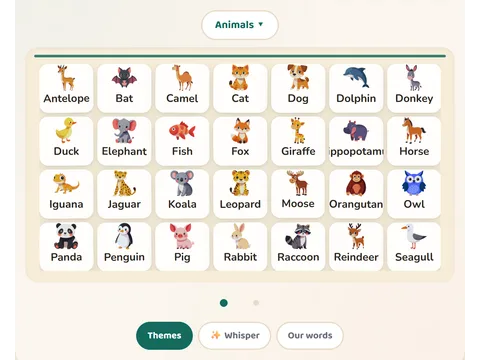
Picture Word Wall
1,495 illustrated words that say themselves
Try it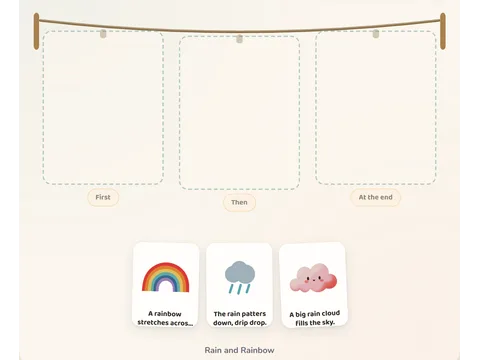
Story Line
Peg the story cards in order — then play your story
Try it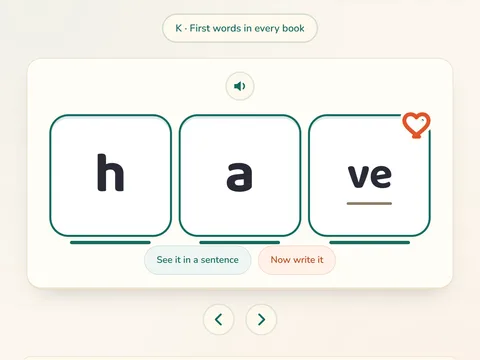
Heart Words
Map the tricky words that cannot be sounded out — then close the routine by writing them from memory.
Try it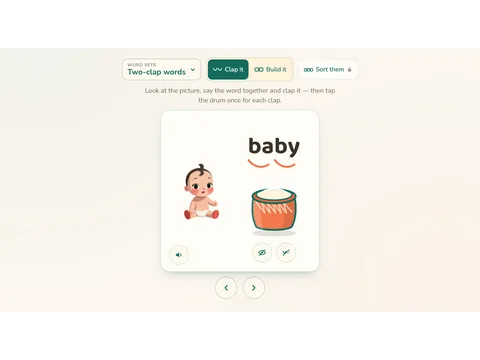
Syllable Splitter
Clap the syllables, tap the drum, and an arc appears under the word for every beat.
Try it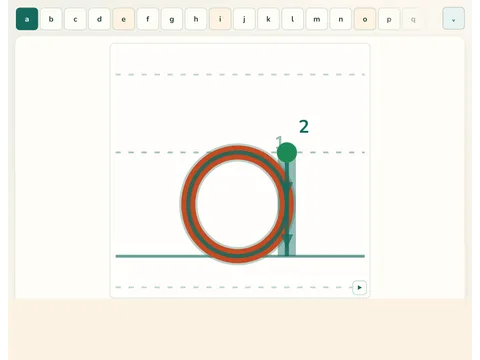
Letter Studio
A huge letter on the lined paper your country actually prints — the firefly shows the way, then the child writes it.
Try it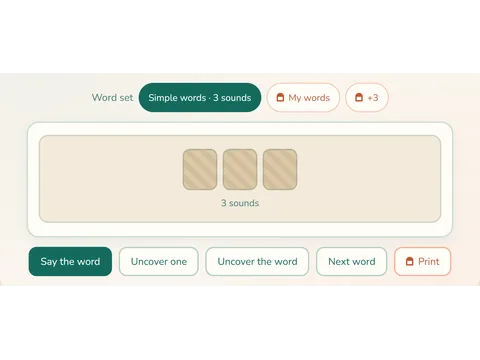
Dictation Desk
You say the word, they write it — then it uncovers itself, one sound at a time.
Try it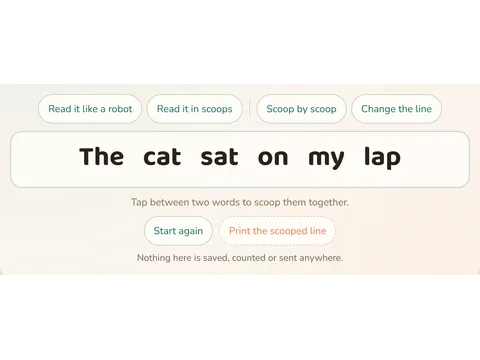
Reading Easel
Scoop the line into phrases, then hear it read both ways — and the class hears phrasing appear.
Try itClassroom Routines
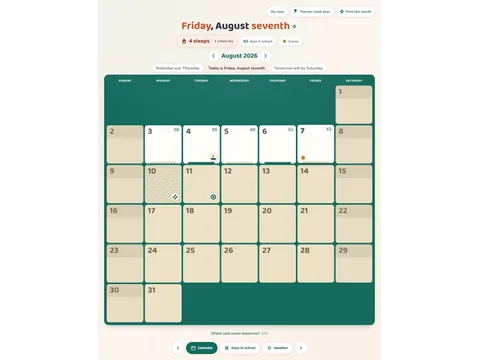
Calendar Wall
Your morning meeting, alive
Try it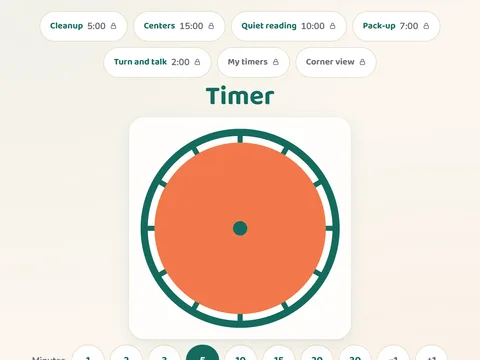
Class Timer
A calm picture of the time you have left
Try it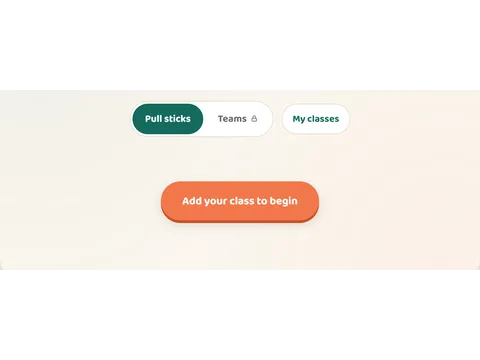
Name Sticks
The fair jar — every name gets a turn
Try it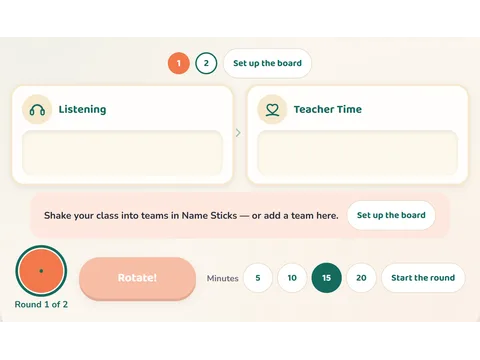
Center Board
Your rotation chart, running itself calmly
Try it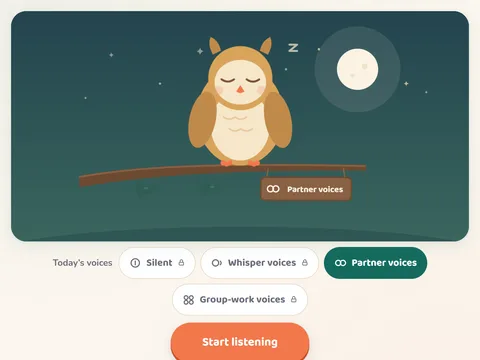
Hush Owl
Let the owl sleep — a calm picture of the room’s voices
Try it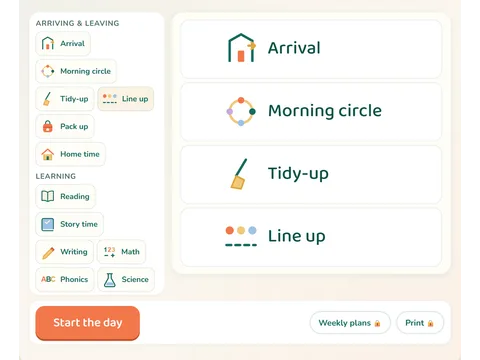
Our Day
The visual daily schedule that makes the whole day feel safe and knowable.
Try it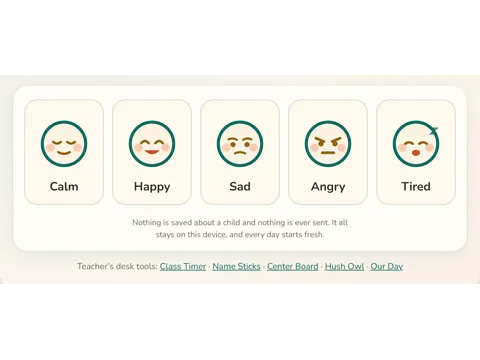
Feelings Check-In
How is your weather today? A kind arrival board for K-3 feelings
Try it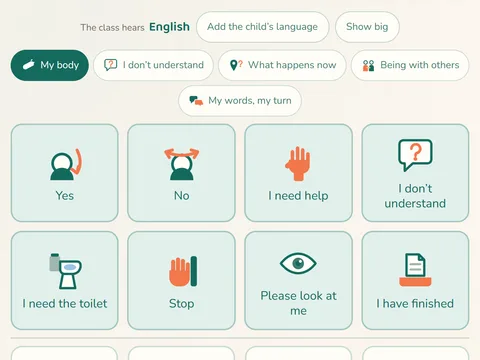
Say It Board
A child with no words yet taps a picture, and the room hears them.
Try it