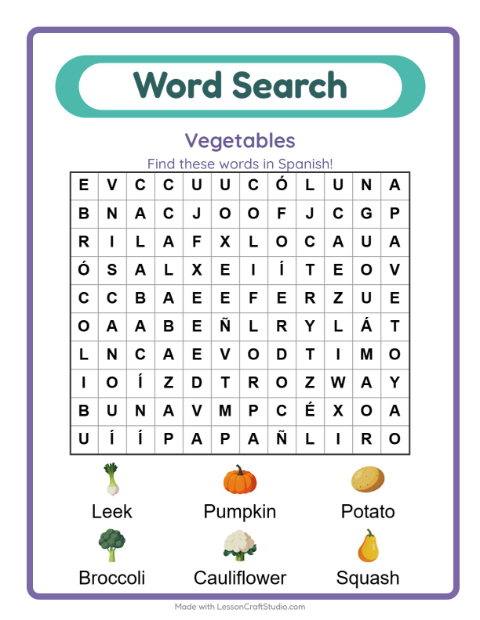
Learn Spanish: picture word search
Learn Spanish: Vegetables – Word Search for Kids
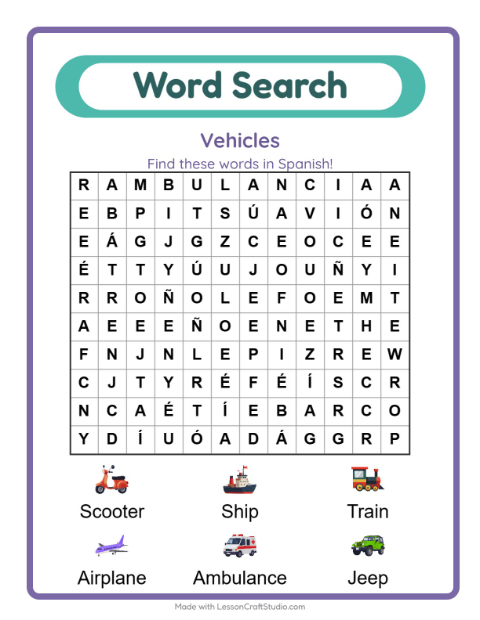
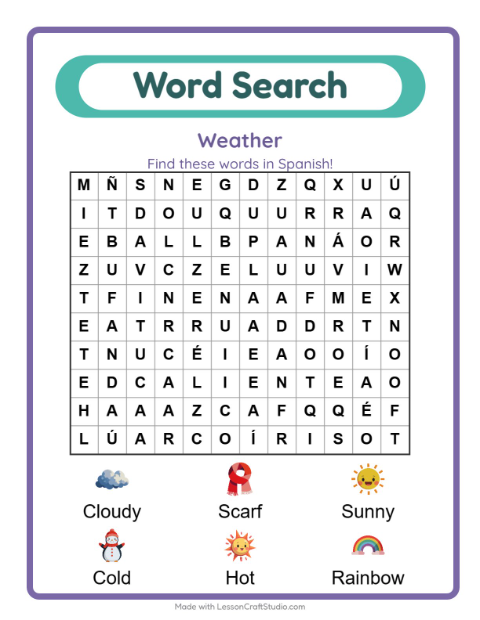
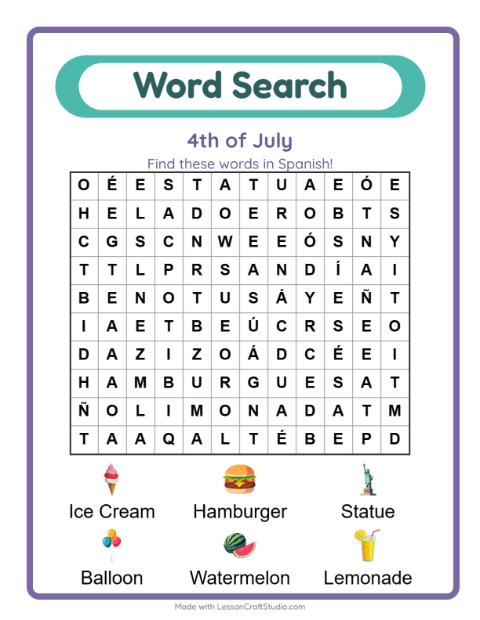
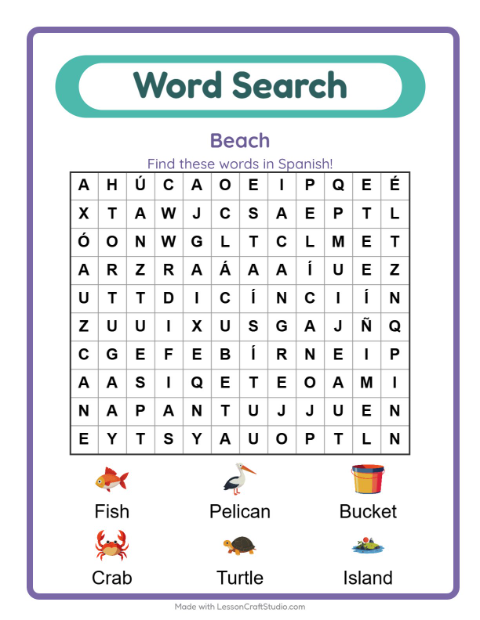
This puzzle asks your child to read and search in Spanish. The names of the carrots, peas and pumpkins are hidden across and down in a letter grid, and your child finds each one and circles it. Reading along the rows and columns, they watch for letters that spell a Spanish word they recognize. That on-sight recognition is the first kind of reading in a new language — your child sees a whole word among the letters and knows it. The picture list gives clear clues, so the only work is the search itself. Short, familiar Spanish words mean a beginner can hunt without anything being spelled out for them, and every circle is a small sign that a Spanish word is becoming truly familiar.
Early reading in a new language grows from recognizing familiar words quickly, and a word search rehearses exactly that. The picture list supplies the Spanish words for the carrots, peas and pumpkins, the grid hides them, and your child supplies the careful eyes that find them. Because your child reads across rows and down columns to spot each one, it builds the on-sight recognition that learning Spanish depends on. The words stay concrete and recognizable, and each Spanish word your child circles is a small proof that they can catch a known word in a busy field of letters — free to print or to play online. One friendly thing about Spanish: the words are said almost exactly the way they are written.
Does your child love searching for Spanish words? Then there is plenty more to hunt for! The word searches about the pets and the ones with summer things hide fresh pictures and new Spanish words to find and circle. And once your child is in the swing of it, a whole free collection built around the vegetables is ready and waiting — free to print or simply to play online. That way learning Spanish stays varied and gives a little fresh pleasure each day, all at your child’s own pace, with no timers and no scores.
What's inside
- 6 exercises
- 6 words
- Answer key included
- Print as PDF or play online — free, no sign-up
Updated June 13, 2026
The 6 words in this worksheet
- Puerro
- Coliflor
- Papa
- Calabaza
- Brócoli
- Calabacín