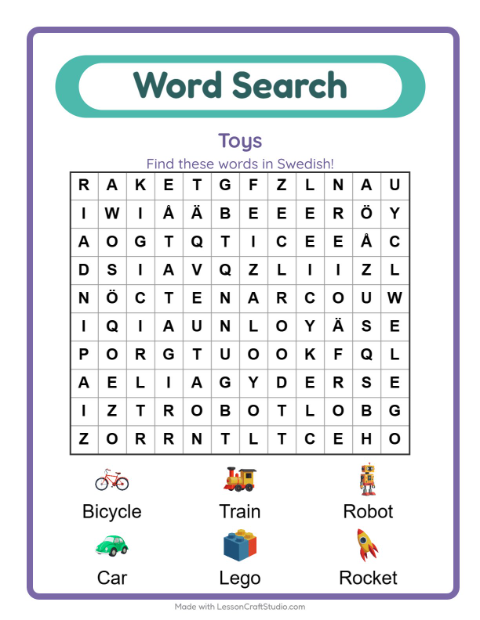
Learn Swedish: picture word search
Learn Swedish: Toys – Word Search for Kids
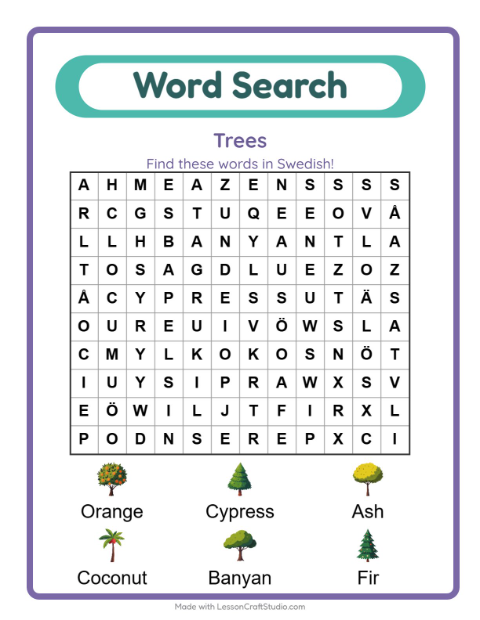
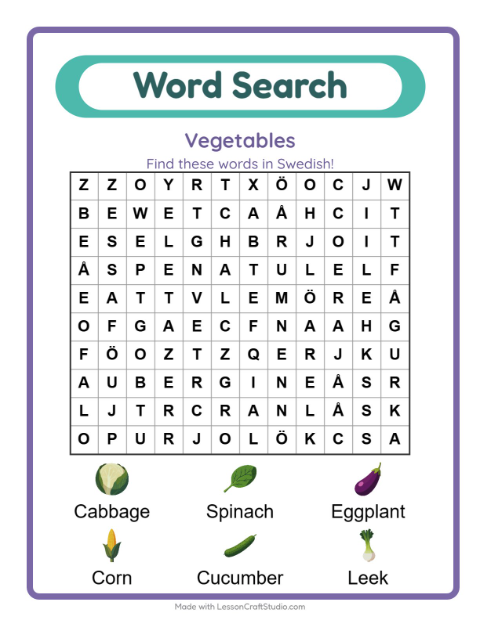
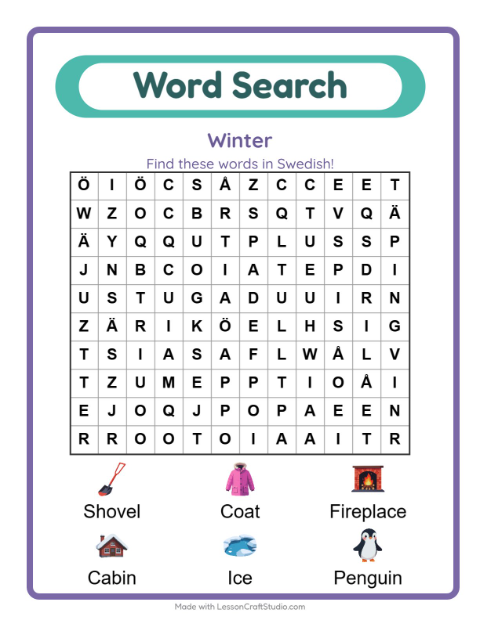
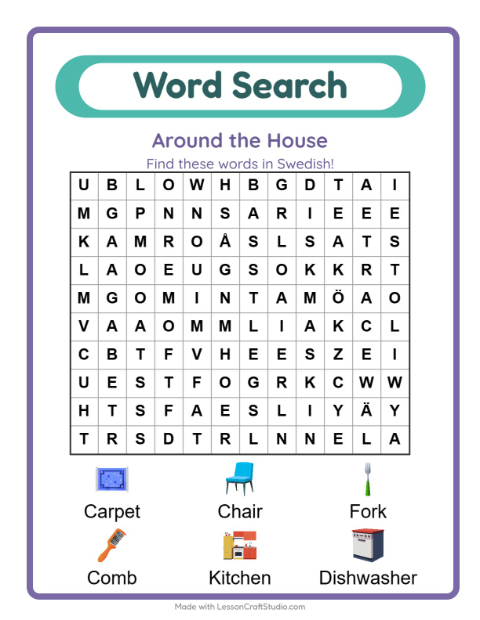
This word search is a gentle hunt for Swedish words. A grid of letters hides the names of the balls, blocks and teddies in Swedish, and your child searches across and down to find each one and circle it. A picture list shows what to look for, so the task is reading and spotting rather than guessing. Your child runs their eyes along the rows, recognizes a familiar Swedish word among the scattered letters, and rings it. Because the words are ones your child is meeting as they learn Swedish, the hidden words stay short and recognizable. Nothing is spelled from scratch here — the whole skill is catching a known Swedish word on sight. There is no timer and no score, just the small, real thrill of finding each Swedish word as it appears.
Recognizing a familiar word among many letters is the reading foundation a new-language learner builds on. A word search rehearses it cleanly: your child knows which Swedish words to find and has to spot them in the grid. Keeping the toys short and familiar means a child can scan a row, catch a Swedish word they know, and circle it, building real independence with the words they will use most. There is no timer here and no winning, only the calm, satisfying hunt that lets your child meet each written Swedish word again and make it their own. Swedish has three extra letters at the very end of its alphabet — a, a and o with little marks — that English does not use.
Does your child love searching for Swedish words? Then there is plenty more to hunt for! The word searches about the sweet treats and the ones with fruit hide fresh pictures and new Swedish words to find and circle. And once your child is in the swing of it, a whole free collection built around the toys is ready and waiting — free to print or simply to play online. That way learning Swedish stays varied and gives a little fresh pleasure each day, all at your child’s own pace, with no timers and no scores.
What's inside
- 6 exercises
- 6 words
- Answer key included
- Print as PDF or play online — free, no sign-up
Updated June 13, 2026
The 6 words in this worksheet
- Tåg
- Bil
- Cykel
- Lego
- Robot
- Raket