
Compound Words Worksheet
Split the Compound: Draw a Line Where the Second Word Starts
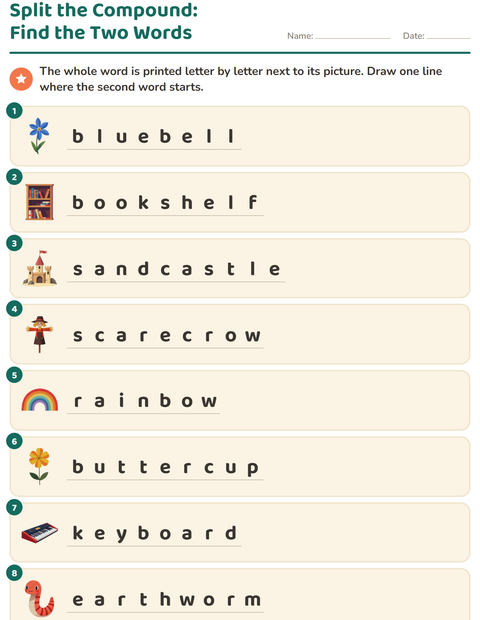
The whole word is already on the page in this 2nd grade compound-words face: eight compounds, one to a row, each spelled out in spaced letters along a baseline with its picture at the left. B l u e b e l l beside a blue flower, b o o k s h e l f beside a shelf of books, then sandcastle, scarecrow, rainbow, buttercup, keyboard and earthworm. The child reads the whole word, finds the place where the first word ends and the second begins, and draws one vertical line through that gap: blue | bell, book | shelf, sand | castle. One line per word, nothing to write.
Cutting a compound is the reverse of building one, and it is the skill that pays off when a child meets a long unfamiliar word in a book. A seam is a meaning unit, not a sound unit — scare | crow, not sca | recrow — so a child who has been dividing words into syllables has to switch from listening to thinking about what each piece means. The eight words are chosen so both halves are common: rain and bow, butter and cup, key and board. The teacher asks the child to say the two pieces after drawing the line; if the pieces are not both real words the line is in the wrong place, and the child can move it without erasing anything else.
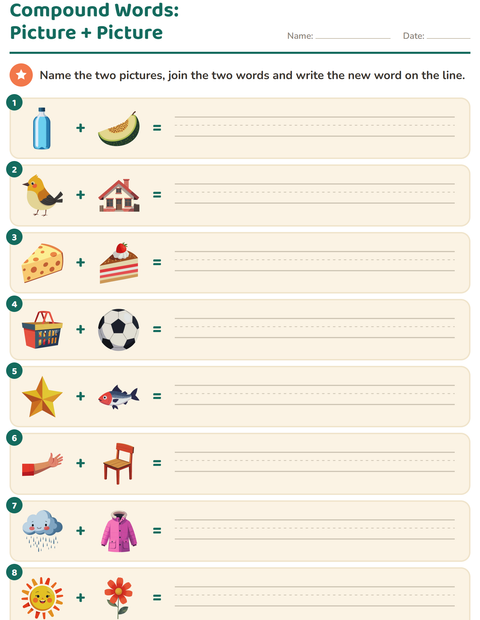
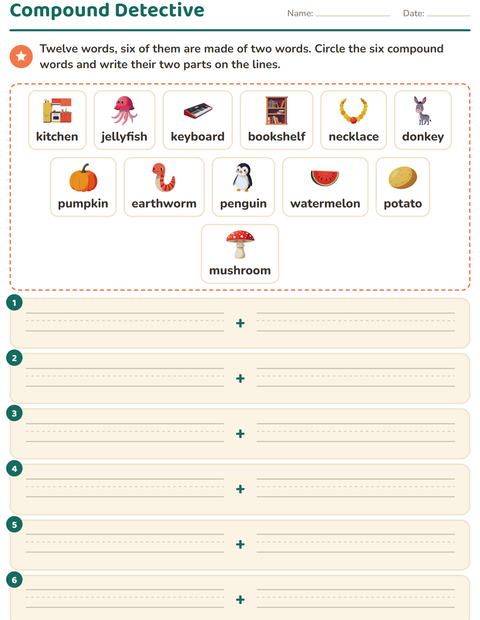
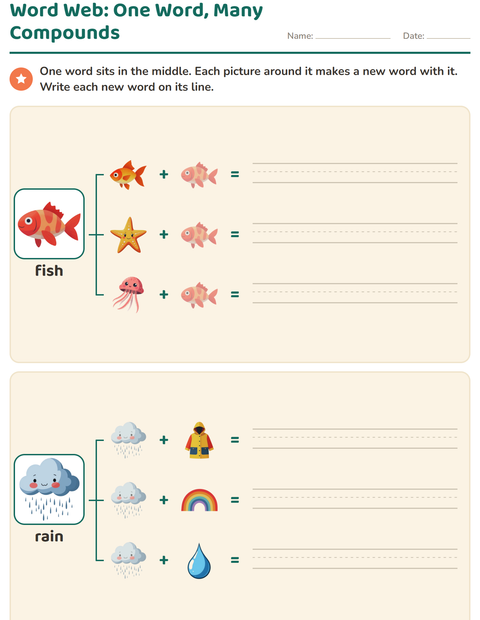
The letters are large and widely spaced so the line has room, and the page prints on one sheet. It belongs after the picture-plus-picture base page, which has the child build the same kind of word from two pictures, and before the compound-detective page, where some of the printed words are not compounds at all. The word-web page then shows how one first word — rain — starts several compounds.
What's inside
- 8 pictures
- Answer key included
- Print as PDF or play online — free, no sign-up
Updated October 2, 2026
More worksheets to try
Reading & Writing · grade 2
→
Made with the Compound Words Worksheets maker
Worksheet-maker page coming soon.