
The Complete Profit Margin Formula for Printable Sellers
Here is the full formula that accounts for every cost.
**Net Profit Per Sale = Sale Price - Platform Commission - Transaction Fee - Payment Processing - Printing Cost (if applicable) - Advertising Cost Per Sale - Tool Cost Per Sale**
**Profit Margin = (Net Profit Per Sale / Sale Price) x 100**
Let us apply this to a real example:
**Etsy digital download at $6.99:**
- Sale price: $6.99
- Etsy transaction fee (6.5%): -$0.45
- Etsy listing fee: -$0.20
- Payment processing (3% + $0.25): -$0.46
- Advertising (if using Etsy Ads, ~15% avg): -$1.05
- Printing cost: $0 (buyer prints)
- Net profit: $4.83 (without ads) or $3.78 (with ads)
- Margin: 69% (without ads) or 54% (with ads)
**KDP paperback at $8.99, 100-page B&W:**
- Sale price: $8.99
- KDP royalty rate (60%): $5.39
- Printing cost: -$2.05
- Net royalty: $3.34
- Margin: 37%
The difference is stark. Etsy digital downloads yield 54-69% margins while KDP paperbacks yield 37%. Both are viable, but the business model implications are very different.
Platform Fee Comparison: Etsy vs KDP vs Gumroad
Each platform takes a different slice of your revenue. Knowing these numbers precisely is essential.
**Etsy:**
- Listing fee: $0.20 per listing (renewed every 4 months or on each sale)
- Transaction fee: 6.5% of item price + shipping
- Payment processing: 3% + $0.25
- Etsy Ads (optional): 1-15% of sale (varies by bid and competition)
- Total platform cost on a $6.99 item: approximately $1.11 (15.9% without ads)
**Amazon KDP:**
- Royalty rate: 60% for paperbacks (you keep 60%, Amazon keeps 40%)
- Printing cost deducted from your 60%
- No listing fees
- No payment processing fees
- Total platform cost on a $8.99 item: $3.60 + $2.05 printing = $5.65 (62.8% total cost, 37.2% margin)
**Gumroad:**
- Platform fee: 10% flat
- Payment processing: included in the 10%
- No listing fees
- No monthly charges
- Total platform cost on a $6.99 item: $0.70 (10%)
- Net profit: $6.29 (90% margin)
**Summary margins on a $6.99 digital product:**
- Gumroad: 90%
- Etsy (no ads): 69%
- Etsy (with ads): 54%
- KDP is not directly comparable (physical product with printing costs)
Gumroad offers the highest margins but requires you to drive your own traffic. Etsy provides built-in traffic at a higher cost. KDP handles everything including printing and shipping but takes the largest cut.
Hidden Costs Most Sellers Forget to Include
Beyond platform fees, several costs erode your margins if you do not account for them.
**Tool subscriptions:** Canva Pro ($12.99/month), Adobe Creative Cloud ($54.99/month), or other design tools. Divide your monthly cost by the number of products you create that month. If you pay $12.99 for Canva and create 10 products, each product carries a $1.30 tool cost.
**Time cost:** This is the most commonly ignored expense. If you spend 2 hours creating a product that sells 50 copies at $5.99, your effective hourly rate is (50 x $5.99 x margin) / 2 hours. At 60% margin, that is $89.85/hour — excellent. But if that product only sells 5 copies, your rate drops to $8.99/hour — below minimum wage.
**Refund rate:** Digital products have a 1-5% refund rate. Every refund is a complete loss of the sale plus potential fees. If your refund rate is 3%, reduce your expected revenue by 3%.
**Advertising spend:** Etsy Ads, Pinterest promoted pins, and any paid promotion. Track your advertising cost per sale, not just total ad spend. If you spend $100 on ads and get 20 sales, your ad cost per sale is $5.
**Free trial and sample creation time:** Time spent creating marketing materials, watermarked samples, and listing assets is a business cost that should be amortized across your product sales.
**Tax obligations:** Self-employment tax (typically 15.3% in the US), income tax, and any state/local taxes on business income. Many sellers are shocked at tax time because they did not factor taxes into their margin calculations.
A realistic total margin after all hidden costs is typically 35-55% for Etsy sellers and 25-35% for KDP publishers. These are still healthy margins for a digital product business, but they are significantly lower than the headline platform margins suggest.
Pricing Strategy Based on Margin Targets
Set your prices based on target margins, not competitor copying.
**Step 1: Determine your minimum acceptable margin.**
For a side business: 40%+ is sustainable. For a full-time business: 50%+ is necessary to cover overhead and provide a livable income.
**Step 2: Calculate your break-even price.**
Take all your fixed costs per product (platform fees, tool costs per product) and divide by (1 - target margin percentage). Example: If fees total $1.50 per sale and you target 50% margin, your minimum price is $1.50 / 0.50 = $3.00.
**Step 3: Compare to market pricing.**
Research what competitors charge for similar products. If your break-even price is $3.00 and competitors charge $5.99-$7.99, you have room to price competitively while hitting your margin target.
**Step 4: Adjust for volume.**
Higher prices reduce sales volume but increase per-unit profit. Lower prices increase volume but decrease margin. Find the sweet spot where (price x volume x margin) is maximized.
**Pricing guidelines by product type:**
- Single worksheet sets (10-20 pages): $2.99-$4.99
- Standard bundles (50-100 pages): $4.99-$7.99
- Premium bundles (100+ pages): $7.99-$12.99
- Complete series bundles: $14.99-$24.99
- KDP activity books: $6.99-$12.99
These ranges are market-tested starting points. Your specific pricing should be calculated from your cost structure and margin targets, not copied from this or any other list.
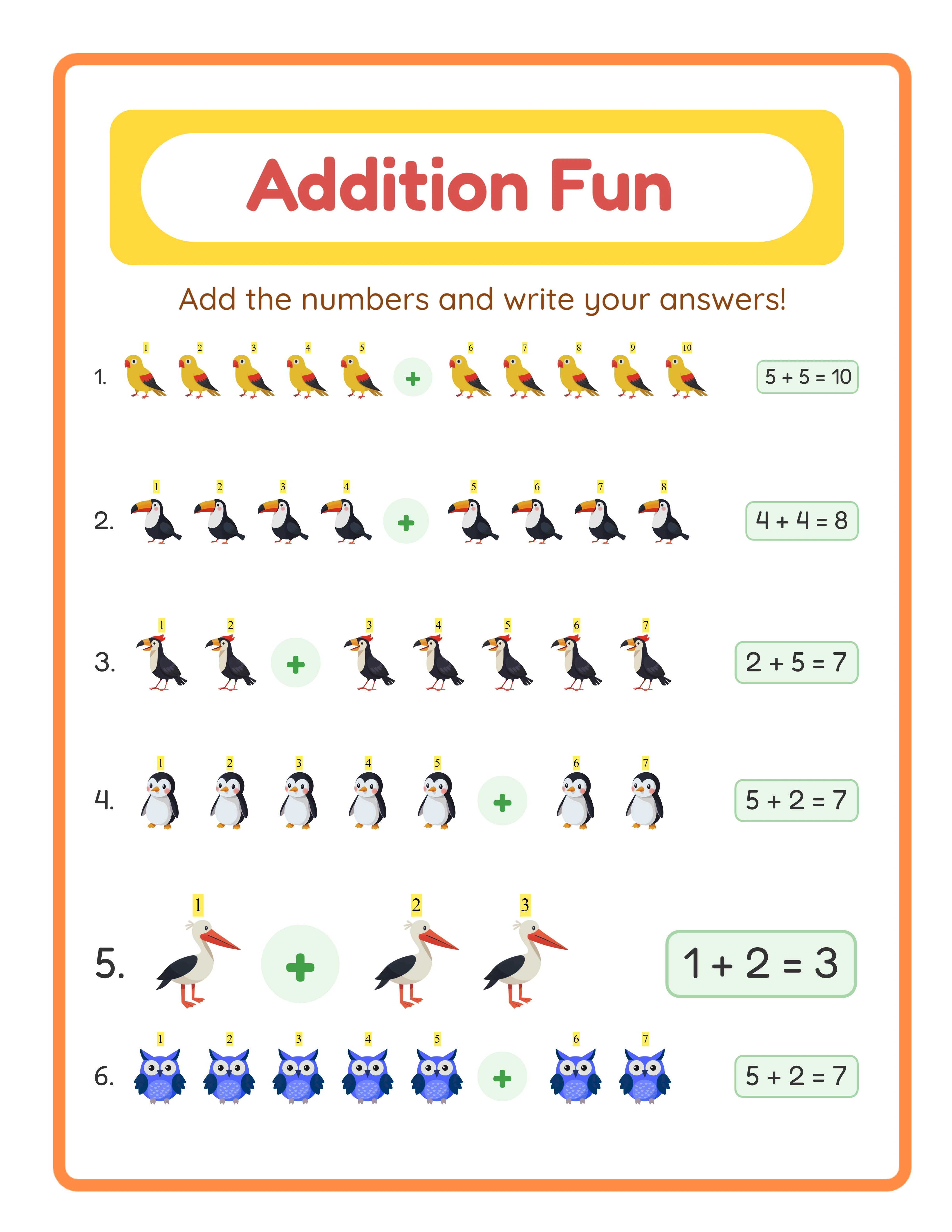
Every Worksheet Includes an Answer Key
Tracking Margins Across Your Product Catalog
A profitable business requires margin tracking at the product level, not just the shop level.
**Build a margin tracker spreadsheet with these columns:**
- Product name
- Platform (Etsy, KDP, Gumroad)
- Sale price
- Platform fees per sale
- Printing cost per sale (KDP only)
- Production time (hours)
- Total units sold (lifetime)
- Total revenue
- Total costs
- Net profit
- Profit margin percentage
- Effective hourly rate
**Review monthly.** Update your spreadsheet with actual sales data. Identify which products have the highest and lowest margins. Look for patterns — are certain product types, themes, or price points consistently more profitable?
**Key metrics to track:**
- Average margin per product: Target 45-55% for Etsy, 30-40% for KDP
- Effective hourly rate: Target $30+ per hour of production time
- Revenue per listing: Products under $50 lifetime revenue may not be worth maintaining
- Advertising ROAS (return on ad spend): Minimum 3:1 ratio
**Actions based on margin data:**
- Products below 30% margin: Raise prices, reduce costs, or discontinue
- Products above 60% margin: Consider advertising investment to increase volume
- Products with high volume but low margin: Test a price increase of $1-2
- Products with high margin but low volume: Improve listing SEO and photos
Data-driven pricing adjustments compound over time. A 5% margin improvement across 50 products adds up to significant annual revenue.
Margin Optimization Strategies
Once you understand your margins, here are concrete strategies to improve them.
**Reduce production time.** Batch creation, templates, and automated tools like worksheet generators dramatically reduce per-product creation time. If you cut production time from 3 hours to 30 minutes per product, your effective hourly rate multiplies by 6.
**Increase average selling price.** Add features that justify higher prices: answer keys, both paper sizes, multiple difficulty levels, commercial license. These additions cost minimal extra time but support $1-3 higher prices.
**Bundle existing products.** Take 5 products at $5.99 each and create a bundle at $19.99. The bundle requires zero additional creation time (just compile existing PDFs) but generates a higher-margin sale.
**Reduce advertising dependency.** Invest in Etsy SEO to drive organic traffic. Organic sales have no advertising cost, immediately improving margins by 10-15%. Use advertising strategically for new product launches, then let organic traffic sustain sales.
**Choose the right platform for each product.** Sell digital downloads on Gumroad (90% margin) and promote them from your own channels. Use Etsy for marketplace discovery. Use KDP for physical books. Each product should be on the platform where its margin is highest.
**Reduce refund rates.** Clear product descriptions, accurate mockup photos, and watermarked free trial samples all reduce refunds. Every prevented refund is a recovered sale at full margin.
**Raise prices on strong sellers.** Products with 50+ sales and 4.5+ star ratings have earned the right to a price increase. Test a $1 increase and monitor the impact on sales volume. Often, volume barely changes while margin improves on every sale.
Using Profit Calculators to Model Scenarios
Before creating any product, model its financial viability with a profit calculator.
**What to model:**
- Best case: Your target price at estimated sales volume
- Likely case: Market-average price at conservative volume
- Worst case: Lowest competitive price at minimum volume
If even the worst case produces acceptable margins and hourly rates, the product is worth creating. If the likely case is borderline, reconsider before investing production time.
**KDP-specific modeling:** Use a KDP royalty calculator to find the sweet spot between page count, trim size, and list price. Small changes in page count can shift your royalty by $0.50-$1.00 per sale. Model several scenarios before finalizing your book specifications.
**Etsy-specific modeling:** Calculate your break-even number of sales. If a product costs $10 in tools and 2 hours to create (at your target hourly rate), how many sales at $5.99 are needed to break even? If the answer is 20 sales and your average product sells 30 copies, the math works.
**Multi-platform modeling:** Model the same product on multiple platforms. A 100-page activity book might be more profitable as a KDP paperback at $9.99 or as an Etsy digital download at $6.99. Calculate both and list where the margin is best — or list on both platforms for maximum reach.
**The Profit Hub tool:** LessonCraftStudio's Profit Hub helps you model profit scenarios across platforms. Input your product specifications and compare margins on Etsy, KDP, and other platforms to make informed listing decisions.
Never create a product without running the numbers first. Fifteen minutes of financial modeling prevents months of selling an unprofitable product.