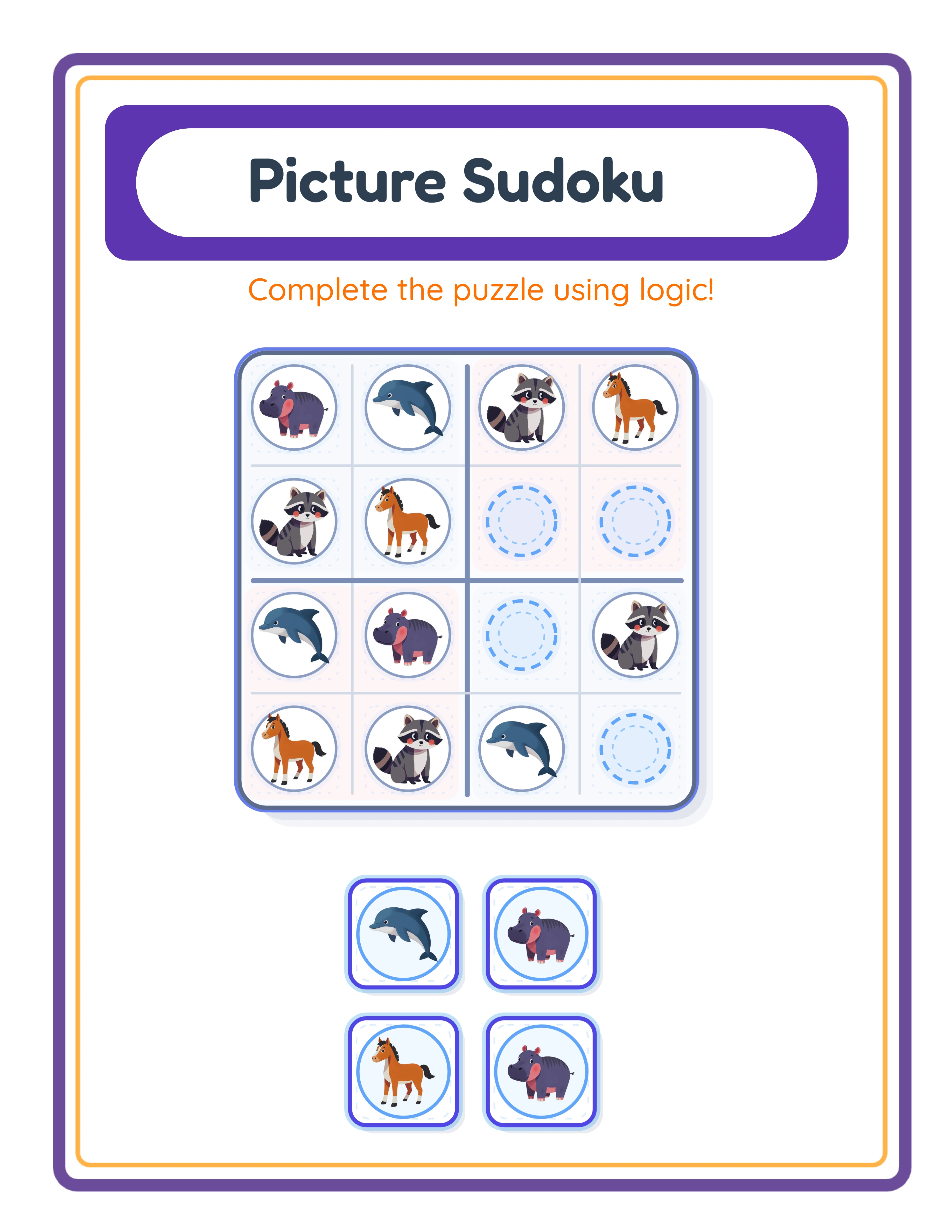
Picture Sudoku vs Classic Sudoku: Know Your Market
Before creating content, understand the two distinct sudoku markets on KDP.
**Classic number sudoku (adults and teens):**
The traditional 9x9 grid with numbers 1-9. This market is enormous but highly competitive. To succeed, you need either large-print editions (targeting seniors), extreme difficulty (targeting puzzle enthusiasts), or creative theming.
**Picture sudoku (kids ages 3-8):**
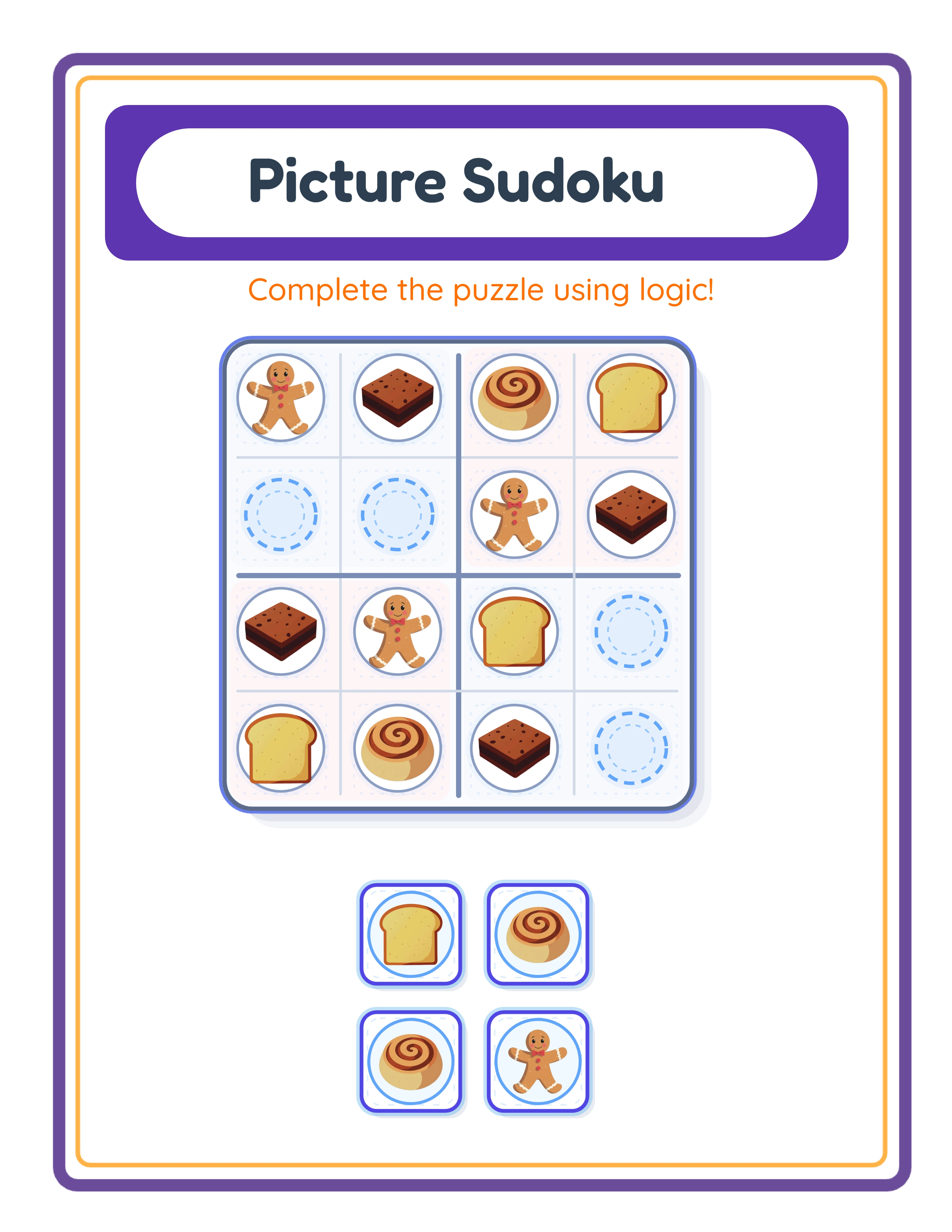
Instead of numbers, each cell contains a themed image. Children fill empty cells so that each row, column, and section contains one of each image. Grids are smaller (4x4 or 6x6) and the visual format makes logic puzzles accessible to pre-readers.
Picture sudoku for kids is significantly less competitive because:
- It requires themed image assets (barrier for most publishers)
- Most KDP publishers focus on the larger adult market
- Parents actively search for "picture sudoku" and "sudoku for kids" with less supply to meet demand
**Hybrid opportunity:**
Some publishers create "sudoku progression" books that start with 4x4 picture sudoku and advance through 6x6 to simple 9x9 number grids. These "learn sudoku" books have excellent review profiles because they grow with the child.
Using LessonCraftStudio's Sudoku Generator, you can create both picture-based and number-based sudoku with themed images, adjustable grid sizes, and automatic solution generation.
Step 1: Plan Your Sudoku Book Structure
A well-structured sudoku book keeps solvers engaged from the first puzzle to the last. Structure depends heavily on your target audience.
**Structure for a kids' picture sudoku book (80 pages, ages 4-6):**
- 2 pages: Title and "How to Play" instructions with visual examples
- 20 puzzles: 4x4 grid, easy (2-3 given images per row)
- 20 puzzles: 4x4 grid, medium (1-2 given images per row)
- 15 puzzles: 6x6 grid, easy (3-4 given images per row)
- 15 puzzles: 6x6 grid, medium-hard
- Answer keys: approximately 8 pages (4 solutions per page)
- Total: 80 pages
**Structure for an adult sudoku book (200 pages):**
- 2 pages: Title and difficulty guide
- 50 puzzles: Easy (35-40 given numbers)
- 50 puzzles: Medium (28-34 given numbers)
- 50 puzzles: Hard (22-27 given numbers)
- 25 puzzles: Expert (17-21 given numbers)
- Answer keys: approximately 23 pages
- Total: 200 pages
**Theme selection for picture sudoku:**
Choose themes with 4 or 6 easily distinguishable images:
- Animals: cat, dog, fish, bird (4x4) or add rabbit, turtle (6x6)
- Vehicles: car, truck, bus, train (4x4) or add boat, airplane (6x6)
- Fruit: apple, banana, orange, grape (4x4) or add strawberry, watermelon (6x6)
Images must be instantly recognizable at small sizes. Avoid images that look similar to each other — children need to quickly distinguish between them.
Step 2: Generate Sudoku Puzzles at Scale
Sudoku generation is algorithmic, which means a good generator can produce hundreds of unique, valid puzzles in minutes. The quality of the generator determines the quality of your book.
**Picture sudoku generation:**
1. Select your theme and images in the generator
2. Choose grid size (4x4 for beginners, 6x6 for intermediate)
3. Set difficulty by controlling how many images are pre-filled
4. Generate each puzzle individually to ensure uniqueness
5. Export both the puzzle page and solution page
**Classic sudoku generation:**
1. Select 9x9 grid format
2. Set difficulty level (controls given-number count)
3. Generate in batches of 10-25 puzzles
4. Export puzzle pages and solution pages
**Quality verification checklist:**
- Every puzzle must have exactly one valid solution (generators handle this)
- No two adjacent puzzles should look identical (vary the starting pattern)
- Difficulty should match the labeled difficulty level
- Picture images must print clearly at the cell size in your chosen trim
- Grid lines must be sharp and visible
**Production time estimates:**
- 70 picture sudoku puzzles: 30-40 minutes
- 175 classic sudoku puzzles: 20-30 minutes (classic grids generate faster)
Use the free trial with watermark to verify that generated puzzles print cleanly at your chosen grid size. Cell sizes below 0.4 inches can cause image clarity issues for picture sudoku.
Step 3: Page Layout and Formatting
Sudoku books need clean, precise layouts. The grid is the star of every page, and it must be large, clear, and easy to write in.
**Trim size recommendations:**
- Kids' picture sudoku: 8.5 x 11 inches (maximum grid size for small hands)
- Adult classic sudoku: 8.5 x 11 for large-print, 6 x 9 for standard
**Grid sizing guidelines:**
For 4x4 picture sudoku on 8.5 x 11 page:
- Grid: 5 x 5 inches (each cell 1.25 x 1.25 inches)
- Centered on the page with theme decoration around the border
- Puzzle number and difficulty stars at top
For 6x6 picture sudoku:
- Grid: 5.4 x 5.4 inches (each cell 0.9 x 0.9 inches)
- Images must be recognizable at 0.9 inches
For 9x9 classic sudoku:
- Grid: 6.3 x 6.3 inches on 8.5 x 11 page (each cell 0.7 inches)
- Grid: 4.5 x 4.5 inches on 6 x 9 page (each cell 0.5 inches — tight but workable)
**Formatting specifications:**
- Interior: Black and white for classic sudoku, color for picture sudoku
- No bleed
- Margins: 0.5 inches minimum, 0.75 inches gutter
- Grid line weight: 2pt for section borders, 0.75pt for cell borders
- Page numbers on every page
- One puzzle per page (never two per page — solvers hate cramped grids)
**Answer key layout:**
- 4 completed grids per answer key page
- Clearly labeled with puzzle numbers
- Reduced grid size (about 50% of the puzzle page size)
- For picture sudoku, answer keys can use initials instead of images to save space
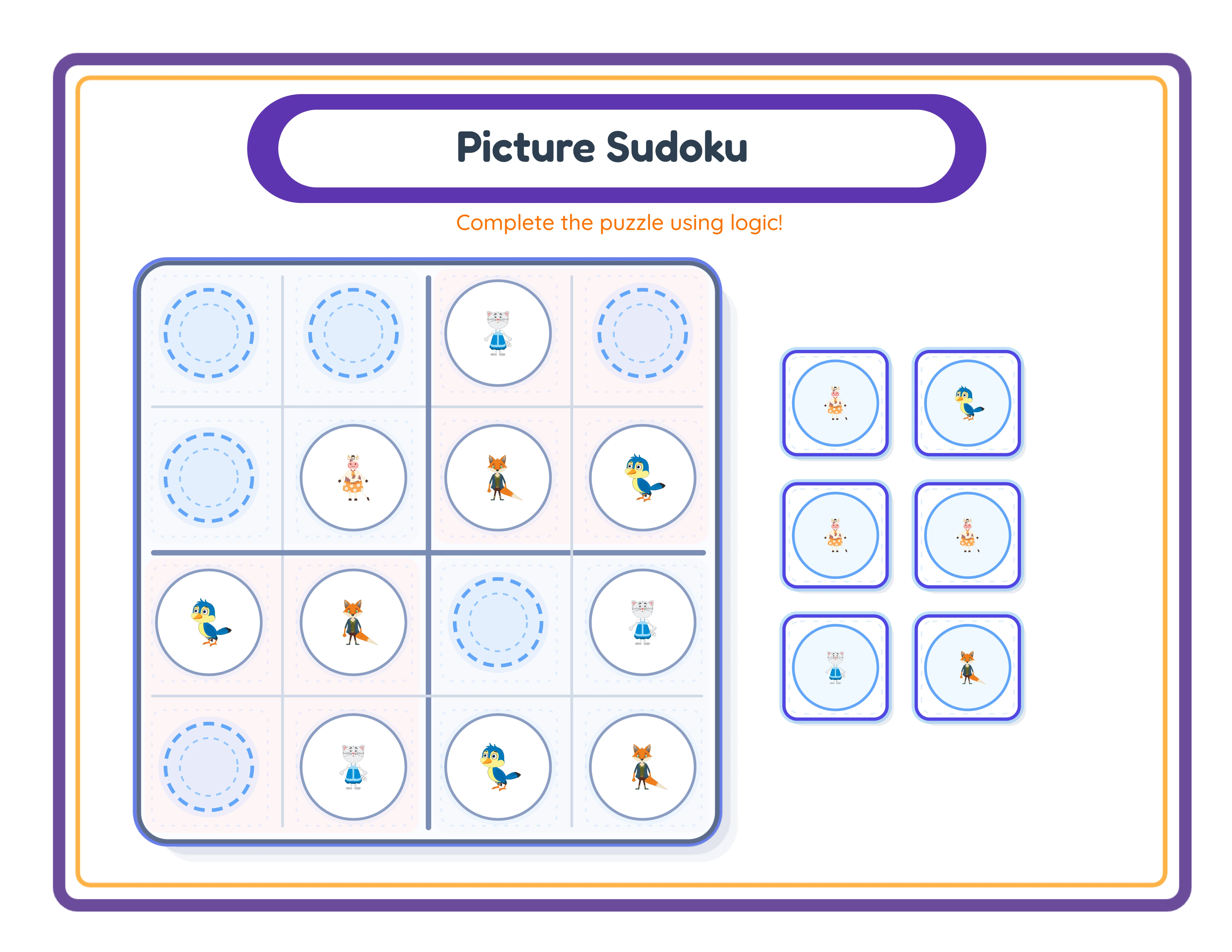
One Generator — Three Product Tiers
Create an entire product line from a single tool
beginner level
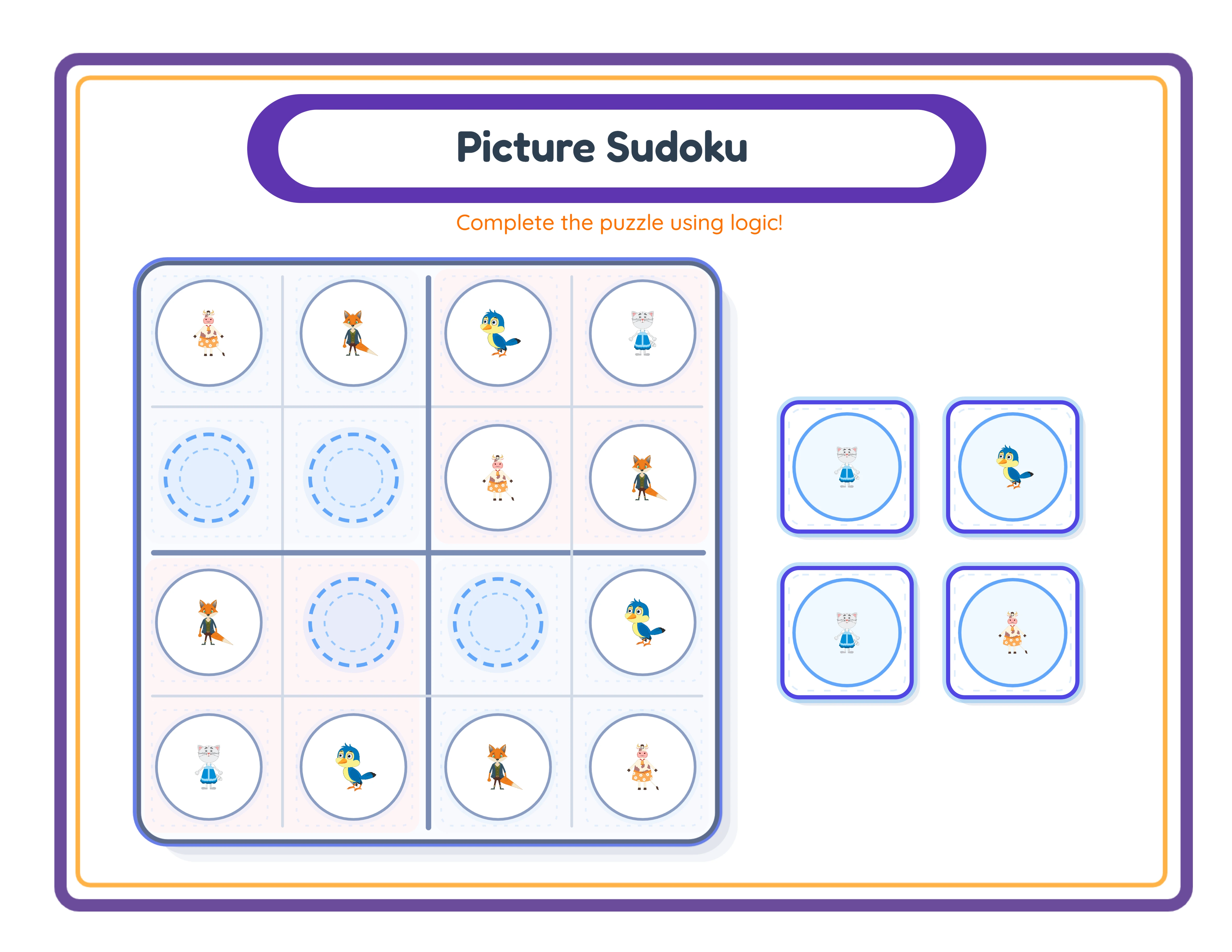
intermediate level
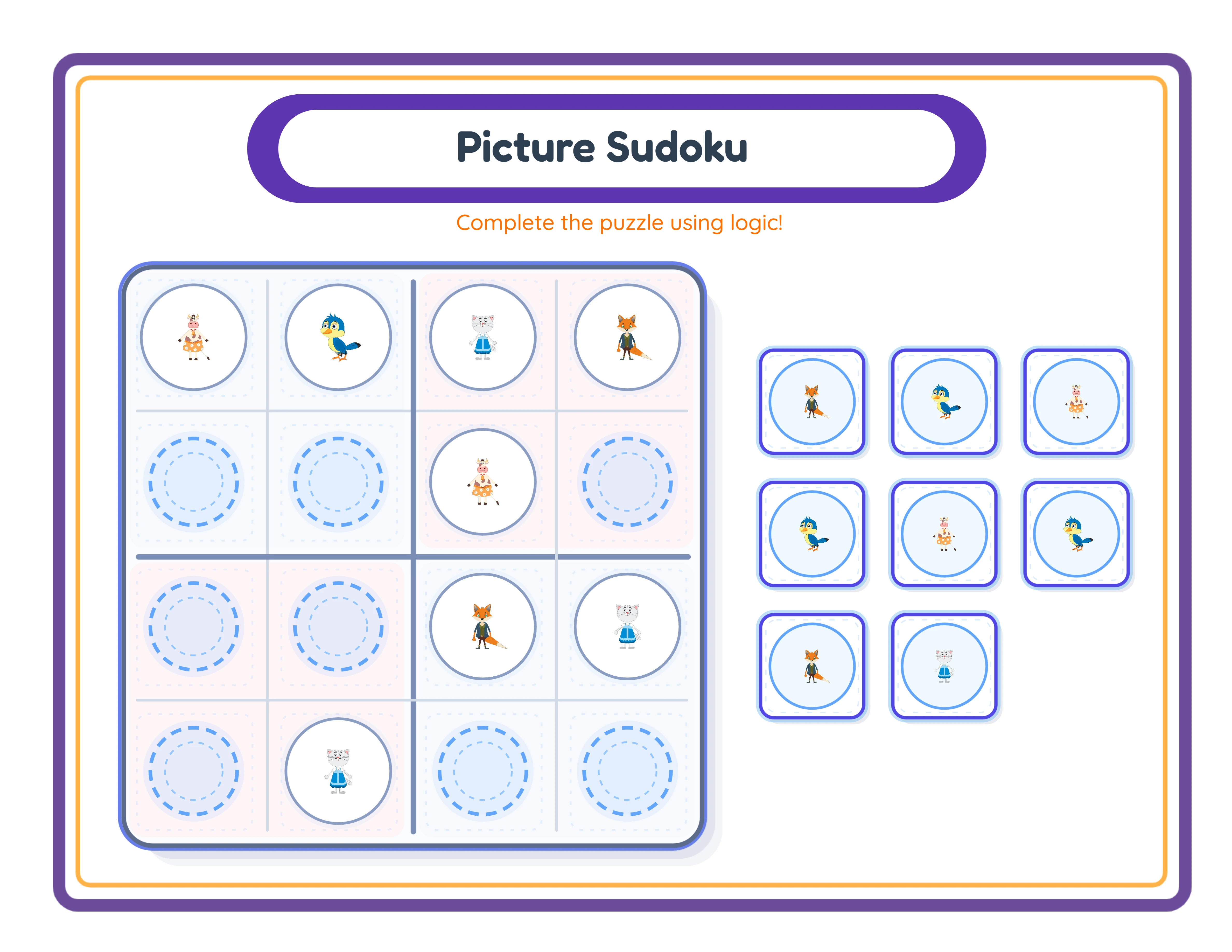
advanced level
→Increasing difficulty→
Step 4: Cover Design and KDP Upload
Your cover communicates the puzzle type, difficulty level, and target audience in a split second.
**Cover design for kids' picture sudoku:**
- Bright, playful colors
- Show a sample 4x4 grid with themed images clearly visible
- Age range prominently displayed ("Ages 4-6")
- Theme illustrations around the border
- "With Answers" badge (reassures parents)
**Cover design for adult sudoku:**
- Clean, sophisticated design
- Grid pattern element in the background
- Difficulty level prominently displayed ("Easy to Expert")
- Puzzle count highlighted ("200 Puzzles")
- "Large Print" if using 8.5 x 11 format
**KDP upload settings:**
- Title: "[Theme] [Sudoku Type] for [Audience] Ages [Range]"
- Subtitle: "[Puzzle count] Puzzles | [Difficulty levels] | Answer Keys Included"
- Categories: Puzzles & Games > Sudoku, plus age-appropriate subcategory
- Keywords: Fill all 7 boxes targeting specific search phrases
**Pricing:**
Black-and-white adult sudoku (200 pages, 6 x 9): printing $3.80, list at $7.99-$8.99
Color kids' picture sudoku (80 pages, 8.5 x 11): printing $5.60, list at $9.99-$11.99
Kids' picture sudoku commands higher prices relative to page count because of the color interior and specialized content. Parents are accustomed to paying $10-$12 for quality kids' puzzle books.
Step 5: Scaling Your Sudoku Publishing Business
Sudoku books scale exceptionally well because the generation process is fast and the market supports many variations.
**Scaling strategy for picture sudoku:**
Create one book per theme, each with the same difficulty progression:
- Dinosaur Picture Sudoku Ages 4-6
- Ocean Animals Picture Sudoku Ages 4-6
- Farm Animals Picture Sudoku Ages 4-6
- Space Picture Sudoku Ages 4-6
- Vehicles Picture Sudoku Ages 4-6
That is 5 titles from one format with different image themes. Then create the same 5 themes for Ages 6-8 with larger grids — now you have 10 titles.
**Scaling strategy for classic sudoku:**
- Easy Sudoku Large Print (for seniors)
- Medium Sudoku for Beginners
- Hard Sudoku Challenge
- Expert Sudoku Extreme
- Sudoku Variety Pack (all difficulty levels)
Add seasonal covers: "Christmas Sudoku," "Summer Sudoku," "Travel Sudoku." Same interior, different cover and metadata — seasonal titles catch holiday gift buyers.
**Revenue projections:**
- 5 picture sudoku titles at $10.99, 1 sale/day each: $12.50/day, $375/month
- 10 picture sudoku titles at $10.99, 1 sale/day each: $25/day, $750/month
- Add 10 classic sudoku titles at $8.99, 1.5 sales/day each: $27/day, $810/month
- Combined 20 titles: $52/day, $1,560/month
The picture sudoku niche has less competition and higher margins. Prioritize it over classic sudoku for your first titles, then expand into the adult market with your established workflow.