Tutorial
1
Understanding Picture Cipher Puzzle Mechanics
Before creating products, you need to understand what makes picture cryptograms unique and why buyers seek them out.
In a traditional cryptogram, each letter is replaced by a different letter (A becomes X, B becomes Q, etc.). Solvers use letter frequency analysis and pattern recognition to decode the message. This format requires strong English literacy and makes little sense to non-English speakers.
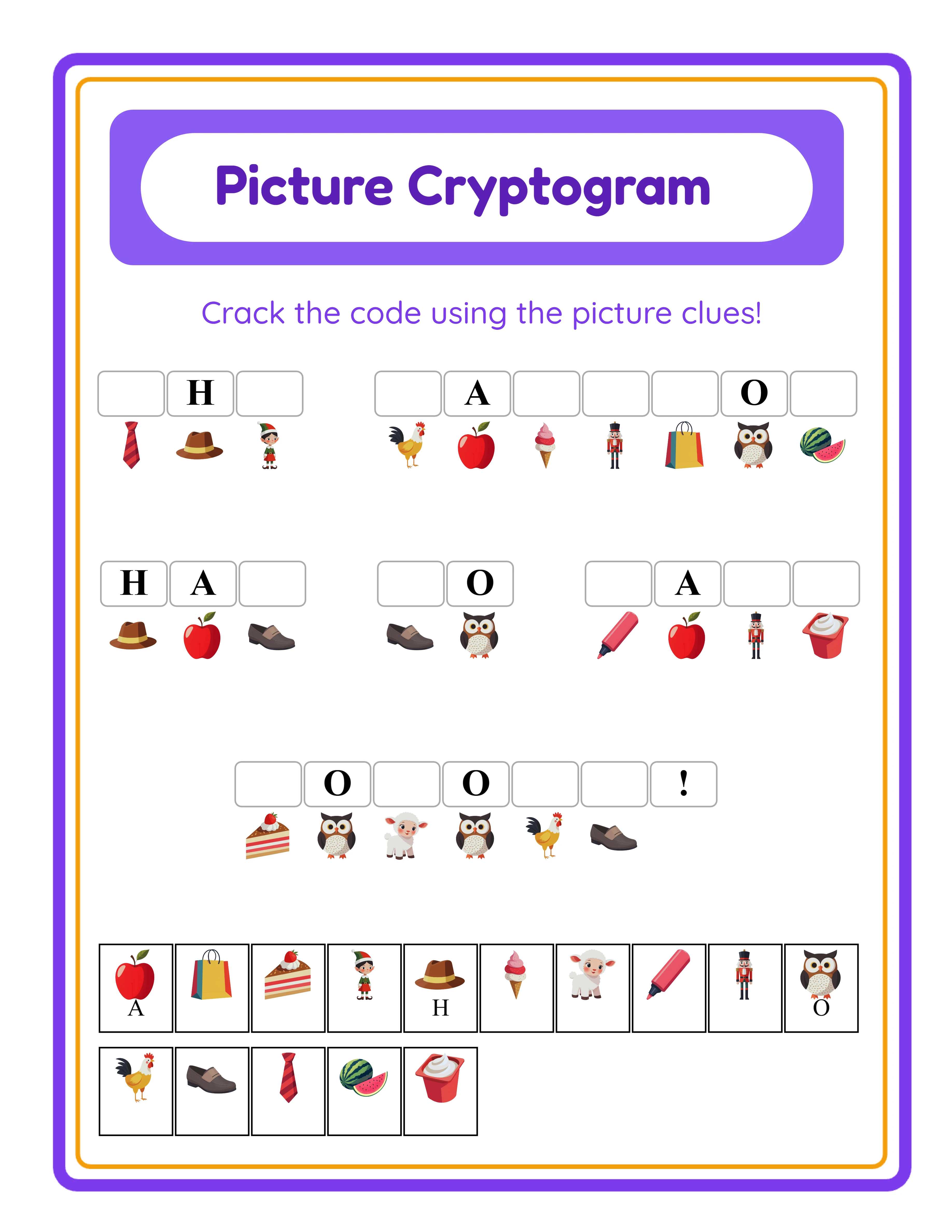
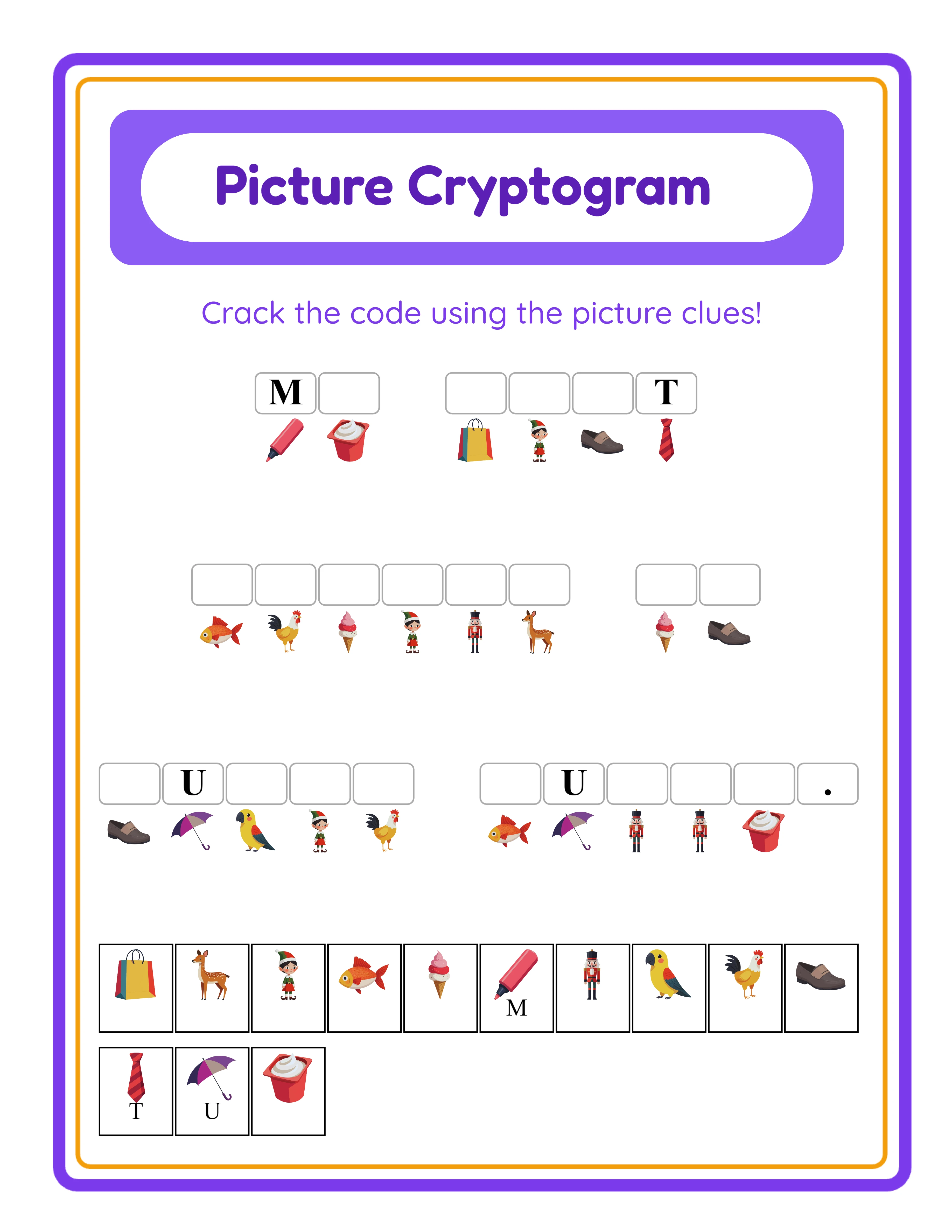
In a picture cryptogram from the LessonCraftStudio generator, each letter is replaced by a small themed image. If the theme is "animals," A might be represented by a cat icon, B by a dog icon, C by a fish icon, and so on. Solvers use a decoder key at the bottom of the page to match pictures to letters and spell out the hidden word or phrase.
Difficulty controls:
Number of unique symbols: Fewer unique pictures (8 to 12) makes puzzles easier because solvers have fewer mappings to track. More unique pictures (15 to 26) increases difficulty significantly.
Word length: Short words (3 to 5 letters) are easier to decode. Longer words and phrases (8+ letters) require sustained concentration and are suitable for advanced solvers.
Hints: The generator can pre-fill certain letters as hints, reducing the decoding work. More hints make easier puzzles; fewer hints create harder challenges.
Theme coherence: When the decoded word matches the picture theme (decoding animal pictures to spell "ELEPHANT"), the puzzle has a satisfying thematic connection that buyers appreciate.
These mechanics create a puzzle format that is simultaneously educational (letter recognition, spelling, pattern matching), entertaining (the "aha" moment of decoding), and visually appealing (colorful themed images). All three qualities drive Etsy sales.
2
Generating Cryptogram Puzzles for Etsy Products
Open the LessonCraftStudio cryptogram generator and configure your first product. Here is the optimal setup for Etsy-ready cryptogram worksheets.
Theme selection: Choose from the 104 themed image collections. The pictures from your selected theme serve double duty -- they become the cipher symbols AND the visual appeal of the finished worksheet. Animal themes are the strongest performers for initial products because of their universal appeal.
Difficulty configuration: For your first products, create 3 difficulty levels:
Easy: 8 to 10 unique symbols, short words (3 to 5 letters), 2 to 3 pre-filled letter hints. Target ages 5 to 8 and puzzle beginners.
Medium: 12 to 15 unique symbols, medium words (5 to 7 letters), 1 hint. Target ages 8 to 12 and casual puzzle solvers.
Hard: 18 to 26 unique symbols, long words or phrases (8+ letters), no hints. Target ages 12+ and dedicated puzzle enthusiasts.
Page layout: Each puzzle page should include the cipher puzzle at the top, the decoder key reference at the bottom, and the puzzle number. The generator handles this layout automatically.
Answer key generation: The generator creates answer keys that show the complete decoded solution. Include answer keys at the end of every product -- Etsy buyers specifically search for "with answer keys" and listings mentioning answer keys convert higher.
Export settings: Export at 300 DPI as PDF. Each puzzle exports as a separate page, which you compile into a multi-page product file.
Production speed: A single cryptogram puzzle takes approximately 3 to 5 minutes to generate, preview, and export. A 20-puzzle product pack takes 60 to 90 minutes of generation time. With answer keys and a cover page, the complete product file contains 40 to 45 pages.
3
Positioning Cryptograms in a Low-Competition Niche
The low-competition nature of the cryptogram niche on Etsy requires a specific positioning strategy that differs from high-competition categories.
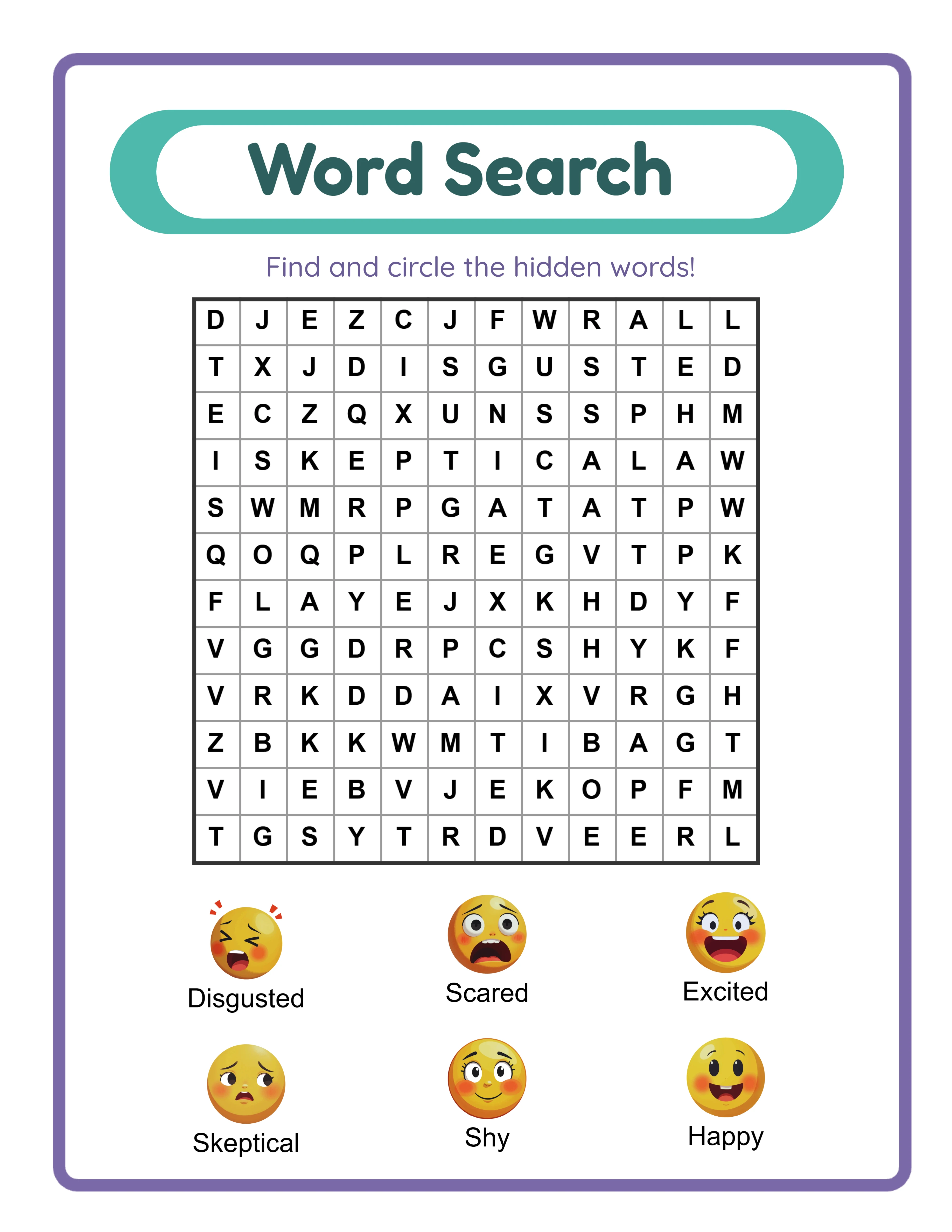
In high-competition niches like word searches, your primary challenge is standing out among thousands of similar listings. In the cryptogram niche, your primary challenge is educating buyers about what the product is and why they want it. Many potential buyers do not know to search for "cryptogram" specifically.
Keyword bridge strategy: Target keywords that buyers already use and connect them to your cryptogram products. Buyers search for "code breaking puzzles for kids," "secret message worksheets," "decoder puzzles printable," and "cipher activities." These are all descriptions of what your cryptogram puzzles do, expressed in terms non-puzzle-enthusiast buyers would use.
Visual education: Your listing photos must show the puzzle being solved. Include a photo or diagram showing: (1) the cipher puzzle with picture symbols, (2) the decoder key, (3) the solved answer. This three-step visual immediately communicates the concept to buyers who have never encountered a picture cryptogram.
Comparison positioning: In your product description, explain the difference: "Unlike word searches where you find hidden words in a grid, cryptogram puzzles challenge you to crack a code -- each picture represents a letter, and you decode the hidden word using the picture key. It is like being a secret agent solving coded messages." This explanation converts curious browsers into buyers.
Niche authority building: Because the cryptogram niche is small, you can become the dominant seller relatively quickly. Aim to be the seller with the most cryptogram listings, the most reviews, and the most variation (themes, difficulty levels, languages). In a niche with 20 competing listings, having 50 optimized listings makes you the category leader.
4
Etsy Listing Optimization for Cryptogram Products
Optimizing cryptogram listings requires targeting both niche-specific and adjacent keywords to capture demand from multiple search paths.
Title formula: "[Puzzle Type] -- [Theme] -- [Page Count] -- [Key Feature] -- [Audience]"
Example: "Cryptogram Puzzles for Kids -- Animal Secret Code -- 20 Pages with Answer Keys -- Printable Decoder Game -- Ages 6-10"
All 13 Etsy tags should be used:
1. cryptogram puzzles printable
2. secret code worksheet
3. decoder puzzle kids
4. cipher activity pages
5. code breaking game
6. picture cryptogram
7. educational puzzle printable
8. [theme] puzzle (e.g., "animal puzzle")
9. brain teaser worksheets
10. homeschool puzzle activity
11. critical thinking printable
12. screen-free activity
13. printable puzzle pack
Description structure (400 to 600 words):
Paragraph 1: What the buyer gets (page count, theme, difficulty level, answer keys included)
Paragraph 2: How the puzzle works (brief explanation of the picture cipher mechanic)
Paragraph 3: Who it is for (age range, use cases -- homeschool, classroom, rainy day activity, party game)
Paragraph 4: Product specifications (300 DPI, Letter/A4 size, instant download)
Paragraph 5: Your other related products (cross-sell word searches, crosswords)
Category selection: List under Toys & Games > Puzzles or Craft Supplies & Tools > Printables. The Puzzles category has higher buyer intent but more competition. Test both and track which generates more traffic.
Pricing: Cryptogram products can command a slight premium over word searches because of lower competition and perceived uniqueness. A 20-page cryptogram pack at $4.50 to $5.50 performs well, compared to similar word search packs at $3.50 to $4.50.
5
Leveraging 11-Language Support for International Expansion
Picture cryptograms have a unique advantage for international selling: the puzzle mechanism is inherently visual, making language expansion simpler than for any other puzzle format.
When you generate a cryptogram in German, the decoder key maps pictures to German letters, and the solution spells a German word. But the pictures themselves are identical. A cat picture is a cat picture in any language. This means your listing photos work across all languages -- only the text overlay on the listing thumbnail needs updating.
Language-specific market analysis:
German (amazon.de, Etsy.com/de): German puzzle enthusiasts actively search for "Kryptogramm Ratsel" and "Geheimcode Ratsel." Competition is near zero. Even 1 to 2 sales per day at EUR 4.50 adds meaningful monthly revenue.
French: "Cryptogramme" is recognized in French. Target "jeux de decodage" and "activites de code secret." The francophone market includes France, Belgium, Switzerland, and Quebec.
Spanish: "Criptograma" and "juegos de codigo secreto" are relevant search terms. The Spanish-speaking market is enormous -- Spain plus all of Latin America.
Portuguese: Brazil alone has a significant Etsy buyer base for educational printables. "Criptograma" and "atividades de decodificacao" are search entry points.
Dutch, Swedish, Danish, Norwegian, Finnish: These markets are almost completely unserved for cryptogram puzzles. Even a handful of listings in each language positions you as the only seller in the niche.
Production workflow: Generate your English cryptogram pack first. Switch the generator's language selector and regenerate using the same theme and difficulty settings. Each language version takes 15 to 20 minutes. A 20-page product in all 11 languages takes approximately 3 to 4 hours total.
Multilingual listing tips: Create separate Etsy listings for each language. Use native-language titles and tags. Mention the language prominently in the title and first listing photo. Example: "Kryptogramm Ratsel fur Kinder -- Tiere Geheimcode -- 20 Seiten mit Losungen"
6
Creating Difficulty Tiers as Separate Products
Each difficulty level of your cryptogram puzzles targets a different buyer segment and justifies a separate listing. This is not just product multiplication -- it is genuine market segmentation.
Easy cryptograms (ages 5 to 8): These use 8 to 10 unique picture symbols, short target words, and pre-filled letter hints. Market to parents of young children with keywords like "first code puzzle," "beginner decoder activity," and "pre-reader puzzle." Include large, clear picture symbols and generous spacing. Parents searching for "educational activities for kindergarten" and "pre-reading skills printable" are your buyers.
Medium cryptograms (ages 8 to 12): Use 12 to 15 unique symbols, medium-length words, and minimal hints. Market to elementary-age children and families with keywords like "code breaking for kids," "secret message puzzle," and "elementary brain teaser." This is your broadest difficulty tier and should have the most product variety.
Hard cryptograms (ages 12+): Use 18 to 26 unique symbols, long words or full phrases, and no hints. Market to adult puzzle enthusiasts and teens with keywords like "challenging cryptogram," "adult brain teaser printable," and "hard cipher puzzle." Mention cognitive benefits for the senior market: "brain exercise," "mental sharpness," "cognitive workout."
Expert cryptograms: Use the maximum symbol count, multi-word phrases, and zero hints. Market exclusively to dedicated puzzle enthusiasts with keywords like "expert cryptogram," "advanced cipher challenge," and "puzzle book for adults." Price these 10% to 15% higher than other difficulty levels -- buyers choosing "expert" self-select for premium pricing.
Each theme from the 104 collections becomes 4 separate Etsy listings across difficulty levels. Animal easy, animal medium, animal hard, animal expert -- that is 4 products from one theme. Across just 10 themes, you have 40 individual listings.
7
Building a Cryptogram-Centered Puzzle Store
A focused Etsy store built around cryptograms and complementary puzzle formats creates niche authority that generalist puzzle shops cannot match.
Store structure: Organize your Etsy shop sections around the buyer journey:
Section 1: "Easy Cryptograms (Ages 5-8)" -- All beginner-level products
Section 2: "Cryptograms for Kids (Ages 8-12)" -- Medium difficulty products
Section 3: "Challenging Cryptograms (Teen & Adult)" -- Hard and expert products
Section 4: "Puzzle Variety Packs" -- Bundles combining cryptograms with word searches and crosswords
Section 5: "Holiday & Seasonal Puzzles" -- Themed products organized by season
Section 6: "International Puzzles" -- Non-English language products
Complementary products: Use the LessonCraftStudio word search and crossword generators to create companion products using the same 104 themes. A buyer who enjoys your animal cryptogram often wants an animal word search and animal crossword too. Cross-linking between listings drives internal discovery.
Niche branding: Position your store as "the cryptogram puzzle specialists." Use consistent branding that emphasizes code-breaking and decoder themes. Your store banner, logo, and listing photo style should all reinforce this identity.
Content marketing: Create a simple Pinterest board sharing sample cryptogram puzzles (using free trial with watermark outputs). Pinterest is the top traffic source for printable products and puzzle content performs exceptionally well. A single viral pin can drive hundreds of shop visits.
Seasonal rotation: Create cryptogram versions for every holiday -- Halloween secret codes, Christmas decoder puzzles, Valentine cipher messages. Holiday-themed cryptograms combine the novelty of the puzzle format with seasonal demand spikes.
Growth milestone targets:
Month 3: 50+ listings, first 10 reviews
Month 6: 100+ listings, 30+ reviews, $300+ monthly revenue
Month 12: 200+ listings (including international), 100+ reviews, $800+ monthly revenue
Month 18: 300+ listings, niche authority established, $1,500+ monthly revenue