Tutorial
1
Why Picture Sudoku Is a Better KDP Opportunity Than Number Sudoku
Understanding the competitive landscape helps you position your books for maximum sales potential.
Number sudoku saturation: Amazon has over 50,000 number sudoku book listings. The top sellers have thousands of reviews and years of sales history. Breaking into page one of search results for "sudoku book" as a new publisher is nearly impossible without significant advertising spend.
Picture sudoku scarcity: Search for "picture sudoku for kids" or "image sudoku puzzle book" and the results thin dramatically. Fewer than 500 listings compete in this space, and most have fewer than 50 reviews. This is the kind of competitive gap that new KDP publishers can exploit.
Age-appropriate appeal: Traditional 9x9 number sudoku is too complex for children under 8. The 4x4 picture grid format is perfect for ages 3 to 8 -- a massive market segment that parents actively purchase activity books for. Your picture sudoku books compete with coloring books and activity workbooks, not with adult number sudoku.
Visual differentiation: When a buyer scrolls through KDP search results, a picture sudoku book with colorful animal images on the cover stands out from rows of identical number-grid covers. Visual distinctiveness drives higher click-through rates from search results.
Multilingual by default: Number sudoku works in any language because numbers are universal. But picture sudoku goes further -- you can add vocabulary labels beneath each image, turning the puzzle into a vocabulary learning tool. A farm animals sudoku with German labels ("Kuh," "Schwein," "Pferd") appeals to German-speaking families and language learners simultaneously.
2
Understanding KDP Requirements for Picture Sudoku Books
Amazon KDP has specific technical requirements that your manuscript must meet.
Trim size options: For activity and puzzle books, the most popular sizes are 8.5 x 11 inches (US Letter -- the default for kids' activity books), 8 x 10 inches, and 6 x 9 inches. US Letter gives maximum grid area and is what parents expect when they purchase a kids' puzzle book.
Page count minimums: KDP requires at least 24 pages for paperback. For a picture sudoku book, aim for 50 to 100 puzzle pages plus 50 to 100 answer key pages. A 100-puzzle book runs approximately 200 total pages -- substantial enough to justify $6.99 to $7.99 pricing.
Interior type: Choose "black and white with cream paper" for the lowest printing cost, or "premium color" if your puzzles include colored images. Black and white interiors cost approximately $0.012 per page; color interiors cost approximately $0.07 per page. For a 200-page book, that is $2.40 vs $14.00 in printing costs -- a massive difference in per-sale royalty.
Bleed settings: Select "no bleed" for puzzle interiors. Picture sudoku grids do not extend to page edges.
Margin requirements: KDP requires minimum margins based on page count. For a 200-page book at 8.5 x 11: 0.75-inch inside (gutter) margin, 0.25-inch outside margin, 0.25-inch top and bottom margins. The LessonCraftStudio generator's page setup accommodates these requirements.
File format: Upload a single PDF manuscript. The generator exports 300 DPI PDFs that meet KDP's quality standards for both image clarity and text sharpness.
3
Generating Picture Sudoku Puzzles with LessonCraftStudio
The sudoku generator's picture mode is what sets your books apart from every number sudoku publication on KDP.
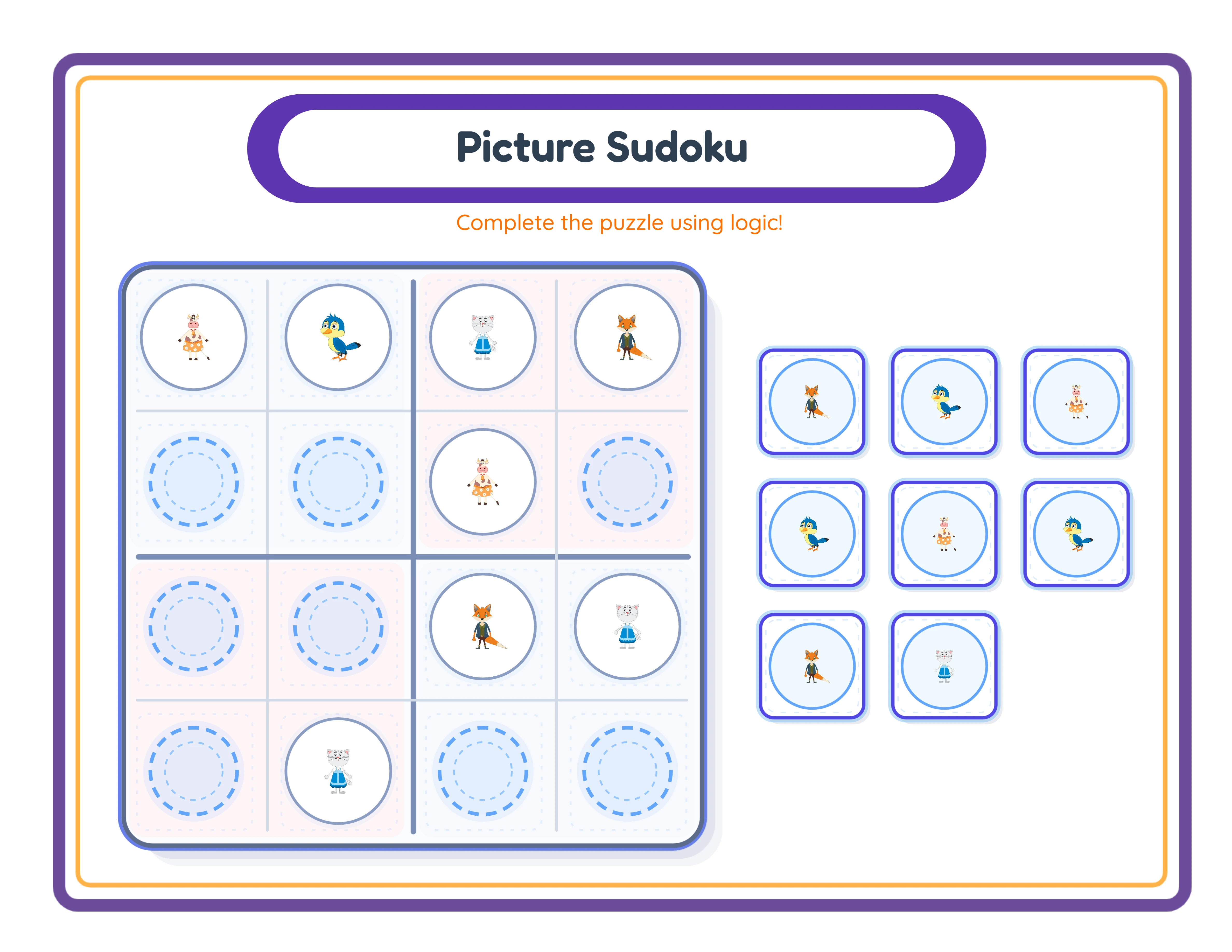
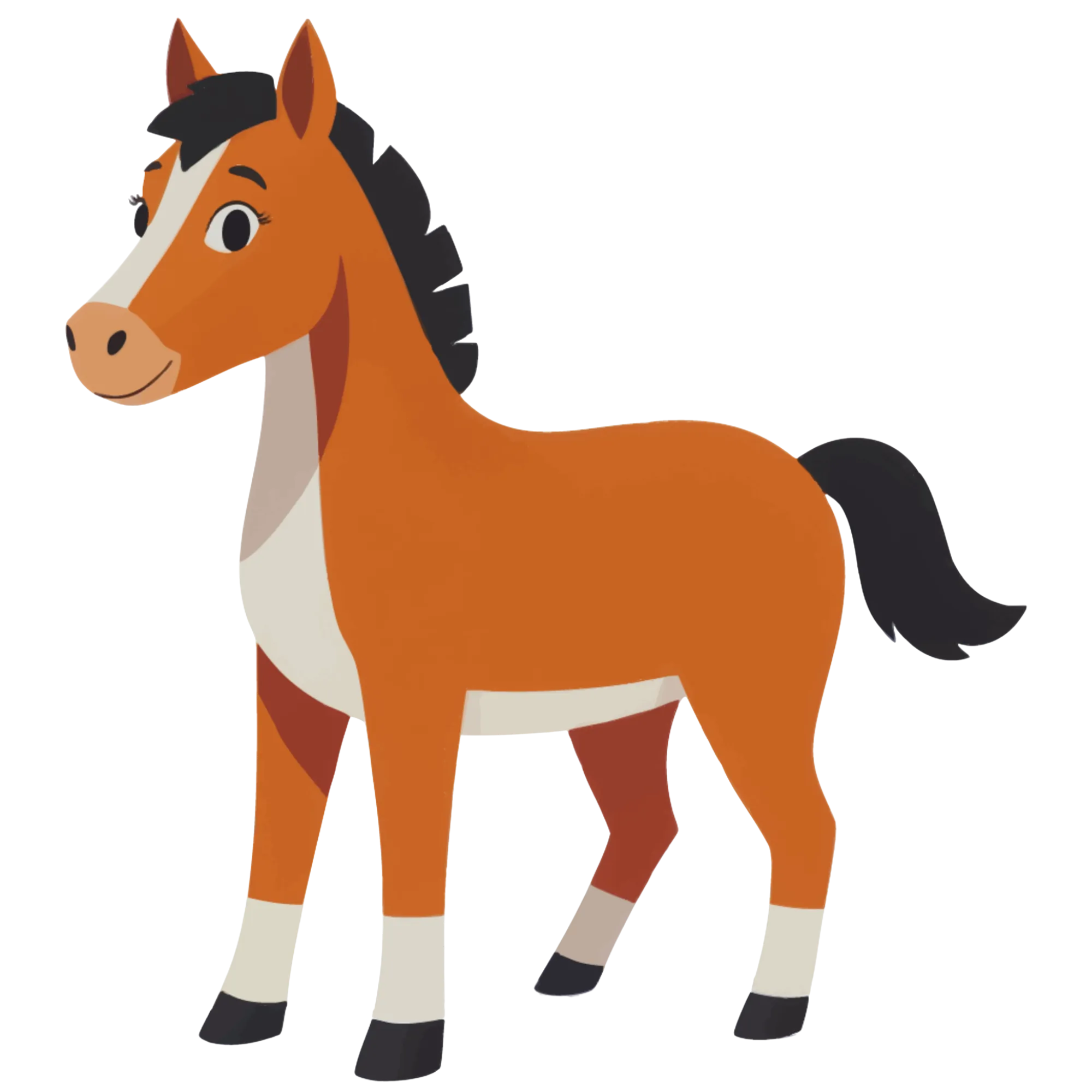
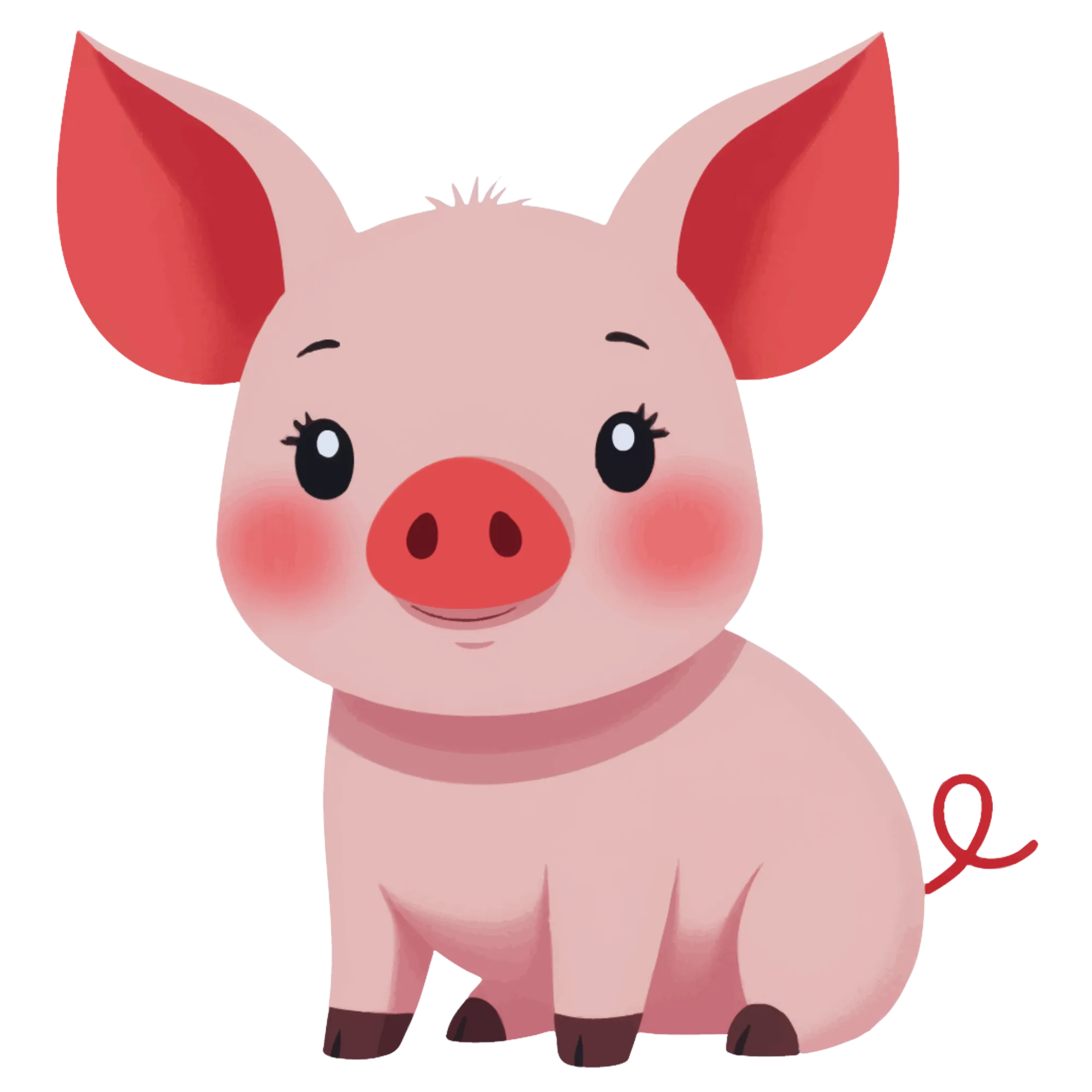
Open the sudoku generator and configure for picture mode. Select your theme from the 104 available collections. Each theme contains coordinated images that work together as a set -- for example, the "farm animals" theme might use a cow, pig, horse, and chicken as the four images in each 4x4 grid.
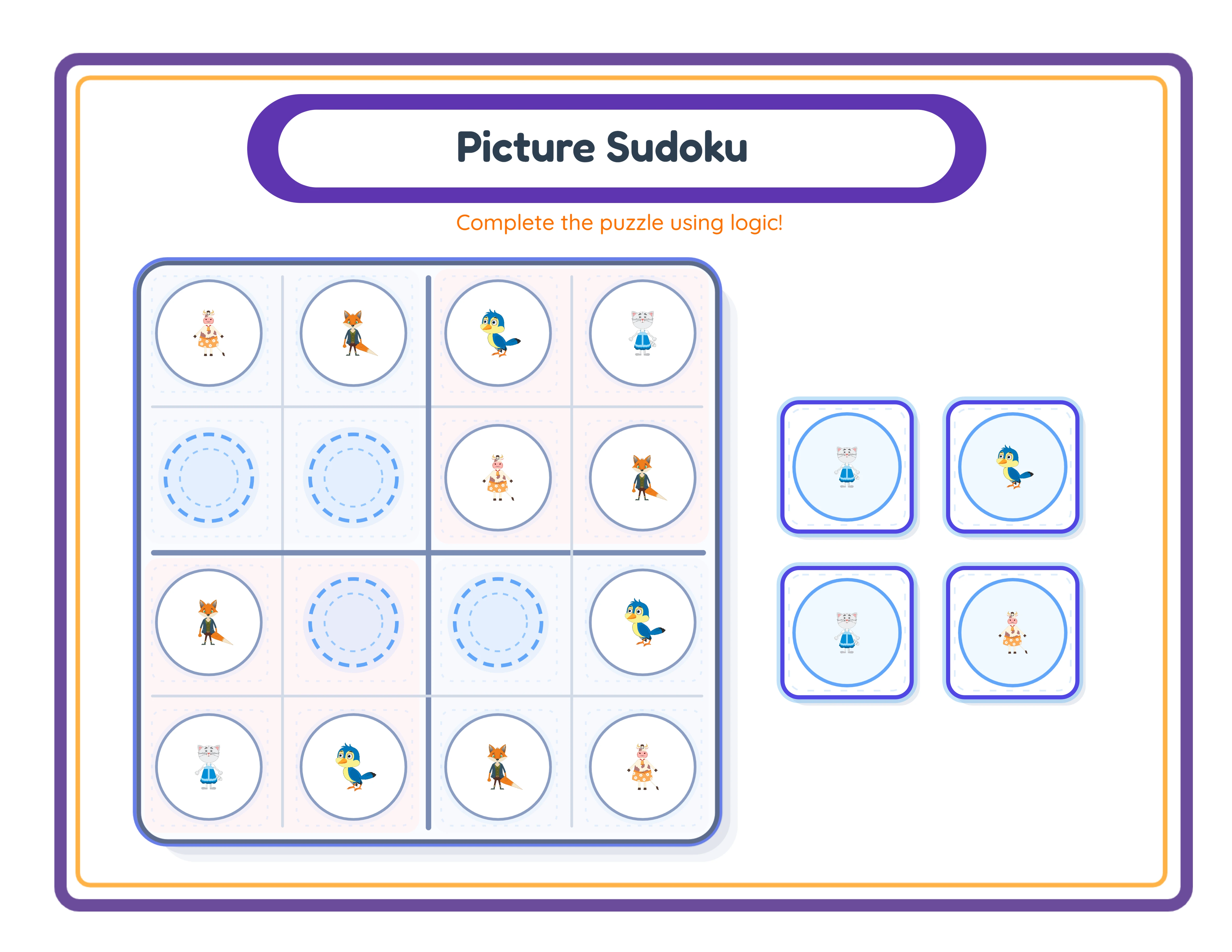
Grid configuration: The 4x4 grid is the standard for picture sudoku. Each row and each column must contain all four images exactly once. The generator automatically creates valid puzzle configurations with varying difficulty levels.
Difficulty control: Easier puzzles pre-fill more cells, leaving fewer blanks for the solver. A puzzle with 8 of 16 cells filled is easy (suitable for ages 3-5). A puzzle with only 4 cells filled is challenging (ages 6-8). Vary difficulty within your book to keep solvers engaged and provide progression.
Image quality: The generator uses images from the 104 themed collections at resolution suitable for print. Each image is clear, recognizable, and sized appropriately for the grid cell. The visual consistency across a theme (all farm animals, all ocean creatures, all vehicles) creates a professional look that justifies premium pricing.
Answer keys: The generator automatically produces complete answer keys for every puzzle. Each answer key shows all 16 cells filled with the correct images. Include these at the back of your book -- buyers expect answer keys and will leave negative reviews if they are missing.
Batch generation: Generate each puzzle individually, verify it looks correct in the preview, and export as PDF. For a 100-puzzle book, plan 2 to 3 hours of generation time. Each puzzle takes about 1 to 2 minutes to configure, generate, preview, and export.
4
Formatting Your KDP Manuscript
Compiling individual puzzle PDFs into a print-ready KDP manuscript requires careful organization.
Manuscript structure for a picture sudoku book:
Page 1: Title page -- book title, subtitle, author or publisher name
Page 2: Copyright page -- standard copyright notice, year, commercial license reference
Page 3: How to solve picture sudoku -- simple instructions with a visual example showing the rules (each row and column must contain each image exactly once)
Page 4: Blank or dedication page
Pages 5-104: Puzzle pages (one puzzle per page, numbered "Puzzle 1" through "Puzzle 100")
Pages 105-204: Answer key pages (one answer per page, labeled "Answer 1" through "Answer 100")
Page 205: About the publisher or catalog page linking to your other books
PDF merging: Use PDFsam Basic, Sejda, or macOS Preview to combine individual puzzle PDFs into a single manuscript. Ensure all pages are the same trim size and orientation (portrait for standard layout).
Page numbering: Add page numbers to help solvers navigate between puzzles and answer keys. If your puzzle pages do not include numbers, add them during the merging step using a PDF editor.
Pre-upload verification checklist:
- All pages are the same trim size (8.5 x 11 for US Letter)
- Margins meet KDP minimums (0.75" gutter, 0.25" elsewhere)
- Images are sharp and clear at print resolution
- Answer keys match their corresponding puzzles
- No watermarks appear on any page (requires commercial license)
- Final PDF is under 650 MB (KDP file size limit)
- Page count matches your planned cover spine width
5
Creating an Effective KDP Book Cover
Your cover is the primary sales tool on Amazon. Buyers make purchase decisions in seconds based on the thumbnail image in search results.
Cover dimensions: Use KDP's cover calculator to get exact dimensions based on your page count, trim size, and paper type. For a 200-page 8.5 x 11 book on white paper, the full wrap cover is approximately 17.75 x 11.25 inches.
Front cover elements for picture sudoku books:
Title: Large, readable at thumbnail size. Example: "Picture Sudoku for Kids Ages 4-8"
Subtitle: Adds detail. Example: "100 Fun Animal Puzzles with Answer Keys"
Visual preview: Show a sample 4x4 picture sudoku grid on the cover. This immediately communicates what the book contains and differentiates it from number sudoku.
Bright, engaging colors: Kids' activity books need colorful, eye-catching covers. Use vibrant backgrounds and clear contrast between text and background.
Age designation: "Ages 4-8" or "Preschool & Kindergarten" on the cover helps parents find age-appropriate content and signals relevance in search results.
Back cover elements:
- Brief description of the book (50 to 100 words)
- Key selling points (number of puzzles, answer keys included, themed images)
- A sample puzzle preview
- Barcode area (KDP places the ISBN barcode automatically)
Spine: Include the book title and author name. Ensure text is large enough to read -- KDP has minimum spine width requirements based on page count.
Design tools: Canva offers free KDP cover templates. Book Bolt has specialized puzzle book cover creators. For professional results, hire a cover designer on Fiverr ($25 to $75 for a complete KDP cover).
6
Publishing and Optimizing Your KDP Listing
A well-optimized KDP listing converts browsers into buyers. Every field on the listing matters for both search visibility and conversion.
Title: Use all available characters for keyword-rich titles. Example: "Picture Sudoku for Kids Ages 4-8: 100 Fun Image Puzzles with Answer Keys -- Farm Animals, Ocean, and Jungle Themes"
Subtitle: Add details not in the title. Example: "Visual Logic Puzzles for Preschool, Kindergarten & Early Learners -- Large Print 8.5 x 11 Format"
Description: Write 500 to 1,000 words using HTML formatting for readability. Cover:
- What the book contains (number of puzzles, themes, answer keys)
- Who the book is for (age range, skill level)
- How picture sudoku works (brief explanation for parents unfamiliar with the format)
- What makes your book different (professional image quality, themed sets, difficulty progression)
- Physical details (page count, trim size, paper type)
Keywords (7 slots): Use specific, buyer-intent phrases:
1. picture sudoku kids ages 4-8
2. visual puzzle book preschool
3. image sudoku activity book
4. kids logic puzzles with answers
5. preschool puzzle workbook
6. animal puzzle book kindergarten
7. screen-free activity book kids
Categories: Select "Children's Puzzle Books" and "Children's Activity Books" as your two categories. These place you in front of buyers actively shopping for kids' activities.
Pricing: For a 200-page 8.5 x 11 black and white interior:
- US: $6.99 (60% royalty = $4.19 minus ~$3.35 printing = $0.84 per sale)
- UK/EU: Set marketplace-specific prices 10 to 20% lower to account for higher printing costs
- Run KDP's royalty calculator for your exact page count before finalizing
7
Scaling Your Picture Sudoku Catalog
A single picture sudoku book generates modest revenue. A catalog of 15 to 25 themed books generates meaningful recurring royalties.
Theme expansion: The 104 themed image collections provide enormous catalog potential. Each theme becomes a separate book:
- Farm Animals Picture Sudoku
- Ocean Creatures Picture Sudoku
- Vehicles & Transportation Picture Sudoku
- Food & Cooking Picture Sudoku
- Sports Equipment Picture Sudoku
- Space & Planets Picture Sudoku
Each themed book targets different keyword searches and reaches different buyer interests. A parent whose child loves dinosaurs will buy the dinosaur book. A different parent whose child loves ocean animals will buy the ocean book. Niche themes reduce competition and increase relevance.
Difficulty series: Publish each theme at multiple difficulty levels. "Easy Picture Sudoku -- Farm Animals (Ages 3-5)" and "Challenging Picture Sudoku -- Farm Animals (Ages 6-8)" serve different age segments and double your catalog from one theme.
Language expansion: Regenerate your best-selling themes in German, French, Spanish, Portuguese, Italian, Dutch, Swedish, Danish, Norwegian, and Finnish. Each language version targets a different Amazon marketplace. German picture sudoku books on amazon.de face almost zero competition.
Seasonal editions: Christmas picture sudoku, Halloween picture sudoku, Easter picture sudoku. Create holiday-themed versions that spike in sales 4 to 6 weeks before each holiday.
Mega-books: Compile multiple themes into a single large book. "Ultimate Picture Sudoku Collection -- 300 Puzzles Across 30 Themes" at $11.99 to $14.99 targets buyers seeking maximum value. These larger books also have higher per-sale royalties.
The catalog effect: Each new book adds to daily sales. A 20-book catalog with each book averaging 1 to 2 sales per day generates 20 to 40 daily sales. At $0.75 average royalty per sale, that is $450 to $900 per month from a catalog you built once.