Tutorial
1
Understanding the Scale of the Spanish Market
The Spanish-speaking market is not one market -- it is a network of interconnected markets that together form the largest non-English language opportunity for printable sellers.
US Hispanic market (65 million people): This is often the most lucrative segment for English-based sellers because buyers have US purchasing power, shop on familiar platforms (Amazon, Etsy), and search in both English and Spanish. Bilingual education is expanding rapidly across US school districts, creating institutional demand for Spanish-language worksheets alongside direct-to-parent sales. The US Hispanic population is projected to reach 111 million by 2060.
Spain (47 million people): Europe's fifth-largest economy with strong digital adoption. Amazon.es is well-established and Etsy has growing adoption. Spanish families invest in supplemental educational materials, and the activity book category on amazon.es faces far less competition than amazon.com.
Mexico (130 million people): Latin America's second-largest economy. Amazon.com.mx is growing rapidly and accepts KDP titles. Etsy serves Mexican buyers through its global platform. The Mexican middle class actively purchases educational materials for children.
Colombia, Argentina, Chile, Peru: Combined population exceeding 130 million. Growing digital adoption and increasing e-commerce penetration. While per-capita spending is lower than the US or Spain, the sheer population size creates meaningful aggregate demand.
Total addressable market: Over 500 million Spanish speakers with combined GDP in the trillions. Even capturing a tiny fraction of demand across these markets generates substantial revenue. And unlike the English market where thousands of sellers compete for that demand, the Spanish printable market has dramatically fewer suppliers.
2
Product Types That Sell Best in Spanish
The strongest-selling product categories in the Spanish market reflect both universal educational demand and culturally specific preferences.
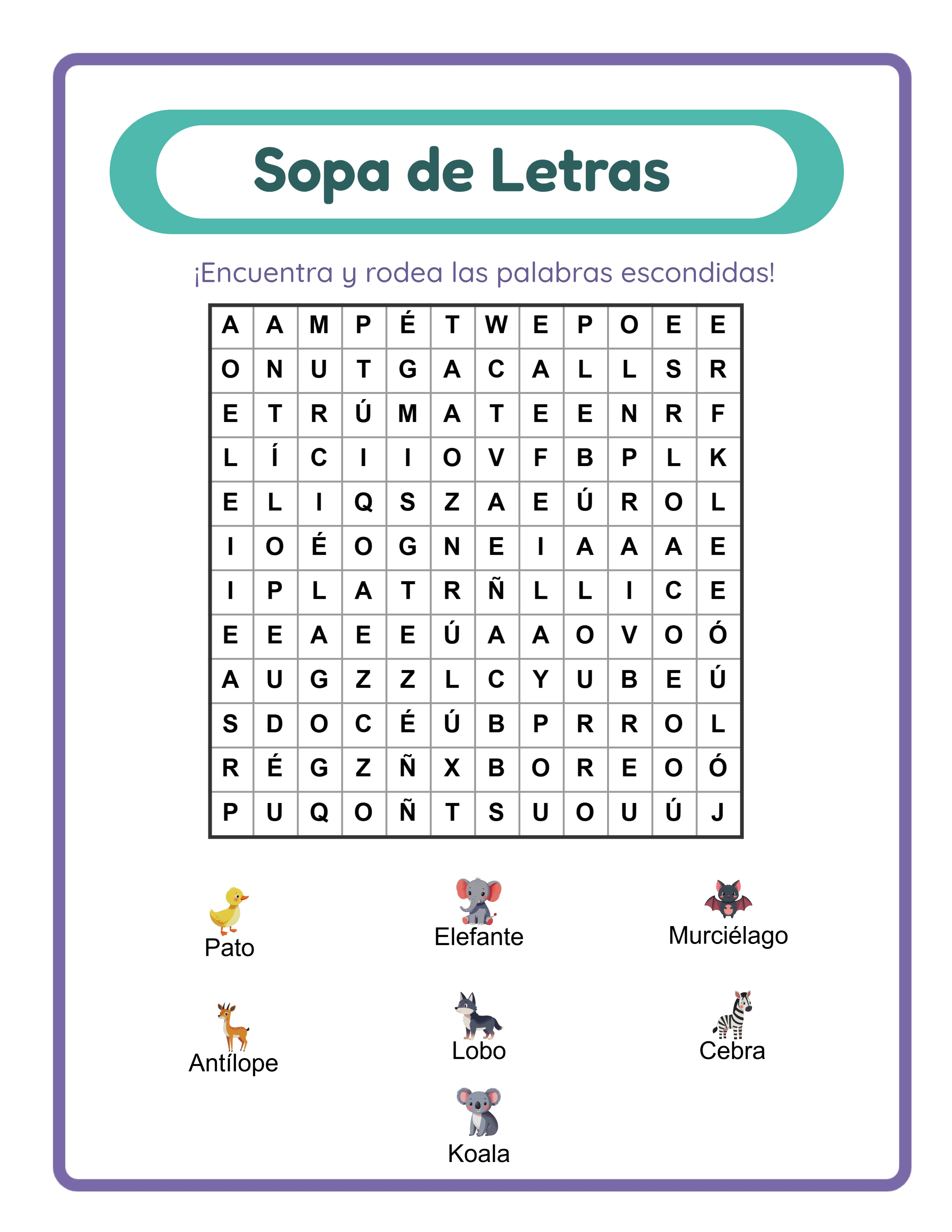
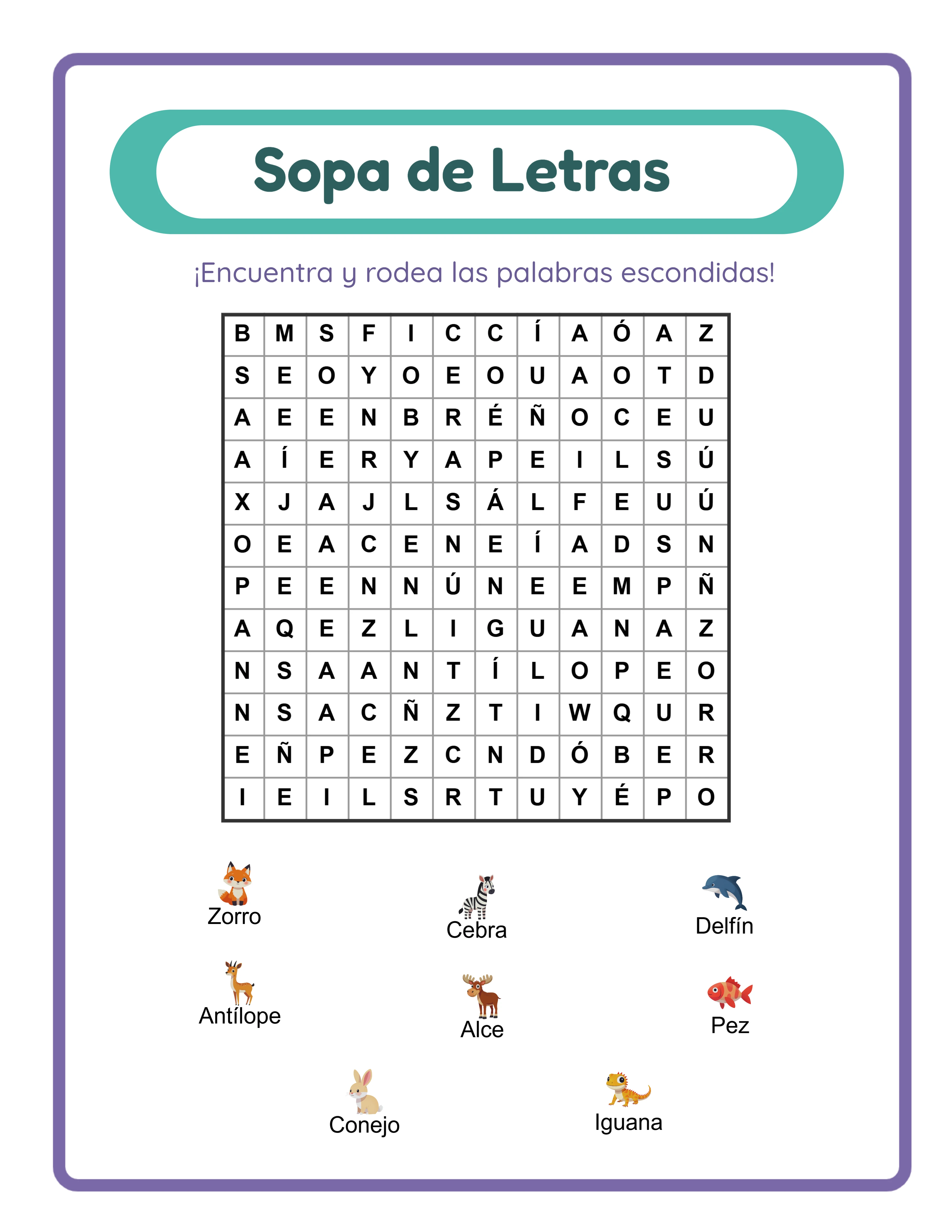
Word search puzzles (Sopa de letras): The single most popular puzzle format in Spanish-speaking markets. "Sopa de letras" is a beloved tradition across all Spanish-speaking countries. Newspapers, magazines, and activity books in Spain and Latin America feature word searches prominently. The LCS word search generator produces Spanish word searches with native vocabulary including accented characters and the distinctive n with tilde.
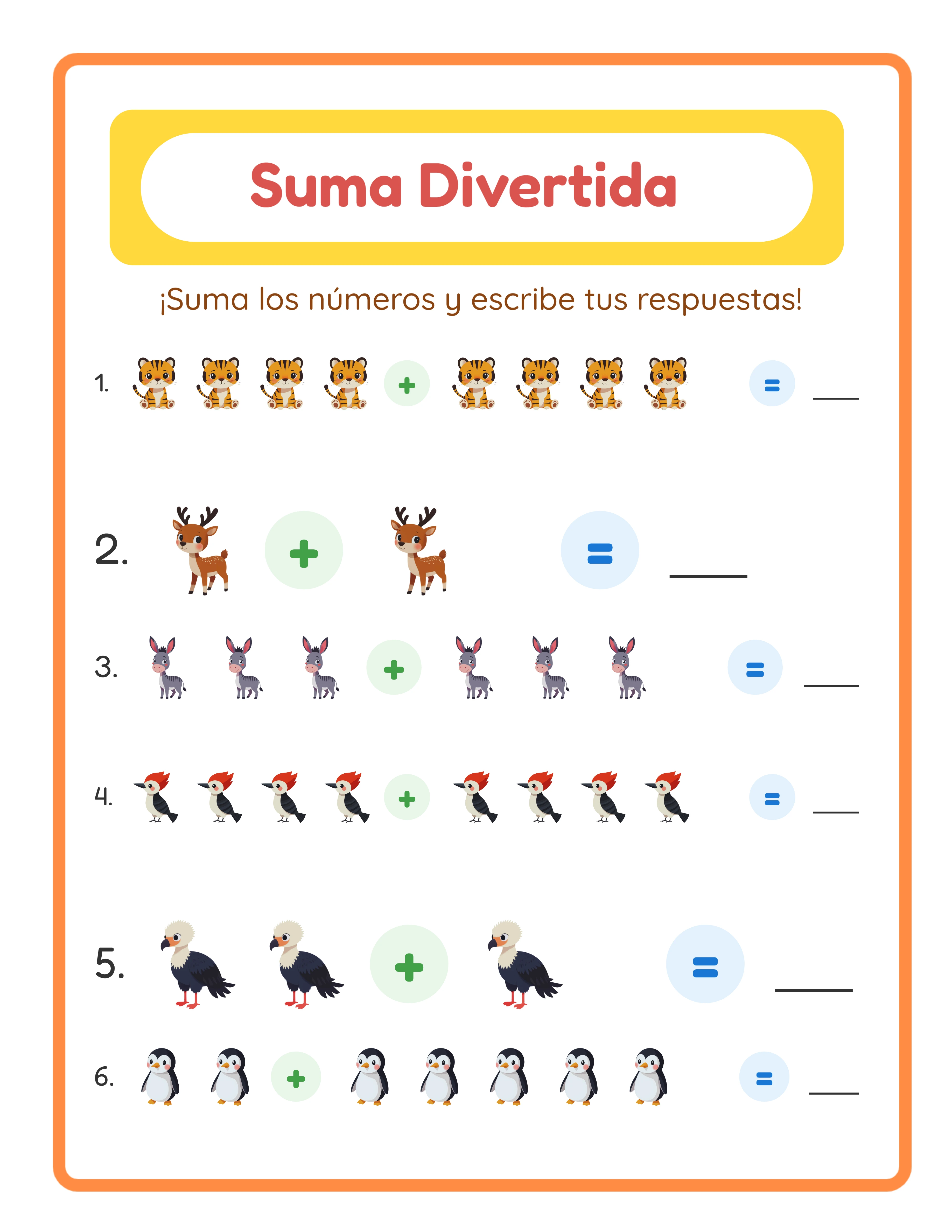
Math worksheets (Hojas de calculo / Fichas de matematicas): Math is universal, but Spanish-language math worksheets with proper formatting and Spanish instructions serve a distinct market. Addition (suma), subtraction (resta), multiplication (multiplicacion), and division worksheets are consistently in demand. Parents and educators searching in Spanish find far fewer options than those searching in English.
Coloring pages (Paginas para colorear): Coloring pages with Spanish vocabulary labels combine art with language learning. Themed coloring pages -- animals (animales), food (comida), vehicles (vehiculos) -- with Spanish word labels serve both native Spanish speakers and language learners. The adult coloring market ("colorear para adultos") is also strong in Spanish-speaking countries.
Bilingual English-Spanish products: This is a unique category that barely exists in other language markets. Bilingual worksheets featuring both English and Spanish vocabulary target US Hispanic families, language learners, and bilingual schools. A bilingual word search with English words on one side and Spanish equivalents on the other has virtually no competition on Etsy.
Alphabet and literacy worksheets (Abecedario): Spanish alphabet worksheets include the unique letter combinations and sounds specific to Spanish. Handwriting practice, letter recognition, and early literacy worksheets in Spanish serve the massive market of Spanish-speaking families with young children.
Holiday and cultural worksheets: Dia de los Muertos (Day of the Dead), Navidad (Christmas), Semana Santa (Holy Week), Fiestas patrias (Independence days -- which vary by country) all create seasonal demand that English-only sellers cannot serve.
3
Spanish Language Considerations for Printables
Creating professional Spanish printables requires understanding the language's character set and a few key considerations.
Accented vowels: Spanish uses acute accents on all five vowels (a, e, i, o, u). These accents indicate stress and are mandatory in written Spanish. "Papa" means potato while "papa" means dad or pope. Missing accents are immediately noticeable to native speakers and signal a non-professional product.
The ene (n with tilde): The letter n with a tilde is a distinct letter in the Spanish alphabet, not a modified n. It appears in extremely common words: "espanol" (Spanish), "nino" (child), "ano" (year), "manana" (tomorrow/morning). Omitting the tilde is a serious error -- "ano" without the tilde means something entirely different and inappropriate.
Inverted punctuation: Spanish uses inverted question marks and exclamation points at the beginning of questions and exclamations. While this matters less for puzzle grids, it is important for instructions, descriptions, and any text content in your printables.
Regional vocabulary: Spanish vocabulary varies somewhat across regions. A banana is "platano" in Spain but "banana" in most of Latin America. A car is "coche" in Spain but "carro" or "auto" in Latin America. The LCS generators use broadly understood vocabulary that works across Spanish dialects, but being aware of regional differences helps you target specific markets when needed.
Grammatical gender: Spanish nouns have grammatical gender (masculine/feminine). The LCS generators handle this correctly in vocabulary databases. This matters when vocabulary words appear with articles or adjectives in your printables.
The LCS generators manage all of these elements automatically. When you select Spanish, vocabulary includes proper accents, the n with tilde appears correctly, and word lists use broadly compatible vocabulary. No Spanish language knowledge required.
4
Targeting the US Hispanic Market
The US Hispanic market deserves special attention because it combines massive scale, high purchasing power, and unique product opportunities.
Market size: 65 million Hispanic Americans represent the largest Spanish-speaking community in any single country after Mexico. Hispanic purchasing power in the US exceeds $1.9 trillion annually. This is not a niche market -- it is a dominant demographic force.
Bilingual demand: Approximately 75% of US Hispanic households speak Spanish at home. Many families actively seek educational materials in Spanish to maintain children's Spanish language skills alongside English schooling. This creates demand for both pure Spanish products and bilingual English-Spanish materials.
Platform behavior: US Hispanic buyers shop on amazon.com (not amazon.es or amazon.com.mx). They search using both English and Spanish terms. Optimizing your amazon.com and Etsy listings with both English and Spanish keywords captures this cross-language search behavior.
Keyword strategy for US Hispanic buyers: Include both languages in your listing optimization. English keywords: "Spanish word search," "Spanish worksheets for kids," "bilingual activity book." Spanish keywords: "sopa de letras en espanol," "actividades para ninos," "cuaderno de ejercicios." The combination targets both bilingual searchers and English-dominant parents searching for Spanish content.
School and institutional demand: Bilingual education programs across US school districts create institutional demand for Spanish-language educational materials. While individual worksheet sales are the primary revenue driver, creating products that align with bilingual education standards can drive bulk purchases.
Seasonal patterns: US Hispanic families follow both American holidays (Thanksgiving, Halloween, Easter) and cultural celebrations (Dia de los Muertos, Tres Reyes Magos). Creating printables for both sets of holidays serves this dual-culture market perfectly.
5
Platform Strategy for Spanish Printables
The Spanish market spans multiple platforms and marketplaces. Here is how to prioritize and optimize each one.
Etsy (global): Etsy reaches Spanish-speaking buyers worldwide. Create listings with Spanish titles and tags for visibility among Spanish-language searchers. Also create separate listings with English titles containing "Spanish" as a keyword to capture English-speaking buyers shopping for Spanish content. Both approaches work simultaneously.
Amazon.com (US market): List Spanish-language KDP books on amazon.com targeting the US Hispanic market. Use English titles with Spanish content descriptors: "Spanish Word Search Puzzle Book for Kids: 100 Sopa de Letras con Soluciones." This captures both English-language and Spanish-language searches.
Amazon.es (Spain): Publish KDP books with fully Spanish metadata on amazon.es. The Spanish Amazon marketplace has growing activity book demand with far less competition than amazon.com. Title example: "Sopa de Letras para Ninos: 100 Puzzles Tematicos con Soluciones -- Letra Grande."
Amazon.com.mx (Mexico): The fastest-growing Amazon marketplace in Latin America. KDP books published on amazon.com are automatically available on amazon.com.mx. Set competitive pricing in Mexican pesos for the local market.
Combined approach: Publish the same Spanish content as: (1) Digital download bundles on Etsy with Spanish and English listing variants, (2) KDP books on amazon.com targeting US Hispanic buyers, and (3) KDP books on amazon.es targeting Spanish buyers. One content creation effort, three distribution channels, three revenue streams.
6
Creating Your First Spanish Product Line
Follow this workflow to create and launch your first Spanish printable products across multiple platforms.
Step 1 -- Start with sopa de letras: Word search puzzles are the highest-demand Spanish puzzle category. Open the LCS word search generator, select Spanish. The generator produces vocabulary like: perro (dog), gato (cat), caballo (horse), vaca (cow), cerdo (pig), gallina (hen), conejo (rabbit), pato (duck).
Step 2 -- Select high-demand themes: Choose themes with universal appeal: animales (animals), comida (food), familia (family), naturaleza (nature), deportes (sports). Generate 5 word search puzzles per theme for a 25-puzzle starter collection.
Step 3 -- Add math worksheets: Switch to the addition generator in Spanish mode. Generate 15 addition worksheets with Spanish-language instructions. Math worksheets complement word puzzles and broaden your product appeal.
Step 4 -- Include coloring pages: Generate 10 themed coloring pages with Spanish vocabulary labels. These add variety and appeal to younger age groups.
Step 5 -- Create an Etsy bundle: Compile all content into a PDF bundle: "Pack de Actividades en Espanol: 50 Sopa de Letras, Matematicas y Coloriages -- PDF A4 Descarga Instantanea." Price at 5.99 to 7.99 USD.
Step 6 -- Create a KDP book: Format the same content as a KDP manuscript. Publish on amazon.com with bilingual title: "Spanish Activity Book for Kids: Sopa de Letras, Math & Coloring -- 50 Activities with Answer Keys." Also publish a Spanish-only version on amazon.es.
Step 7 -- Create a bilingual variant: Using the same themes, generate word search puzzles in both English and Spanish. Pair them side by side in a "Bilingual Word Search" product. This unique format has almost zero competition and targets the massive bilingual education market.
7
Competitive Advantage Through Multi-Language Scale
The LCS 11-language support transforms Spanish from a single-market opportunity into a launchpad for global printable revenue.
Immediate multiplication: Every Spanish product you create can be regenerated in 10 other languages with minimal additional effort. Your 25-puzzle Spanish word search bundle becomes 11 products (English, German, French, Spanish, Portuguese, Italian, Dutch, Swedish, Danish, Norwegian, Finnish) in under a day.
Spanish as a gateway: Spanish is an ideal first non-English language because the market is enormous, demand is proven, and the workflow teaches you everything you need for subsequent language expansions. The listing templates, KDP formatting, and marketing approaches you develop for Spanish transfer directly to other languages.
Portuguese synergy: Spanish and Portuguese share significant vocabulary overlap. The same themes that sell well in Spanish almost always perform in Portuguese too. Adding Portuguese after Spanish is nearly effortless.
Bilingual product expansion: Once you have Spanish products, creating bilingual variants with each of the other 10 languages opens entirely new product categories. English-Spanish, German-Spanish, French-Spanish bilingual printables target language learners, international schools, and multicultural families.
Market resilience: Diversifying across the US Hispanic market, Spain, Mexico, and other Latin American countries means your revenue is not dependent on any single marketplace, country, or seasonal pattern. Economic dips in one region may coincide with growth in another.
Scaling arithmetic: If your Spanish catalog generates $800 per month across all platforms, adding 4 more languages at comparable (or even 50% lower) performance brings total revenue to $2,400 to $4,800 per month. The incremental effort per language is a fraction of the initial Spanish setup, making each additional language increasingly profitable.