Tutorial
1
Choosing Operations and Grade-Level Targets
Your first decision determines your book's market positioning: which math operations to include and which grade level to target.
Single-operation workbooks target the most specific searches:
- Addition only: "addition practice book grade 1"
- Subtraction only: "subtraction workbook kindergarten"
- Multiplication only: "multiplication practice grade 3"
- Division only: "division workbook grade 4"
These single-operation books match high-intent search queries precisely. A parent searching for "addition practice" wants addition -- not a mixed workbook that includes subtraction and multiplication.
Mixed-operation workbooks target broader searches:
- "math workbook grade 2" (addition + subtraction)
- "math practice book ages 8-10" (all four operations)
- "arithmetic workbook" (mixed operations, general audience)
Mixed workbooks appeal to parents who want comprehensive practice and justify higher page counts and prices.
Grade-level targeting by operation:
- Pre-K to Kindergarten: Counting, number recognition, simple addition (sums to 10)
- Grade 1: Addition to 20, subtraction from 20, number bonds
- Grade 2: Addition to 100, subtraction from 100, introduction to multiplication
- Grade 3: Multiplication tables, basic division, three-digit addition/subtraction
- Grade 4-5: Multi-digit multiplication, long division, mixed operations
- Grade 6+: Fractions, decimals, order of operations
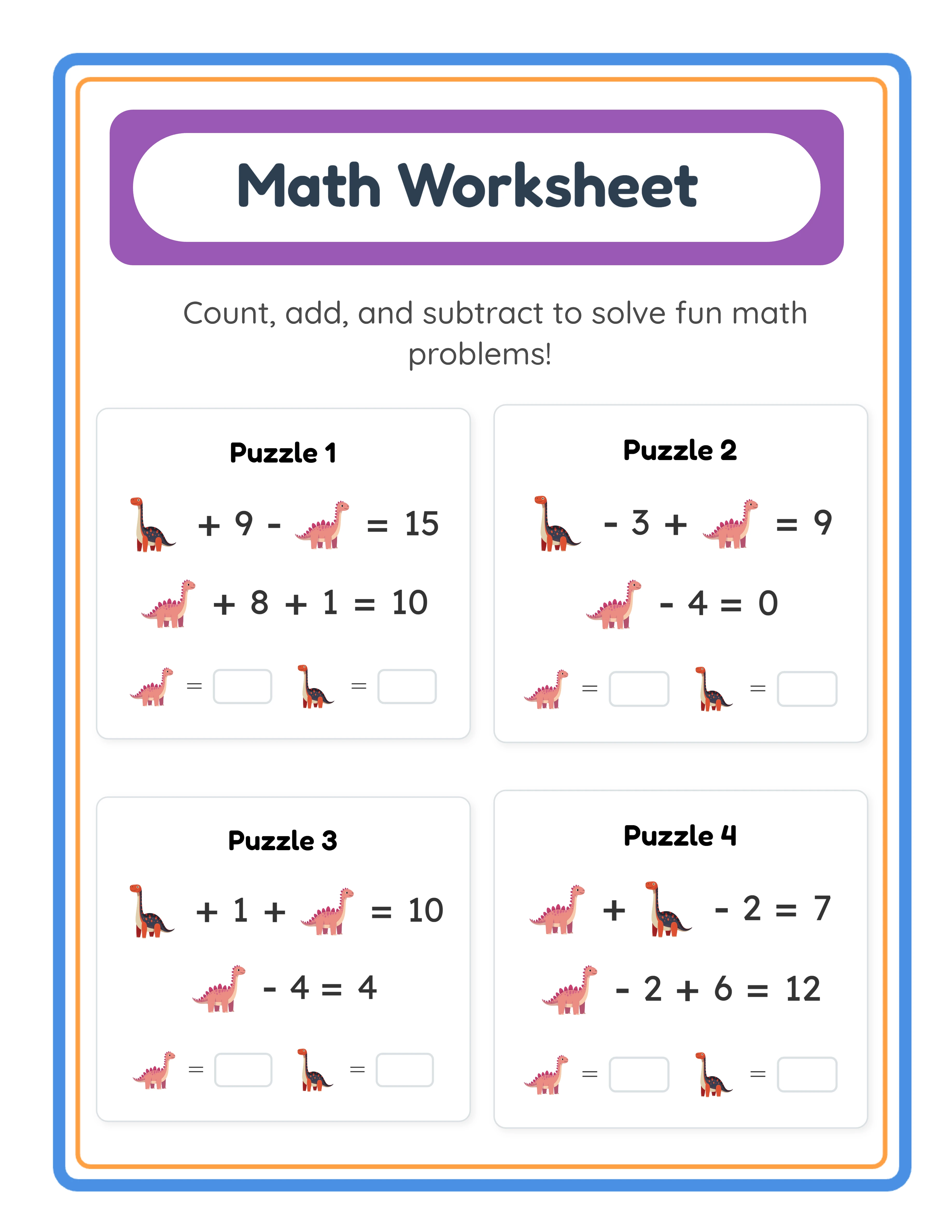
The LCS Math Worksheet generator covers addition and subtraction with configurable number ranges. The dedicated Addition and Subtraction generators offer more granular control over specific operation types. Use the Math Worksheet generator for mixed-operation books and the individual generators for single-operation deep dives.
2
Designing Progressive Difficulty Structure
Progressive difficulty is the single most important quality signal in math workbooks. It is what parents praise in positive reviews and what they complain about in negative ones.
Three-tier progressive structure:
Tier 1 -- Foundation (first 25-30% of problems): Problems at the lowest difficulty for your target grade. For a Grade 2 addition workbook, this means single-digit addition with sums to 18. Every solver should be able to complete this section successfully. The purpose is confidence building.
Tier 2 -- Development (middle 40-50% of problems): Problems at grade-appropriate difficulty. For Grade 2 addition, this means two-digit plus one-digit (34 + 7) and two-digit plus two-digit without regrouping (23 + 45). This section builds skill through repetition at the target level.
Tier 3 -- Challenge (final 20-30% of problems): Problems that stretch beyond typical grade level. For Grade 2, this means two-digit addition with regrouping (47 + 35) and three-digit addition (123 + 456). This section challenges advanced solvers without being required for the core experience.
Within each tier, randomize problem order so the solver encounters variety rather than repetitive patterns. But maintain the overall tier progression across the book.
Page structure: Each worksheet page should contain 15 to 25 problems depending on complexity. Simple single-digit problems fit 25 per page. Multi-digit problems need more space -- 15 per page allows room for showing work.
Label difficulty clearly: "Section 1: Warm Up," "Section 2: Practice," "Section 3: Challenge" gives parents and solvers a roadmap through the book.
3
Generating Math Problems with the LCS Generators
The LessonCraftStudio platform includes three math generators optimized for different workbook needs.
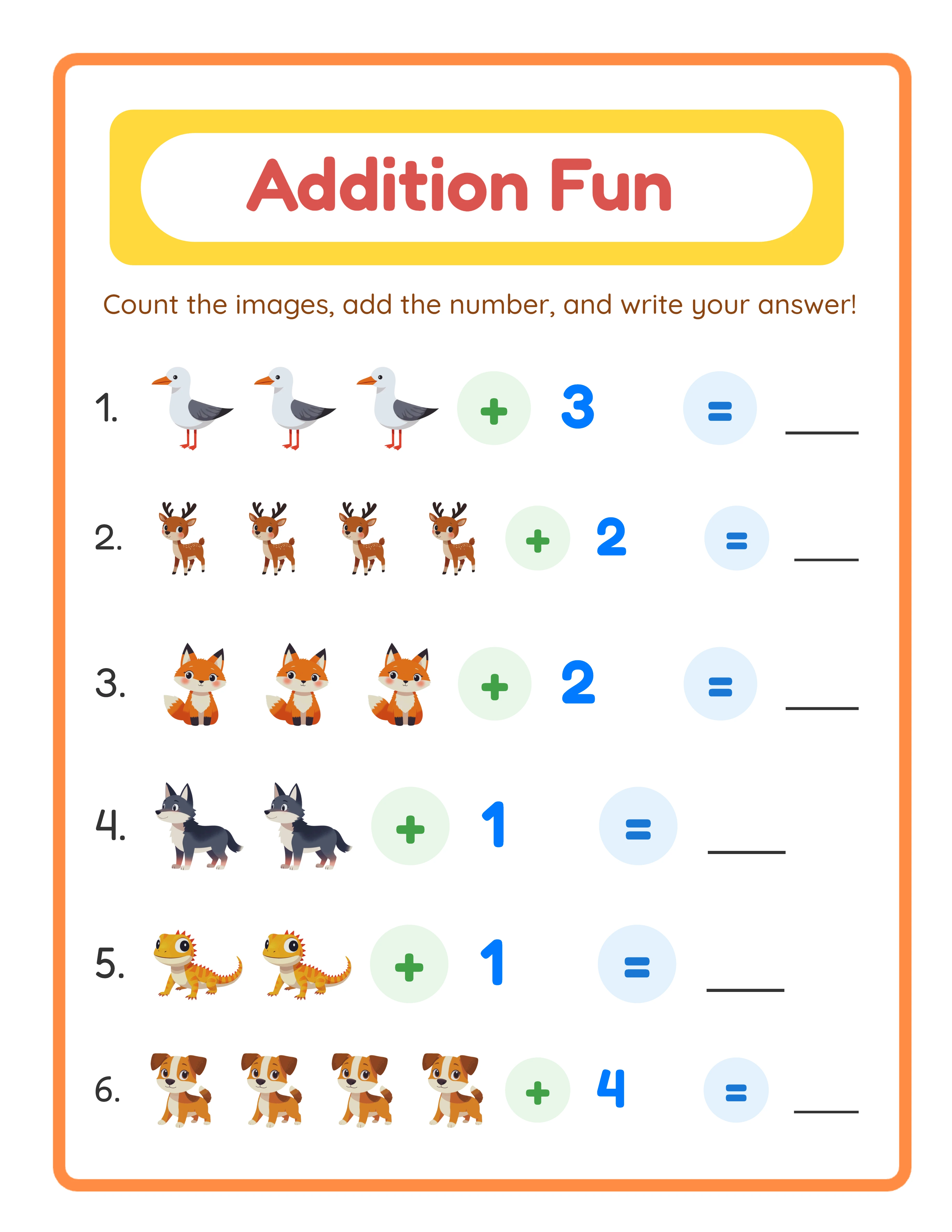
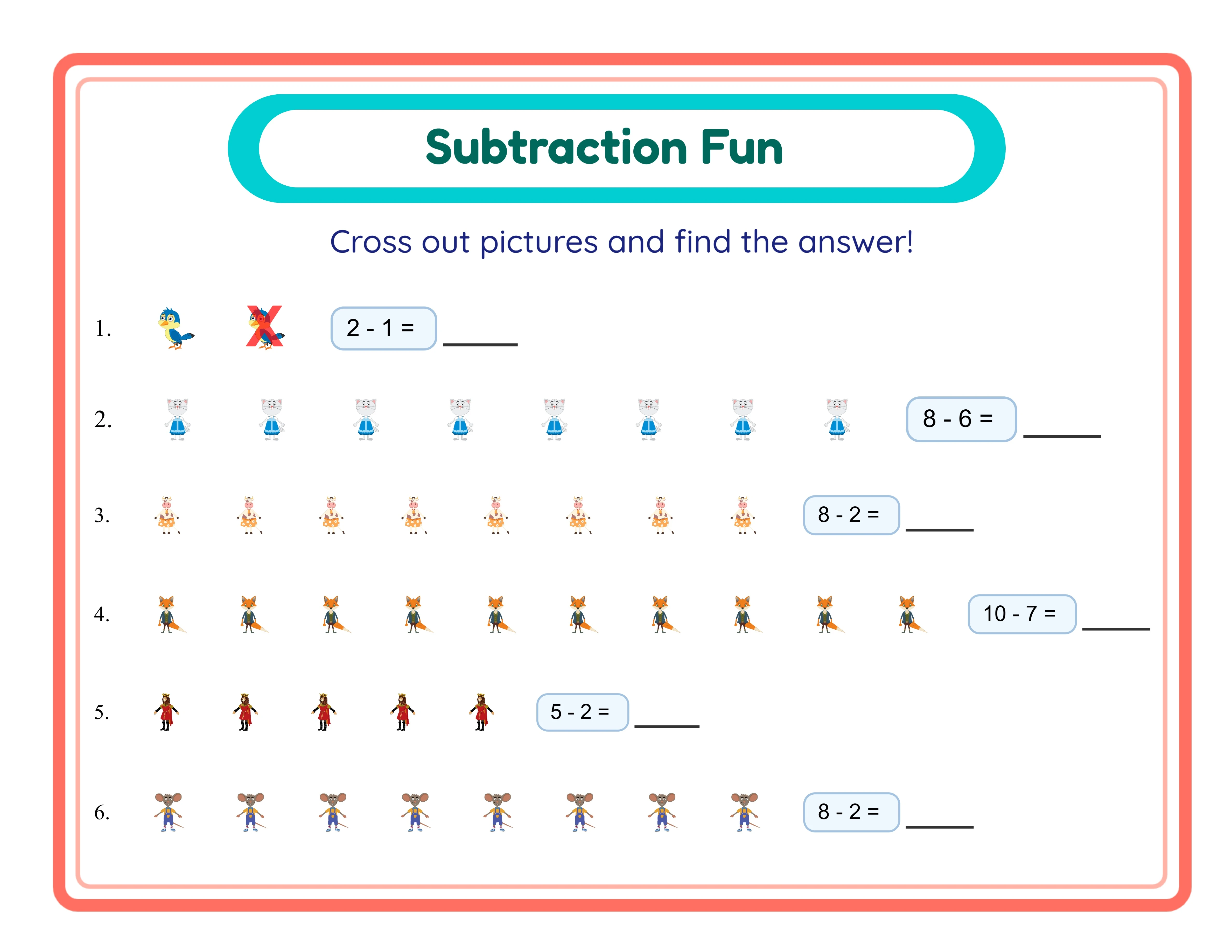
Math Worksheet Generator: Produces pages with configurable operation types (addition, subtraction, or mixed), number ranges, and problem counts. Best for mixed-operation workbooks and general math practice books.
Addition Generator: Focused specifically on addition problems with fine-grained control over addend ranges, sum limits, and visual formatting. Best for single-operation addition workbooks.
Subtraction Generator: Focused on subtraction with control over minuend/subtrahend ranges and borrowing/regrouping. Best for single-operation subtraction workbooks.
Generation workflow for a Grade 2 addition workbook:
Step 1 -- Open the Addition generator. Select English language (or your target language from the 11 supported).
Step 2 -- Configure Tier 1 problems. Set addend range to 1-9 (single-digit addition). Set problem count to 20 per page. Generate 8 to 10 pages. Export each as a 300 DPI PDF.
Step 3 -- Configure Tier 2 problems. Set first addend range to 10-99 and second addend to 1-9 (two-digit plus one-digit). Generate 15 to 20 pages.
Step 4 -- Increase Tier 2 complexity. Set both addend ranges to 10-50 (two-digit plus two-digit, no regrouping). Generate 10 to 15 pages.
Step 5 -- Configure Tier 3 problems. Set addend ranges to 10-99 with sums exceeding 100 (requires regrouping). Generate 8 to 10 pages.
Step 6 -- Generate answer keys. The generator creates answer keys for each worksheet page automatically. Export all answer keys as separate PDFs.
Step 7 -- Organize files by tier and page number. Name systematically: "tier1-page01.pdf" through "tier3-page10.pdf."
Total pages: 40 to 55 worksheet pages + 40 to 55 answer key pages + front/back matter = approximately 90 to 120 total pages.
4
Formatting Your Math Workbook Manuscript for KDP
Math workbook manuscripts need clean formatting with adequate space for handwritten answers and showing work.
Trim size: 8.5 x 11 inches is standard for math workbooks. It matches school worksheet expectations and provides ample space for problems and written work. A 6 x 9 alternative works for "mini workbook" or "on-the-go practice" products but limits problem layout.
Page layout:
- Problems should be arranged in clear rows with consistent spacing
- Each problem needs a blank answer space (line or box) large enough for handwritten digits
- For multi-digit problems, include lined work space below or beside each problem
- Number each problem sequentially within each page (1 through 20, etc.)
- Include page numbers for easy reference to answer keys
- Leave margins that meet KDP requirements (minimum 0.75 inch gutter)
Manuscript structure:
Page 1 -- Title page with book title, subtitle, grade level, and publisher name
Page 2 -- Copyright page with standard notice
Page 3 -- Table of contents listing each section with page numbers
Page 4 -- Instructions: "How to Use This Workbook" with tips for parents and solvers
Pages 5-15 -- Section 1: Foundation (warm-up problems)
Pages 16-35 -- Section 2: Practice (grade-level problems)
Pages 36-50 -- Section 3: Challenge (advanced problems)
Pages 51-55 -- Bonus: Timed practice pages (optional, adds perceived value)
Pages 56-100 -- Answer keys (one per worksheet page, numbered to match)
Page 101-102 -- Certificate of completion (popular with parents; the child tears it out)
Page 103 -- Catalog page listing your other math workbooks
Merge all PDFs using PDFsam Basic, Sejda, or macOS Preview. Verify consistent trim size, margins, and formatting throughout the merged document.
5
Creating an Effective Math Workbook Cover
Math workbook covers need to communicate three things instantly: what operation, what grade level, and what quality standard.
Front cover essential elements:
Operation and grade level in the largest text: "Addition Practice" and "Grade 2" (or "Ages 7-8") should be the most prominent text on the cover. Parents scanning search results need to identify your book's relevance within seconds.
Problem count or page count: "100 Pages of Practice" or "1,000+ Problems" quantifies the value. Math workbook buyers compare offerings by volume.
Answer keys included: "With Complete Answer Keys" is a critical selling point. Many competing workbooks omit answer keys, and parents specifically look for this feature.
Difficulty progression: "Easy to Challenging" or "Progressive Difficulty" signals quality structure.
Visual elements: Include a sample math problem on the cover -- this immediately identifies the content type. Use bright, clean colors that signal "educational" without being childish for adult-targeted workbooks.
Back cover: Grade level and age range, list of skills covered, number of problems, answer key confirmation, and a brief parent guide explaining the progressive structure. Leave space for the ISBN barcode.
Cover design approach: Use a clean, professional template. Math workbooks that look hand-drawn or amateurish get passed over. Bold fonts, organized layout, and a clear color scheme signal professionalism.
Design tools: Canva offers educational book cover templates. Keep the design simple -- parents buy math workbooks for content quality, not artistic covers.
6
Publishing Your Math Workbook on KDP
Navigate to kdp.amazon.com and set up your paperback listing.
Title: Lead with the operation and grade level.
Example: "Addition Workbook Grade 2: 100 Pages of Progressive Practice with Answer Keys"
Subtitle: Add detail.
Example: "Single-Digit to Three-Digit Addition -- Easy to Challenging -- Ages 7-8"
Description (500 to 1,000 words):
- What operations and skill levels the book covers
- Progressive difficulty structure explained
- Number of problems and pages
- That complete answer keys are included
- Grade level and age range alignment
- How parents can use the workbook effectively
- Quality standards (300 DPI print, clear formatting)
Use HTML formatting with bold headings and bullet points.
Keyword slots (7):
- "addition workbook grade 2"
- "math practice book second grade"
- "addition worksheets with answers"
- "math workbook ages 7-8"
- "arithmetic practice kids"
- "addition problems grade 2"
- "math skills workbook elementary"
Categories: "Education & Teaching > Math" and "Children's > Activity Books" or the grade-specific subcategory if available.
Content settings: Black and white interior, 8.5 x 11 trim, no bleed, white paper.
Pricing for a 108-page workbook:
- US: $5.99 to $6.99 (printing cost ~$2.15, royalty ~$1.44 to $2.04)
- Set international prices 15-20% higher
Order a proof copy before advertising. Check that problem text is crisp, answer spaces are adequate, and page alignment is correct throughout.
7
Building a Grade-Level Math Workbook Catalog
A single math workbook is a product. A grade-spanning catalog is a business with compounding returns.
Grade-level series strategy: Create one workbook per grade level per operation.
Addition series:
- "Addition Practice: Pre-K" (sums to 5)
- "Addition Practice: Kindergarten" (sums to 10)
- "Addition Practice: Grade 1" (sums to 20)
- "Addition Practice: Grade 2" (sums to 100)
- "Addition Practice: Grade 3" (three-digit addition)
Subtraction series:
- Mirror the addition series with grade-appropriate subtraction
Mixed operations series:
- "Math Workbook: Grade 1" (addition + subtraction)
- "Math Workbook: Grade 2" (addition + subtraction, intro multiplication)
- "Math Workbook: Grade 3" (all four operations)
Each series creates a progression path. Parents who buy your Grade 1 addition book and like it will search for your Grade 2 book the following year. Use consistent branding across the series -- same cover template, same publisher name, same formatting standards.
Seasonal timing: Publish new workbooks in June to July (summer practice demand) and August to September (back-to-school). These two periods drive the highest math workbook sales volume.
Language expansion: The LCS generators support 11 languages. A German-language "Additionsaufgaben Klasse 2" faces minimal competition on amazon.de. Spanish-language math workbooks have growing demand on amazon.com for bilingual families.
Cross-promotion: Include a catalog page in every workbook listing all your titles by grade and operation. Use KDP's Series feature to link grade-level progressions.