Tutorial
1
Understand Why Niche Selection Determines Business Success
Niche selection is the single most consequential decision you make when starting a printable business, yet most sellers treat it as an afterthought. Understanding exactly why niche focus matters will prevent you from making the most common and costly mistake in the printable marketplace: trying to serve everyone and reaching no one.
Scattered sellers create products across many topics with no connecting thread. Their store might contain kindergarten coloring pages, high school vocabulary worksheets, adult budget planners, and toddler alphabet activities. Each product targets a completely different buyer, which means no cross-selling, no repeat purchases, and no store identity. When a parent finds one useful kindergarten worksheet, there is no reason to explore the store further because nothing else applies to their child. The seller starts from zero with every single product launch.
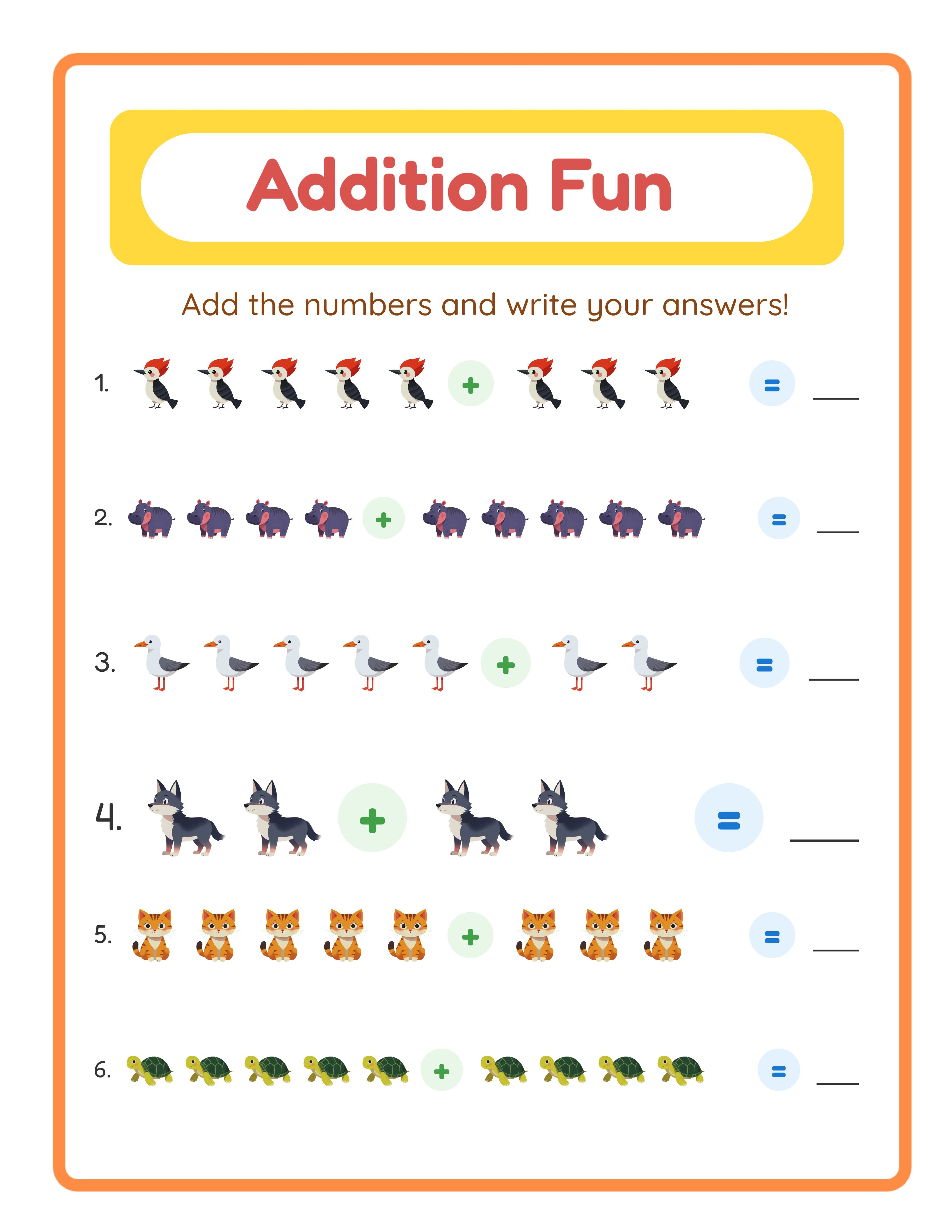
Focused sellers build a catalog that compounds. A seller specializing in kindergarten math activities creates counting worksheets, number recognition exercises, simple addition practice, number tracing pages, and math-themed coloring sheets. When a parent or buyer finds one product and likes the quality, they discover an entire catalog of relevant resources. One satisfied customer becomes a repeat buyer who purchases five or six products over a school year. The store's reviews all reinforce the same message: this seller produces excellent kindergarten math content. Platform search algorithms notice the consistent topic focus and surface the store more prominently for related searches.
Niche focus also determines your pricing power. A generalist store selling random worksheets competes purely on price because there is no perceived expertise. A specialist store that comprehensively covers a specific area commands premium prices because buyers perceive depth and authority. Buyers will pay more for resources from a seller who clearly understands their specific grade level and subject area than from a seller who appears to create whatever is trending this week.
Your marketing becomes dramatically more efficient with niche focus. Instead of creating content and advertising that speaks vaguely to "anyone who needs worksheets," you create messaging that speaks directly to a defined audience: "Everything a first-grade buyer needs for math practice, in one store." Your social media content, your email marketing, your Pinterest pins, and your product descriptions all reinforce a single, clear message that resonates deeply with your target buyer rather than weakly with everyone.
2
Identify Your Niche Starting Points
The strongest printable niches emerge from the intersection of what you know, who you understand, and what you can produce consistently. Starting with your existing advantages — rather than chasing whatever niche looks most profitable on paper — dramatically increases your chances of building a sustainable business because you can create better content faster and market it more authentically.
Begin with your skills and expertise. What subjects do you know well enough to create accurate, useful content? A former math buyer can produce math worksheets with proper pedagogical progression that a non-buyer cannot replicate. A parent who homeschooled three children understands the practical challenges of at-home learning in ways that inform better product design. A graphic designer brings visual quality that sets their coloring pages and activity sheets apart. Your expertise does not need to be professional — genuine personal experience with a subject or audience is equally valuable because it produces authentic, practical products.
Next, consider the audiences you understand deeply. The printable market serves several distinct buyer groups, each with different needs, different budgets, and different purchasing behaviors. Store buyers need standards-aligned resources that serve 20 to 30 solvers and fit within structured lesson plans. Homeschool parents need flexible, self-directed activities that work across mixed age groups. Parents supplementing school education need engaging practice that does not feel like extra homework. Special education professionals need adaptable resources with scaffolding and differentiation options. Tutors need targeted skill-building materials for one-on-one or small group instruction. Which of these audiences do you understand from personal experience?
Evaluate the subjects and themes you can produce consistently. Choosing a niche you find genuinely interesting matters more than most sellers realize, because building a printable business requires creating dozens or hundreds of products over months and years. A niche that excites you initially but bores you after 20 products leads to burnout and abandoned stores. A niche that genuinely interests you sustains your creative energy and motivation through the inevitable slow periods that every business experiences.
Finally, identify your competitive advantage. What can you offer that most sellers in your potential niche cannot? This might be subject expertise, design skills, bilingual content creation, deep understanding of a specific content library standard, or access to unique themes through the image library. Your competitive advantage does not need to be dramatic — even a modest edge in quality, consistency, or understanding of buyer needs compounds over time into significant market differentiation. Use the worksheet generators to explore how quickly you can produce professional content in your potential niche areas, as production speed directly affects how fast you can build a comprehensive catalog.
3
Research Market Demand for Printable Niches
A niche that excites you but has no buyers is a hobby, not a business. Market demand research tells you whether enough people are actively searching for and purchasing products in your potential niche to sustain the revenue you need. This step separates viable business niches from personal interests that lack commercial potential.
Start with platform search bars. Type your potential niche keywords into Etsy, Amazon, and Gumroad search bars and observe the autocomplete suggestions. Autocomplete suggestions represent real searches by real buyers — the platforms only suggest terms that people actually search for frequently. If you type "kindergarten math" and see autocomplete suggestions for "kindergarten math worksheets," "kindergarten math centers," "kindergarten math activities printable," and "kindergarten addition," that niche has active buyer demand. If your niche keywords produce few or no autocomplete suggestions, demand may be too low to support a business.
Use Google Trends to evaluate demand patterns. Enter your niche keywords and examine the trend line over the past 5 years. Look for three patterns: steady demand (the line stays relatively flat, indicating consistent year-round interest), growing demand (the line trends upward, indicating an expanding market), or seasonal demand (the line shows regular peaks and valleys tied to calendar events). Steady or growing demand is ideal for a primary niche. Seasonal demand works well as a supplementary niche but may not sustain a business on its own unless you plan around the calendar carefully.
Examine search volume for niche-specific keywords. Tools like Google Keyword Planner, Ubersuggest, or even the basic version of Ahrefs can show monthly search volume for printable-related keywords. Look for keywords with at least 500 to 1,000 monthly searches in your target niche. "First grade math worksheets" with 12,000 monthly searches signals strong demand. "Rhombus tracing worksheets for left-handed the early-learner niche" with 10 monthly searches is too narrow to build a business around. The sweet spot is specific enough to define a clear niche but broad enough to support a full product catalog.
Investigate what buyers actually purchase, not just what they search for. Browse the top-selling sections on Etsy, the top results on Gumroad, and the highest-rated products on Amazon in your potential niche. Are the top products worksheet packs, activity bundles, full content library units, or individual pages? What price points dominate? How many reviews do the top products have? A niche where the top products have hundreds or thousands of reviews confirms strong buyer demand and willingness to pay. Pay attention to the specific product types that sell best — this tells you what format your niche products should take.
Look for demand signals beyond marketplaces. Pinterest is a significant traffic source for printable sellers; search your niche keywords there and note whether related pins have strong engagement. Facebook groups dedicated to your target audience (homeschool groups, buyer resource groups, special education communities) reveal what resources their members request and recommend. Reddit communities, blog posts, and YouTube videos about your niche topic all indicate market interest that can translate into product sales.
4
Analyze Competition in Your Target Niche
Competition in a niche is not a reason to avoid it — in fact, a complete absence of competition usually signals a lack of demand. The goal of competitive analysis is not to find a niche with zero competitors, but to find a niche where you can differentiate, where gaps exist that current sellers are not filling, and where the quality bar leaves room for improvement.
Start by cataloging the existing sellers in your potential niche. Search your niche keywords on Etsy, Gumroad, and Amazon and examine the first two pages of results. How many different sellers appear? What is the quality range of their products? Are there a few dominant sellers with hundreds of reviews, or is the market fragmented among many small sellers? A niche dominated by two or three established sellers is harder to enter than a fragmented niche with many small sellers, but both can work with the right differentiation strategy.
Evaluate the quality of existing products honestly. Download available previews, study listing photos, read product descriptions, and examine reviews. Are the current products professionally designed or visually basic? Do they use high-quality images or clip art? Are the activities pedagogically sound or just worksheets with random content? Quality gaps represent your entry opportunity. If every existing product in your niche uses basic black-and-white layouts with generic clip art, you can differentiate immediately by creating visually rich worksheets using themed images from the image library. The worksheet generators produce professional-quality output that often exceeds the visual standard of existing marketplace products.
Read negative reviews on competing products carefully. Negative reviews reveal exactly what current products fail to deliver — and those failures become your product features. Common complaints in printable niches include: too few pages for the price, incorrect content or errors, poor print quality, no answer keys included, limited variety within a pack, and formatting that wastes paper or ink. Every common complaint is a feature you can promise and deliver in your competing products.
Identify underserved segments within your niche. Broad niches like "math worksheets" are intensely competitive, but specific segments within them may be underserved. "Math worksheets for visual learners," "math worksheets with real-world word problems," "bilingual math worksheets in English and Spanish," or "math worksheets organized by specific Common Core standard" represent segments where fewer sellers compete and buyers have more specific needs that you can address directly.
Assess the competition's pricing and bundle strategy. Note the price range for individual products and bundles in your niche. If most sellers price individual packs at $4 to $6 and bundles at $15 to $20, you know the market's price expectations. You can choose to compete at a similar price with better quality, or position at a premium with demonstrably superior products and more comprehensive bundles. Understanding competitive pricing prevents both underpricing (leaving money on the table) and overpricing (failing to convert browsers into buyers).
5
Evaluate Niche Profitability
Demand and manageable competition are necessary but not sufficient for a good niche. Profitability evaluation determines whether a niche can actually generate the revenue you need, given the prices buyers will pay, the volume you can expect, and the cost of creating content in that niche.
Analyze the price range in your potential niche. Search marketplaces for products in your niche and record the prices of the top 20 to 30 results. Calculate the median price (not the average, which can be skewed by outliers). A niche where the median individual product price is $8 to $12 has healthy pricing. A niche where most products sell for $2 to $4 will require significantly higher volume to generate meaningful revenue. Niches with median prices below $5 for individual products should be approached cautiously unless bundle potential or volume is exceptionally high.
Estimate volume potential using available signals. On Etsy, multiply the number of reviews by approximately 10 to estimate total sales (roughly 10% of buyers leave reviews). A product with 200 reviews has likely sold around 2,000 copies. On Gumroad, sales counts are sometimes visible directly. On Amazon, best-seller rankings give relative volume indicators. If the top products in your niche show strong sales volume at healthy prices, the niche can support additional sellers. If even the top products show minimal sales, the niche may be too small.
Consider customer lifetime value by niche type. Some niches naturally produce repeat buyers, while others attract one-time purchasers. A seller specializing in "first grade math" serves buyers who need resources for an entire school year and then transition to second-grade needs — if you also cover second grade, the same customer returns year after year. A seller specializing in "wedding planning printables" serves buyers who purchase once and never return. Niches with recurring needs and natural progression paths generate higher lifetime customer value and more predictable revenue.
Evaluate recurring-purchase niches versus one-time-buy niches. Educational content organized by grade level creates natural progression: a kindergarten parent becomes a first-grade parent the following year. Seasonal content creates annual purchase cycles: a buyer buys Halloween activities every October. Skill-building content creates advancement purchases: a parent starts with basic addition and progresses to multi-digit addition, then multiplication. These recurring-purchase patterns dramatically increase the lifetime value of each customer acquired in your niche.
Calculate your content creation cost per niche. Some niches require more time and expertise to produce quality content than others. A math worksheet niche requires accurate problems at appropriate difficulty levels but can leverage the worksheet generators for rapid, consistent production. An art and drawing niche might require original illustrations that take significantly longer to create. A content-aligned niche requires research into specific standards and progression frameworks. Factor your creation time and any tool costs into your profitability estimate — a slightly lower-priced niche where you can produce content four times faster may be more profitable per hour than a higher-priced niche with slow production.
6
Validate Your Niche Before Committing
Research tells you what might work; validation tells you what actually works. Before investing months of effort building a full catalog in your chosen niche, create a small test to confirm that real buyers will pay real money for your products. This minimum viable niche test prevents the costly mistake of building 30 products in a niche that does not convert.
Create 3 to 5 test products in your chosen niche. These should represent the core of what your niche catalog would include — not edge cases or experimental products, but the most obvious, highest-demand products for your target buyer. If your niche is kindergarten math, create a counting worksheet pack, a number recognition activity, and a simple addition practice set. If your niche is themed coloring pages, create animal coloring pages, vehicle coloring pages, and seasonal coloring pages. Use the worksheet generators to produce these test products quickly without investing excessive time before validation.
List your test products on at least one marketplace. Etsy is the most common starting point because it has the lowest barrier to entry and the fastest feedback loop. Create optimized listings with professional titles, descriptions, and preview images. Price your products at the median price point you identified during competitive analysis. Do not underprice to generate initial sales — validation requires testing at realistic prices to confirm genuine demand at sustainable margins.
Measure three signals over 2 to 4 weeks: views, favorites or saves, and sales. Views tell you whether buyers are finding your products through search (if views are low, your niche keywords may need adjustment, or the niche may have less search demand than research suggested). Favorites tell you whether buyers find your products interesting enough to save for later purchase (a high favorite-to-view ratio with low sales suggests pricing may be too high). Sales confirm actual purchase intent at your price point.
Set realistic validation thresholds. For a test of 3 to 5 products over 4 weeks on Etsy, reasonable expectations are: 200 to 500 views total across all products, 10 to 30 favorites, and 2 to 8 sales. If you hit these ranges, the niche shows promise and warrants further investment. If views are strong but sales are zero, examine your pricing and product quality. If views are near zero, the niche may lack sufficient search demand, or your listing keywords need significant improvement.
Be willing to pivot early. Validation exists specifically to prevent sunk-cost thinking. If your test products generate no traction after 4 weeks of optimized listings, that is valuable information — not a failure. Adjust your niche angle (narrower or broader), try a different product format, or test a completely different niche. The cost of testing 3 to 5 products in a niche that does not work is minimal compared to the cost of building 30 products before discovering the niche cannot sustain your business. Many successful printable sellers tested 2 to 3 niches before finding the one that generated consistent sales.
7
Choose Between Evergreen and Seasonal Niches
One of the most important strategic decisions in niche selection is the balance between evergreen content that sells year-round and seasonal content that sells in concentrated bursts. Each type has distinct advantages, and the most resilient printable businesses deliberately combine both.
Evergreen niches produce steady, predictable income throughout the year. Math worksheets, reading comprehension activities, handwriting practice, alphabet recognition, and basic skill-building content have consistent demand regardless of the calendar. Buyers need these resources in September and in March, during school terms and during summer practice periods. The advantage of an evergreen niche is revenue predictability — once your products rank well in marketplace search, they generate sales month after month without seasonal marketing effort. The disadvantage is that evergreen niches tend to be more competitive because every seller recognizes their value.
Seasonal niches produce concentrated revenue spikes during specific calendar windows. Back-to-school content (August and September), Halloween activities (October), holiday worksheets (November and December), Valentine's Day materials (February), and summer practice packets (May and June) all follow predictable annual demand curves. Seasonal niches often have less year-round competition because many sellers neglect them outside peak periods. The advantage is that well-timed seasonal content can generate more revenue in 4 to 6 weeks than some evergreen products generate in 4 to 6 months. The disadvantage is the income gap between seasons, which creates cash flow unpredictability.
The optimal strategy for most printable sellers combines an evergreen core with seasonal supplements. Build your primary catalog around evergreen content in your chosen niche — this becomes your revenue foundation that generates consistent monthly income. Then create seasonal variations and themed additions that capitalize on calendar-driven demand spikes. A seller focused on kindergarten math (evergreen) might create Halloween counting worksheets, Christmas number activities, Valentine's Day addition practice, and summer math review packets that supplement the year-round catalog with seasonal peaks.
Plan your production calendar around the school year and seasonal demand cycles. Create seasonal content 4 to 8 weeks before the relevant period to capture early planners. Back-to-school content should be listed by mid-July. Holiday content should be ready by early October. Summer practice content should be published by late April. This advance planning ensures your seasonal products have time to gain search visibility before peak demand arrives.
Track which seasonal periods perform strongest in your niche and double down on those. Not all seasonal windows perform equally across all niches. A preschool-focused seller might find that back-to-school is their strongest season because new preschool parents are buying resources for the first time. A homeschool-focused seller might find that summer is their strongest period because homeschool families use summer for catch-up and enrichment. Your niche and audience determine which seasonal windows deserve the most investment.
8
Plan Your Niche Expansion Strategy
A well-chosen niche is your starting point, not your ending point. Planning your expansion strategy before you begin prevents two common mistakes: expanding too quickly (diluting your niche authority before it is established) and expanding too slowly (hitting a revenue ceiling because your niche is too narrow to grow within).
Start narrow and build depth before breadth. Your first 15 to 20 products should all serve the same tightly defined niche. If your niche is first-grade math, create addition worksheets at multiple difficulty levels, subtraction practice sets, number sense activities, math word problems, place value exercises, and measurement activities — all for first graders. This depth establishes your authority, builds a catalog that cross-promotes effectively, and generates the reviews and search rankings that make expansion successful. Sellers who try to cover kindergarten through fifth grade from day one spread their effort too thin and build authority nowhere.
Plan adjacent niche moves in advance. Once your core niche catalog is established (15 to 20 products with consistent sales), the most natural expansion is into directly adjacent niches. For a first-grade math seller, adjacent moves include: second-grade math (same subject, next grade), first-grade literacy (same grade, new subject), or kindergarten math (same subject, previous grade). Adjacent moves leverage your existing audience — the first-grade buyer who loves your math products is likely to purchase your literacy products as well, and she will need second-grade resources next year.
Grade-level expansion is often the highest-value adjacent move. A seller covering first-grade math can expand to kindergarten and second-grade math, creating a three-grade math catalog that serves each customer for three consecutive school years. This tripling of customer lifetime value is significant because the acquisition cost remains the same — the same parent or buyer who found you for first-grade resources continues purchasing through second and third grade without any additional marketing effort.
Subject expansion within the same grade level broadens your appeal to existing customers. After establishing first-grade math, adding first-grade reading, first-grade science activities, and first-grade social studies worksheets transforms your store from a math resource into a comprehensive first-grade resource. Buyers who previously bought only math products now purchase across subjects, dramatically increasing your revenue per customer.
Theme expansion adds variety without changing your core audience. If your educational niche covers math, creating themed versions of your math products — animal-themed addition, space-themed counting, ocean-themed subtraction — appeals to the same buyers seeking seasonal or interest-based variations. Use the worksheet generators with different image themes to produce themed variations efficiently without redesigning your core product structures.
Know when to add a second niche versus deepening your first. Add a second niche only when your first niche catalog is comprehensive (25 or more products), your sales are consistent, and your expansion within the niche has reached a natural plateau. If you are still finding new product ideas within your current niche, keep building depth. A deep catalog in one niche almost always outperforms shallow catalogs across multiple niches because of the compounding effects of authority, cross-promotion, and customer lifetime value. The exception is when your niche has a hard demand ceiling — if you have created every possible product in a narrow niche and sales have plateaued, it is time to apply your proven process to a new niche.