Tutorial
1
Understanding the Brain Games Market on Amazon KDP
The brain games category on Amazon spans multiple demographics, which is both its strength and its strategic opportunity.
Children's brain games (ages 4-10): Parents and educators search for "brain games for kids," "critical thinking activities," and "visual puzzles for children." These buyers want age-appropriate challenges that develop reasoning skills. Visual puzzles are ideal because they require no reading. Price point: $5.99 to $7.99.
Adult brain games (ages 18-65): Adults search for "brain teasers," "mind puzzles," and "cognitive challenge books." They buy these for entertainment, stress relief, or mental exercise. The key selling point is variety -- adults get bored with single-format puzzle books. Price point: $7.99 to $12.99.
Senior brain games (ages 65+): This is the fastest-growing segment. Seniors and their caregivers search for "brain games for seniors," "cognitive exercise book," and "mental fitness puzzles." Visual puzzles are especially suitable because they work at any reading level and can be presented in large print format. Price point: $7.99 to $9.99.
The strategic insight: a single brain games book with visual puzzles can serve all three demographics by adjusting the difficulty level, page density, and cover marketing. A book with easier puzzles and larger images targets kids and seniors. A book with complex patterns and more items per page targets adults. The puzzle types remain the same -- only the difficulty configuration changes.
2
Four Puzzle Types for Brain Games Compilations
A strong brain games book combines multiple puzzle types to maintain engagement and challenge different cognitive skills. Here are the four generators you will use.
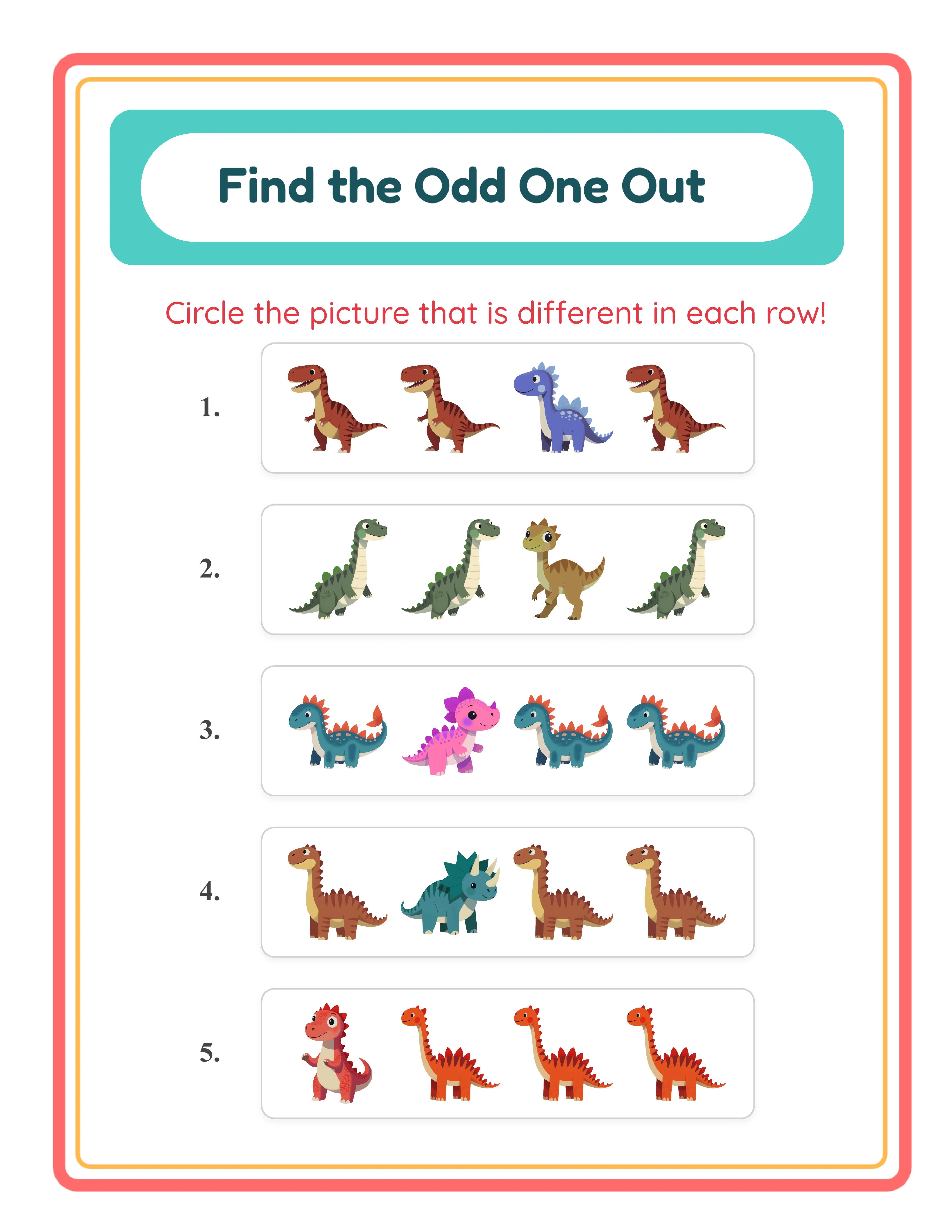
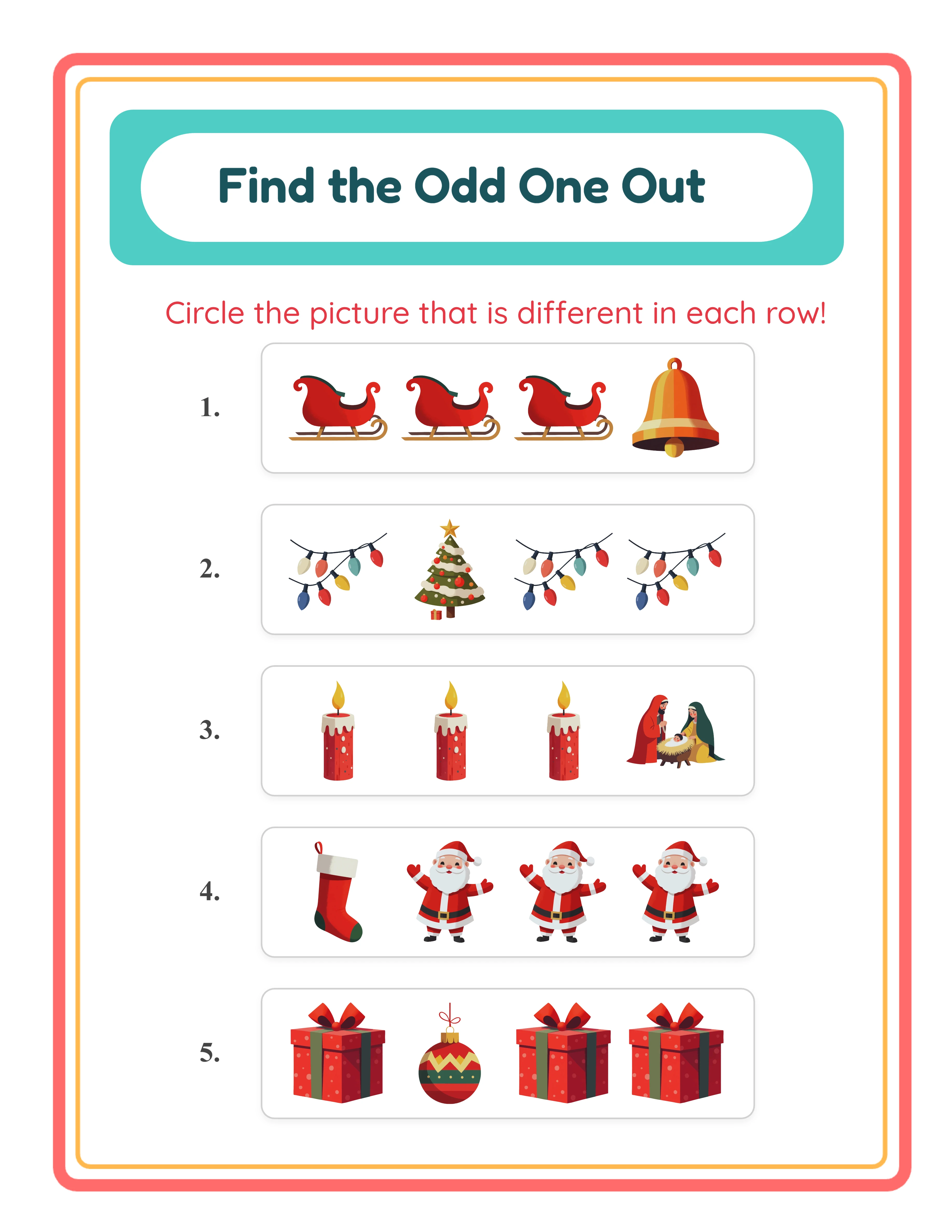
Odd-One-Out: The generator creates rows of images where all items are identical except one that differs in some way -- different object, different color, different orientation, or different size. The solver must identify which image does not belong. This tests visual discrimination and categorical thinking. Each page can contain 4 to 8 exercise rows depending on difficulty.
Shadow Match: The generator creates puzzles where colored images are paired with black silhouettes. The solver must match each image to its correct shadow by analyzing outlines and shapes. This develops spatial awareness and visual-form recognition. The auto-generated pixel-level silhouettes are precise and challenging.
Grid Match: The generator creates pattern grids where images follow a logical sequence and one cell is empty. The solver must determine which image completes the pattern based on the grid's rules (rows, columns, or both). This tests logical reasoning and pattern recognition -- the same skills measured on IQ tests.
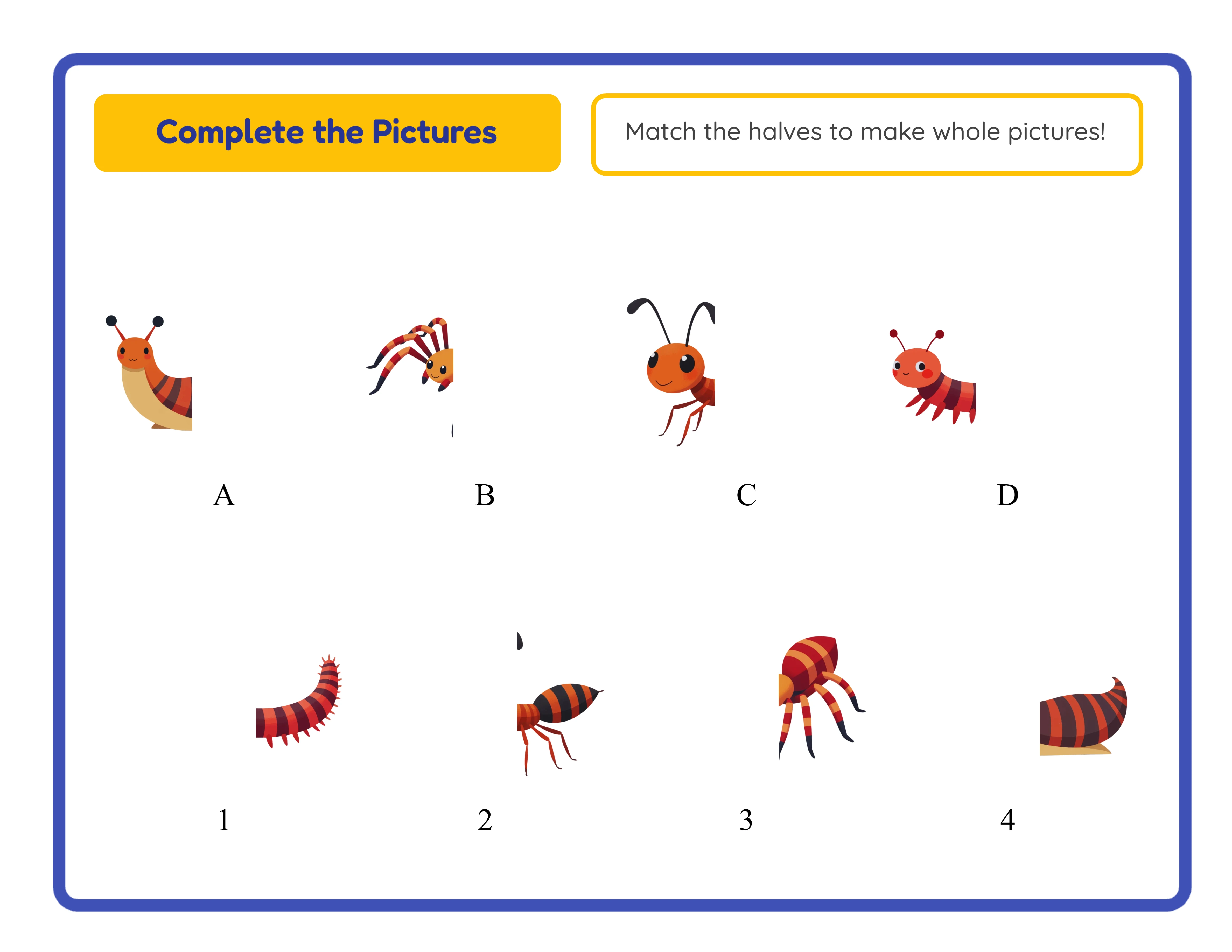
Missing Pieces: Although not one of the three primary recommended tools for this guide, you can also incorporate missing pieces puzzles where an image has a section removed and the solver selects the correct piece from multiple options. This tests visual-spatial reasoning and detail orientation.
Each puzzle type targets a different cognitive skill, which is why combining them creates a genuine "brain games" experience rather than a single-skill repetition book.
3
Generating Odd-One-Out Puzzles for Your Book
The odd-one-out generator is your primary content source for brain games books. Here is the optimal KDP configuration.
Open the odd-one-out generator and select a theme from the 104 collections. For brain games books, diverse themes work better than single themes -- mix animals, food, vehicles, and household items to keep every page visually fresh.
Difficulty configuration:
Easy (ages 4-7 or seniors): 4 items per row, 4 rows per page. The odd item is a completely different object (a cat among dogs). Large images with clear differences.
Medium (ages 8-12 or adults): 5 items per row, 5 rows per page. The odd item differs by a subtler trait -- orientation, size, or color variation. Requires more careful observation.
Hard (teens and adults): 6 items per row, 6 rows per page. Differences are subtle -- slight rotation, minor detail change, or pattern variation. Demands focused attention.
Generate 25 to 30 odd-one-out pages for a standard brain games compilation. Vary the themes across pages so no two consecutive pages use the same image set. Export each page as a 300 DPI PDF.
Answer keys: The generator creates answer keys automatically, highlighting the odd item on each page. Include these at the back of your book -- brain games books always include answers so solvers can verify their reasoning.
4
Generating Shadow Match Puzzles
Shadow matching pages provide a visually striking contrast to odd-one-out puzzles. The black silhouettes against white backgrounds create pages that look dramatically different, adding visual variety to your compilation.
Open the shadow match generator and select themed images. The generator automatically creates pixel-accurate black silhouettes from any themed image. The solver sees colored images on one side and black shadows on the other, drawing lines or writing numbers to match each image to its shadow.
KDP configuration:
Page layout: For an 8.5 x 11 page, arrange 5 to 6 images on the left and 5 to 6 scrambled shadows on the right. The scrambled order is what makes the puzzle challenging.
Difficulty control: Easy shadow matches use images with very distinct outlines (elephant versus butterfly versus car). Hard shadow matches use images with similar silhouettes (different dog breeds, various fruit shapes, similar-looking tools).
Generate 20 to 25 shadow match pages. Like odd-one-out pages, vary the themes across pages. Animals work particularly well for shadow matching because their silhouettes are distinctive and recognizable.
The shadow match format has a unique advantage for brain games books: it looks sophisticated and professional on the page. The contrast between full-color images and solid black silhouettes creates visual impact that photographs well for Amazon listing images. This helps your cover and product photos stand out in search results.
5
Generating Grid Match Pattern Puzzles
Grid match puzzles are the most intellectually demanding format in your brain games compilation. They test logical reasoning and pattern recognition -- cognitive skills that buyers specifically seek in brain games books.
Open the grid match generator. The generator creates grids (typically 3x3 or 4x4) where images follow a logical pattern across rows and columns. One cell is left empty, and the solver must determine which image completes the pattern.
Grid configurations for KDP:
3x3 grids: Each grid contains 8 images and 1 empty cell. The pattern might be "each row contains one of three animals" or "each column shows a size progression." These are suitable for easy to medium difficulty.
4x4 grids: 15 images and 1 empty cell. More complex patterns involving both row and column rules simultaneously. Suitable for medium to hard difficulty.
Page layout: For an 8.5 x 11 page, fit 2 grid puzzles per page for 3x3 grids, or 1 grid puzzle per page for 4x4 grids. Include a small answer choice section below each grid with 3 to 4 options.
Generate 20 to 25 grid match pages. These are the "anchor" puzzles in your brain games book -- the ones that make solvers pause, think, and feel accomplished when they find the answer.
Answer keys are generated automatically. For grid match puzzles, the answer key shows the completed grid with the correct image in the previously empty cell.
6
Compiling Your Brain Games Manuscript
The compilation structure is critical for brain games books. You want variety without chaos -- a clear organizational system that keeps solvers engaged across all four puzzle types.
Recommended manuscript structure:
Page 1: Title page -- "Brain Games: Visual Puzzles for Critical Thinking"
Page 2: Copyright page
Pages 3-4: Instructions page with simple icons explaining each puzzle type (keep visual for language-free accessibility)
Pages 5-28: Odd-one-out section (24 puzzles)
Pages 29-48: Shadow match section (20 puzzles)
Pages 49-68: Grid match section (20 puzzles)
Pages 69-76: Mixed challenge section (8 pages combining all types)
Pages 77-100: Answer keys for all sections
Page 101: Optional "About" page or catalog page
Alternative structure (interleaved): Instead of grouping by type, alternate puzzle types throughout the book. Page 5: odd-one-out, Page 6: shadow match, Page 7: grid match, Page 8: odd-one-out, etc. This maximizes variety on every page turn but makes the answer key section more complex to organize.
Formatting for KDP:
Trim size: 8.5 x 11 (standard for puzzle/activity books)
Interior: Black and white (shadow match silhouettes print crisply in B&W)
Bleed: No bleed
Margins: 0.75-inch inside, 0.25-inch outside minimum
Merge all exported PDFs in your chosen order using PDFsam Basic or equivalent tool. Verify the merged PDF has consistent page dimensions and no blank pages between sections.
7
Publishing and Listing Optimization for Brain Games Books
Brain games books benefit from specific listing optimization strategies that differ from single-format puzzle books.
Title strategy: Include "brain games" as the primary keyword and specify the puzzle variety. Examples:
- "Brain Games: 70+ Visual Puzzles for Critical Thinking -- Odd One Out, Shadow Match & Pattern Recognition"
- "Visual Brain Teasers: A Puzzle Book with 80 Challenges for All Ages"
- "Brain Games Activity Book: Find the Odd One Out, Match the Shadows & Complete the Patterns"
Subtitle: Emphasize the variety and age range. "4 Puzzle Types, 100+ Challenges, No Reading Required -- Ages 6 to Adult"
Keywords (7 slots):
- "brain games book for adults"
- "visual puzzle book critical thinking"
- "brain teasers for kids ages 8-12"
- "odd one out puzzle book"
- "cognitive exercise book seniors"
- "brain games activity book all ages"
- "visual reasoning puzzles"
Description: Describe each puzzle type with a brief explanation of what cognitive skill it develops. Parents buying for children want to see educational language. Adults buying for themselves want "brain training" and "mental exercise" language. Write the description to appeal to both audiences.
Pricing: A 100-page brain games compilation at 8.5 x 11:
- US: $7.99 to $8.99 (brain games books command higher prices than single-format books)
- Europe: $8.99 to $10.99
- The "brain games" label supports premium pricing because it signals cognitive value beyond entertainment
8
Scaling Your Brain Games Catalog
The brain games niche offers multiple scaling vectors that compound revenue.
Difficulty series: Publish "Brain Games: Easy" (for kids 4-8 and seniors), "Brain Games: Medium" (for kids 8-14 and adults), and "Brain Games: Hard" (for adults and puzzle enthusiasts). Each uses the same four puzzle types with different configurations -- more items per row, subtler differences, harder patterns.
Theme series: "Animal Brain Games," "Nature Brain Games," "Food Brain Games" -- each using images from the respective themed collections. Themed books attract niche keyword searches.
Age-targeted editions: "Brain Games for Kids Ages 4-8" with easy puzzles and large images. "Brain Games for Teens" with medium-hard challenges. "Large Print Brain Games for Seniors" with bigger images and fewer items per page. Same content, different packaging and difficulty, three separate products.
Volume series: "Brain Games Volume 1" through "Volume 5" (or more). Once a buyer enjoys Volume 1, they search for Volume 2. Amazon's Series feature links volumes together on the product page.
Combination expansion: Add new puzzle types as you grow. Word search, crossword, cryptogram, and find-the-difference puzzles can all be mixed into future "Brain Games" volumes. Each additional puzzle type justifies a new book in the series.
The catalog math: 3 difficulty levels x 5 themes x 2 age groups = 30 potential books. Each selling 1 to 2 copies per day at $1.50 to $2.50 royalty creates $1,350 to $2,250 per month. This is achievable over 6 to 12 months of consistent publishing.